The desire for alternative options starts with disappointment and anxiety.
–Alan Rapp
We live a free life. Very few people can say that.
–Marc Explo

Stretching
Following from Rapp, where does disappointment start? Why did we have expectations to that lead to anxiety to begin with? Are disappointment and anxiety internally or externally imposed conditions? Finally, what is the organic link between urban exploration and infiltration?
In the course of the following visual spectacle, I present two important case studies: an exploration of a derelict London Tube station paired with a live infiltration of a number of Paris Metro stations sprinkled with a sugar coated topping of French cathedral brachiation. The link between these seemingly disperate case studies in time-wastery, I will suggest, is desire.

Fragments

Of Time

Less interesting
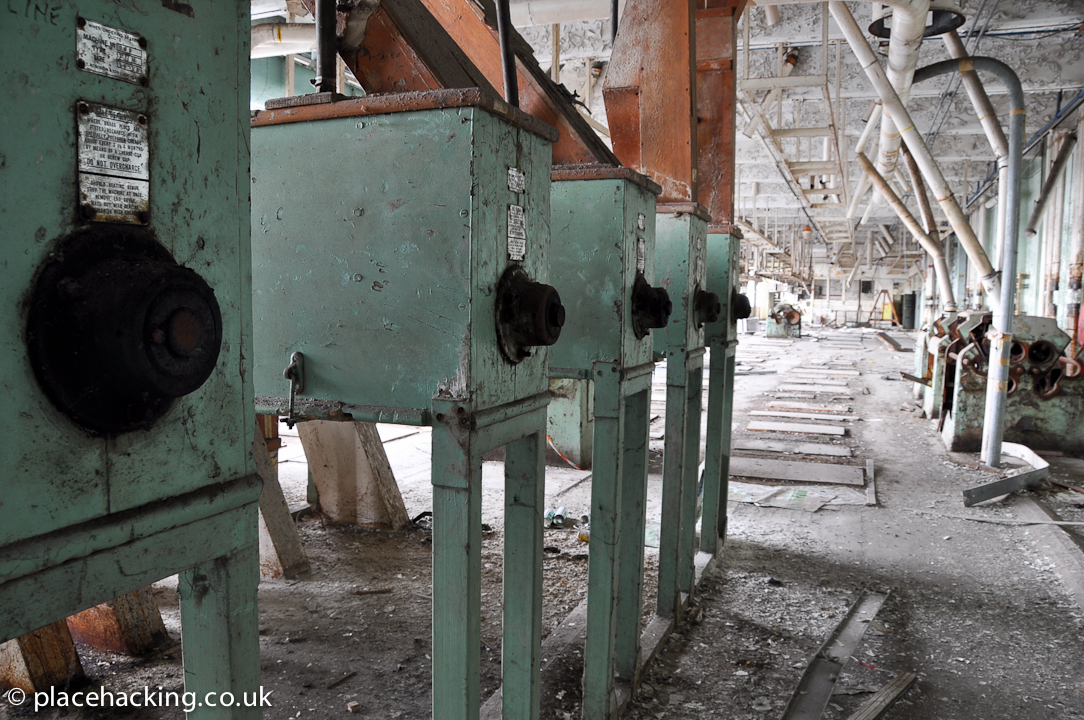
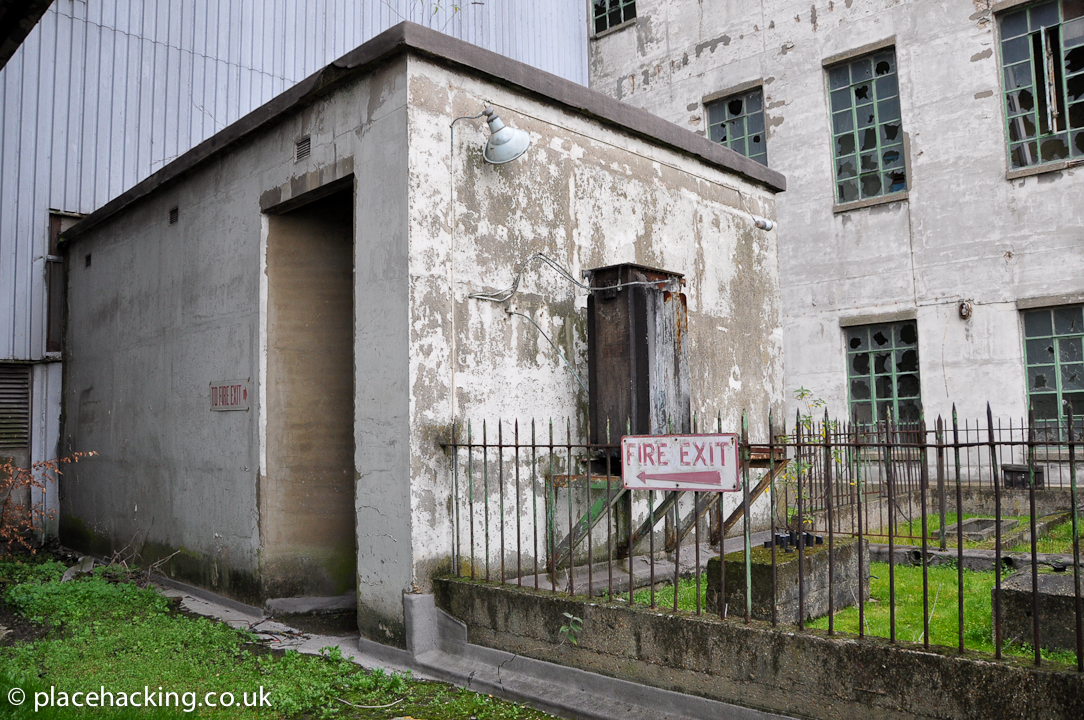
Our desire to seek ruins is as obvious as the motivations behind the expeditions. We seek them to find pieces of what was, was is, what could have been. The failure of planning, execution and participation found in this empty station is comical and sad but not necessarily disappointing. We assure ourselves that the only thing that could make the situation more amusing would be if a train were suddenly to pass though, disrupting our notions of what we thought we barely understood. By the time we leave, we are pretty sure something happened. We can see it on our skin, taste it in our teeth, wash it out of our clothes but the experience remains so ephemeral that to speak about it is almost blasphemy. The satisfaction that comes with that feeling is almost as wonderful as the peals of laughter that ring out from our throats as we leap from the back of the speeding train into the dark tunnels, drunk on the screams of platform perambulators who are sure that we are the demons they heard about on the 10 o’clock news.

The multiplication of the third rail
The eminent anthropologist Marc Augé is disappointed with our play space. Throughout his entire book on ‘non-places’, poor Augé is a victim of one postmodern monstrosity after another, striking out at remnants of what remains with a panicked grab, decrying the end of history, implying that there is no place for us in a world of machines, of mobility, of ‘urban concentrations, movements of population, and the multiplication of what we call “non-places”, in opposition to the sociological notion of place…”. But as Alastair Bonnett writes, this ‘sociological’ notion of place is was a false consciousness imposed by bureaucratic minds ‘colonized by the language of academia’ be begin with.

Your illusion
I contend that place is what you make it and the responsibility to make space viable, vibrant and interesting, the responsibility to create places of desire is only limited by our individual and collective capacities for love and the level of our energies devoted to giving a shit. As Sartre has taught us, since we all share in the same situation, we must embrace our awesome freedoms, deliberately rejecting any (false) promise of authoritative moral determination. Freedom is not given, it is obtained. I hear Marc Explo teaches a seminar on the rooftops of Paris with beer in hand on this very topic.

7.5%
My comments are not intended to be solely derogatory. I am not suggesting that a vision of life which is guided by another person’s ideals is inauthentic. Indeed we are all, to some degree or another, remixing, reusing, embracing, contesting and disputing all that has come before. Individuals that I quote, in speech and text, have quoted others before me, a lineage stretching back as far as communicative origins. This continuum of thought and energy should be celebrated with toasts to the heavens for the graces of wisdom. We have inherited more knowledge, more beauty, more potential, than any human beings who have come before. To suggest that that knowledge and the possibilities that cause fragmentation of self awareness are disappointing is in itself disappointing. Join the party Augé, I have a bottle of Beaujolais Nouveau waiting. Make no mistake, it will be messy, it will be confusing, it will be the ruin and the construction site, Battersea Power Station and Heathrow Terminal 5. It will be the informal state of constant becoming but ‘to embrace the chaos is not to slide toward entropy but to emerge into an energy like the stars’.

Forming

Spontanous combustion
While we can all clearly see that within a capitalist system, the invitation to co-produce place often has a price or that the output of that production is expected to become commodified, we may choose to operate outside of that system. Maybe that operation requires giving up watching East Enders tonight. Maybe it requires operating at a loss. Maybe it means writing a shitty Ph.D. because you were in a sewer instead of resting up for the next wrestling match with Microsoft Word. Fuck it, people begin participating in informal modes of cultural production because they want human bonds and community to take precedence over outcome. People want becoming over being. People want the freedom of the present! ‘On the other hand, anyone trapped in the anemic and atomized everyday routine of our residential deserts might doubt that such determination could be found out there anymore. Reconnecting with such gestures, buried under years of normalized life, is the only practical means of not sinking down with the world, while we dream of an age that is equal to our passions.’

Marinetti
As the Invisible Committee reminds us, the primary component of that freedom is not just enthusiasm but passion. And the passion for joy, for bonding, for shared experience and community goes beyond the specifics of the practice (read: UrbEx). The one thing ALL explorers of space share is a passion for life, ‘an exuberant and playful negation of the alienation and exclusion provoked through axiomatic consumeristic machinations.’ And here, we begin to see the contemporary critique of traditional notions of exploration in the rejection of the idea that only some can be involved or that a passion for adventure can only be satiated through grand international expeditions. Urban exploration teaches us that those stories, those adventures, are found in our backyards also – if you choose to chase them.

The Rabbit Hole

Follows no cardinals
If this sounds polemic, that’s because it is. I am tired of disappointment, resentment and critique being the only accepted modes of critical academic engagement. We do what we do because we love it. It produces nothing. It hurts no one. It endangers our lives. That is our choice and no one else’s. And in expectation of the showering critique, the next person who tells me that my happiness is subject to an economic audit can keep chewing on that corpse because my fingers are in my ears.

There's no such thing as ghosts!
Barthes writes that pleasure is continually disappointed, reduced and defeated, in favour of strong, noble values: Truth, Death, Progress, Struggle, etc. It seems that our society refuses (and ends up ignoring) bliss to such a point that it can produce only epistemologies of the law. Well if that’s the case then fuck the law. I never consented to it’s construction in the first place and I am pretty sure that democracy isn’t supposed to resemble a Mafia extortion scheme. But don’t take that as a threat, it is rather a populist invitation to playfully reinterpret what the state holds so sacred, it’s an invitation to critically and playfully engage with the humiliating notions of ‘morality’ and ‘progress’ that dehumanize, commodify and deterritorialize our places of occupation to create what Guy Debord called “an impotent utopia of pretensions and complicities.” We intend to end the humiliation of a sham democracy by resituating ‘strategic sites of power beyond the depersonalized representation of an impotent democracy and back into the multitude.’ Following Laurie Weeks’ Theory of Total Humiliation: “we don’t erect monolithic reified barriers against the humiliation; rather we welcome it, embrace it; then everyone wants to fuck us, for mysterious reasons.”

Fuck us
So that we come full circle here, what does an exploration of a derelict London Tube station paired wimh a live infiltration of a number of Paris Metro stations and some rogue climbing of outdated religious architecture have in common? The answer is desire. We desire, and take, opportunities to ‘slip into a paradoxical position between the “real “and “not-real” in that it incorporates “real” words, gestures, hopes and intentions, that are framed as “unreal” through playful context.’
_________________________
We play out of desire
Desire sprouts love
Love is like oxygen





 RSS
RSS Twitter
 Scribd