Man is free at the instant he wants to be.
-Voltaire

Clear light of bliss

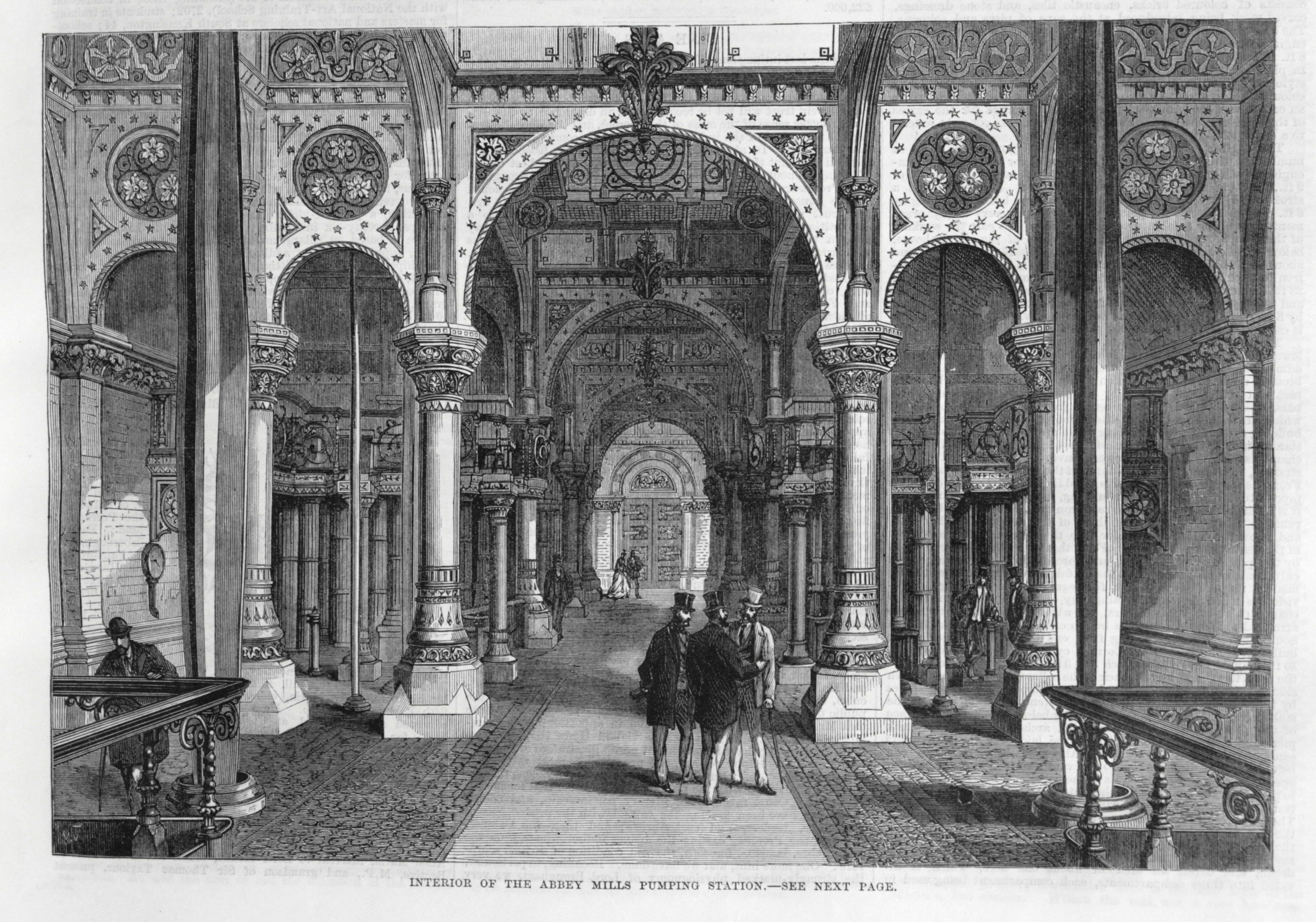
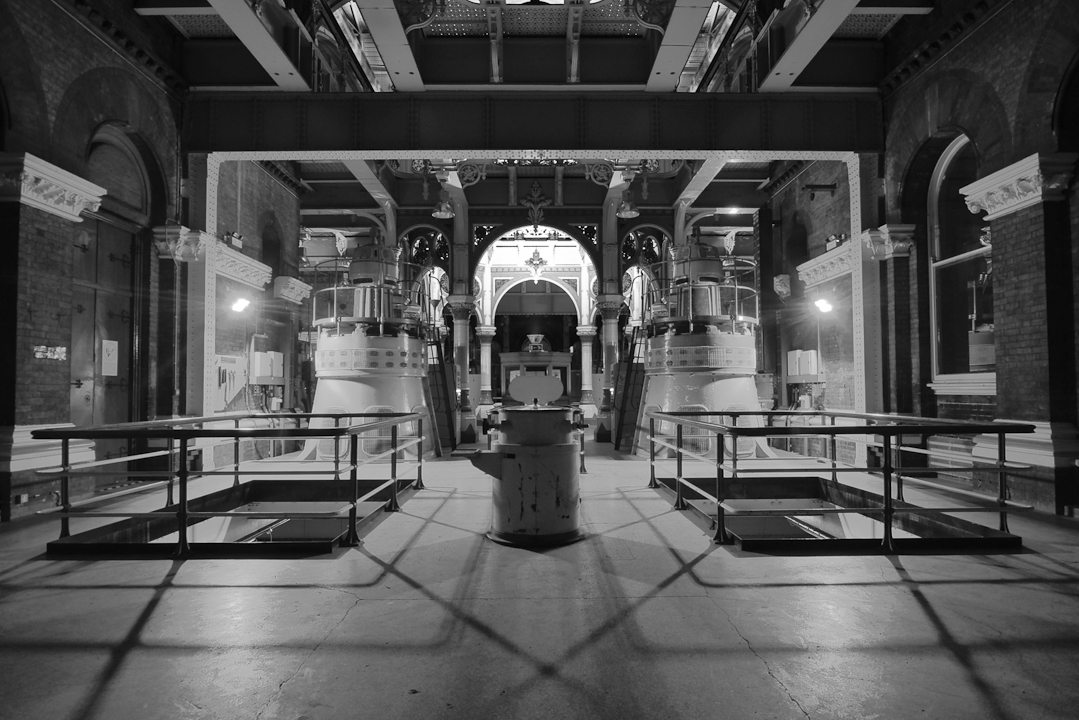
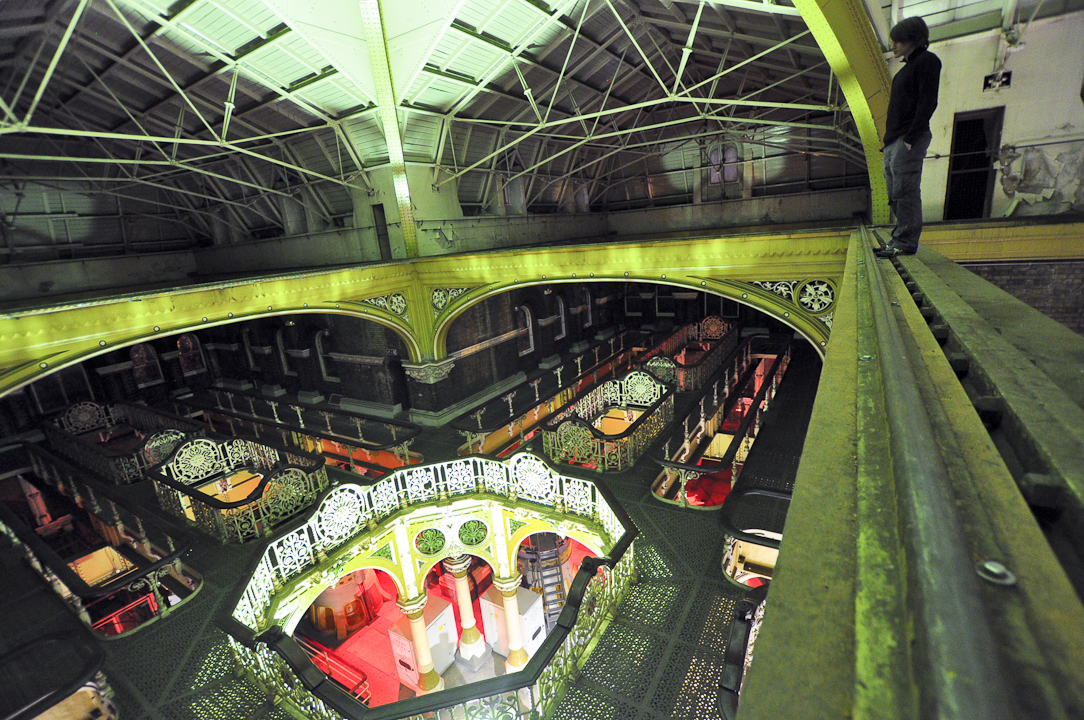
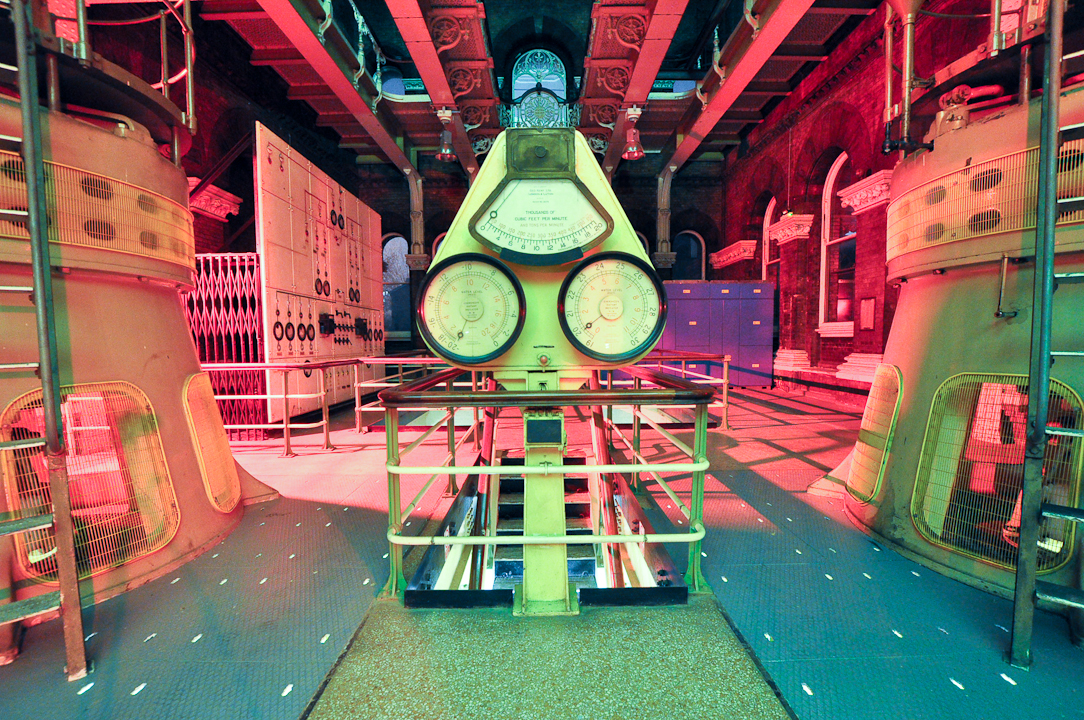
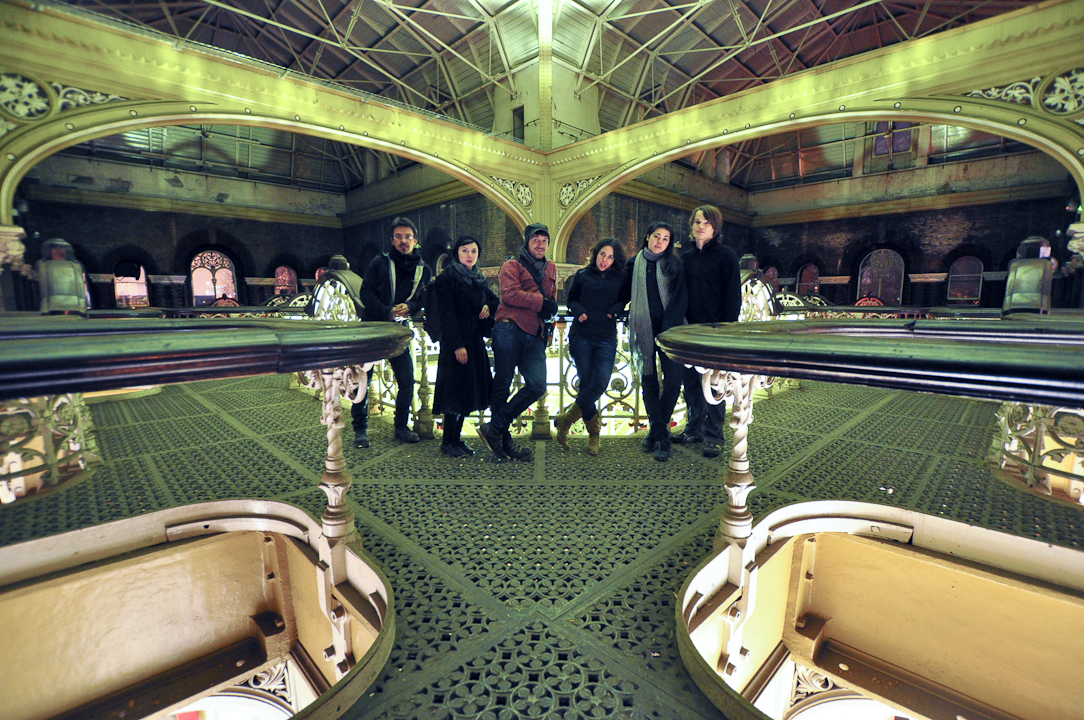
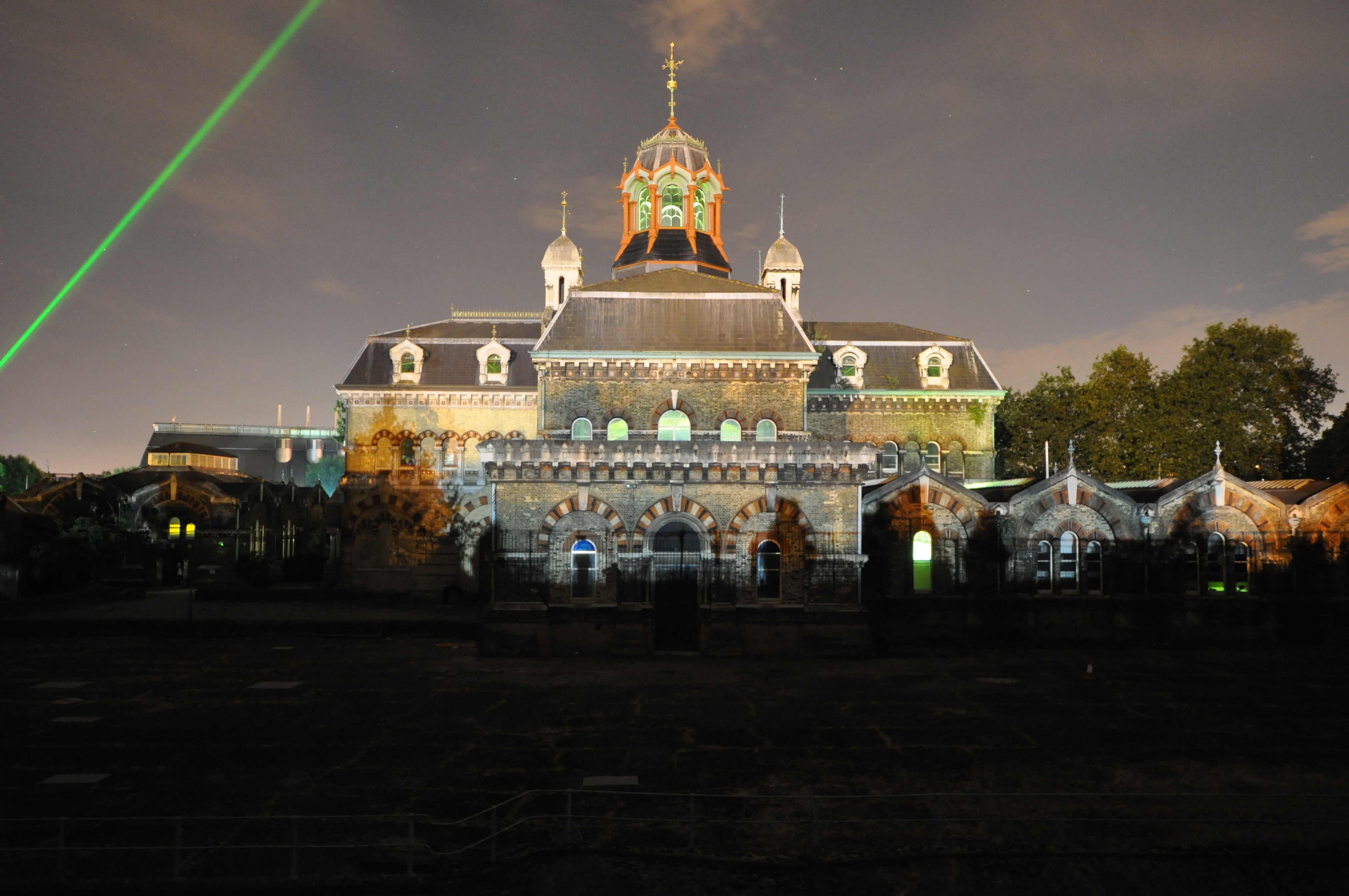
Silent Motion rolled up on the East London Greenway at about midnight. Sarah and Maria were with him and he was headed with a determined stride to an old flame. Architecturally speaking of course. The Abbey Mills Pumping Station, recently written about by our friend Paul Dobraszczyk on rag-picking history is indeed a Cathedral of Sewage.

The first empty Redstripe can spiked onto the security fence followed by another empty precariously placed on a ledge waiting for the next little gust of wind to send it spiralling into the River Lea clearly indicated that the Goblinmerchant and Brosa were already inside. But when Silent Motion and the girls rolled up, they found the dejected pair with the rogue Sophie dancing around a fifth of Famous Grouse playing tag with the demons of the night. The window was jammed.

Two hours of death-defying acrobatics followed. We all knew with Silent Motion there we weren’t walking away. The popping sound of the fire exit opening 40 minutes later was consequently rather satisfying, given how miserably cold we all were lying huddled around our empty Grouse bottle drawing straws to see who would be eaten first while we waited for the early-morning train from the Far East back to more respectable South London Boroughs.

Post-apocalyptic imaginaries were abandoned as we walked through the door.

In the presence

Of Bazalgette

Being in such close presence to Joseph Bazalgette, hero of London sewage, urban exploration and architectural aesthetics, was instantly sobering. Standing in the main hall, it become clear that Bazalgette was mad as a hatter when he built this absurd monstrosity of shit-pumpage. But as Jack Kerouac writes in On The Road,

“The only people for me are the mad ones, the ones who are mad to live, mad to talk, mad to be saved, desirous of everything at the same time, the ones who never yawn or say a commonplace thing, but burn, burn, burn, like fabulous yellow roman candles exploding like spiders across the stars and in the middle you see the blue centerlight pop and everybody goes “Awww!”

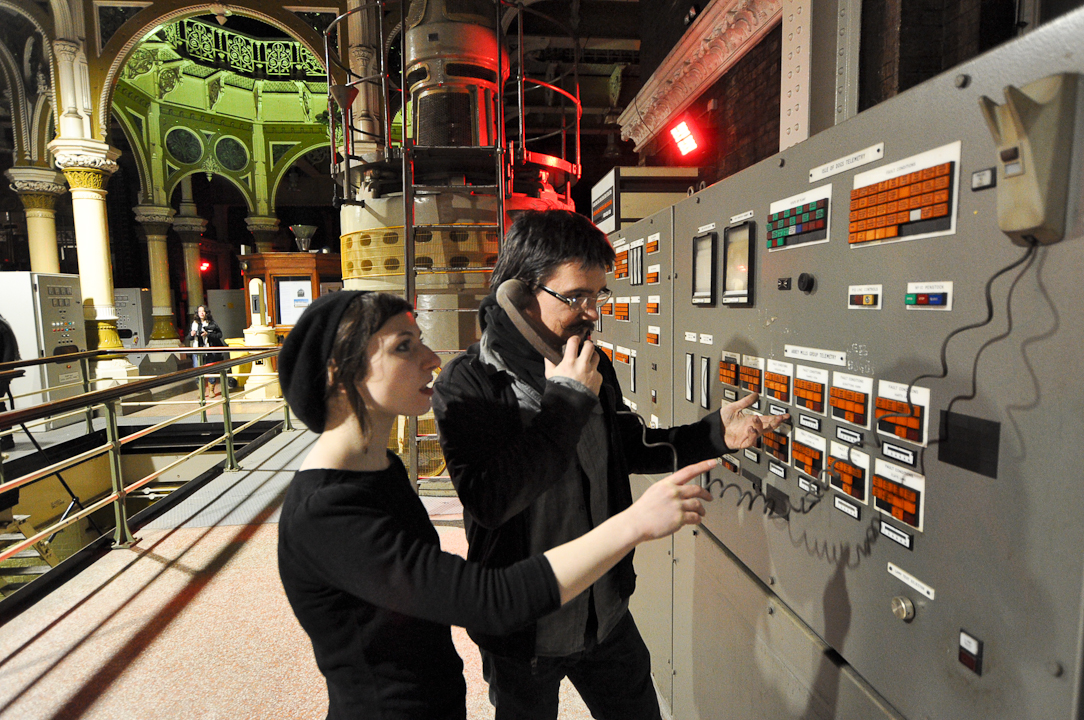
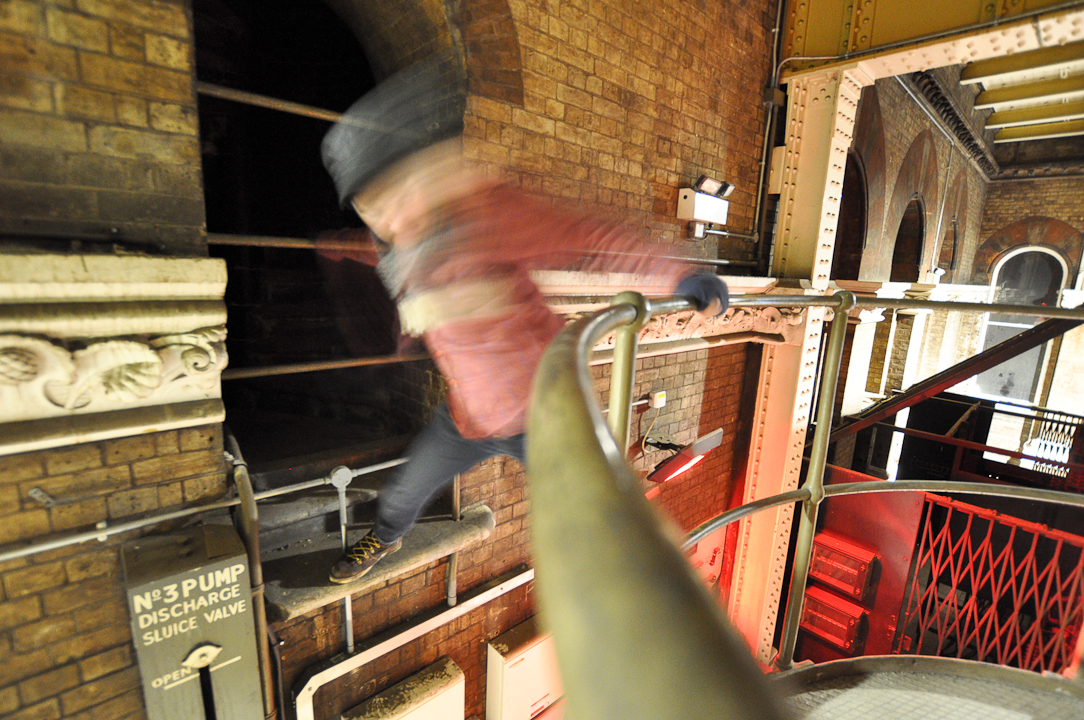
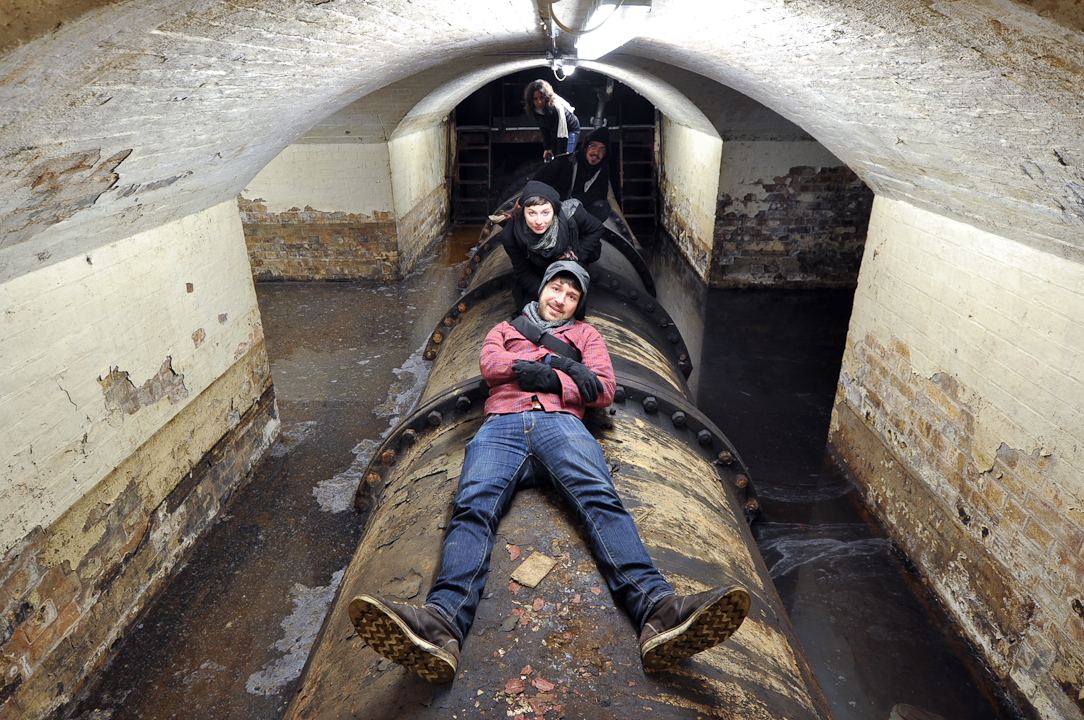
We were all on the same team here. It was clear to everyone in attendance that Bazalgette was there too, raving and craving, clawing and lusting, climbing and laughing. We went into a wild Bacchian frenzy. It was movable feast of affectual affordances as twisted Victorian metal was transmuted into swing and ladders, balance beams and gaps to jump. We played limbo under their security gates, we crawled on all fours across half-submerged pipes and used the derelict phone system to call the security hut and tell them they lost the game.

We don't need

To ask for

Permission

_________________________

The truth is that Silent Motion and I needed some time to play. We had been fighting police in the streets, sat in sub-zero kettles, setting fire to the city to keep warm for a month straight as part of the student protests. It felt like life had quickly become so serious. Even urban exploration had taken an ominous turn after other explorers started crying about our A-team exploits. One detractor even labelled our crew “the London can openers” which I quite liked.

Spot the can opener

Our participation in particular types of exploration, our participation in the riots that most explorers chose to ignore while they sad at home madly bashing their keyboards in frustration, our participation in whatever the fuck gets us pumped up is a reminder, however sad, that as Winch has said before, there is no UrbEx community, there are just friends who enjoy hanging out with each other. Some are braver than others. Some explore for the glory, some for the fun. Some walk in the track of others. Some blaze new trails. Some try to make things a little more fun. As Statler says, there are no rules to UrbEx, there’s just where your morals fit and as Sartre once wrote about the philosophy teacher Mathieu, “he could do what he liked, no one had the right to advise him, there would be for him no Good or Evil unless he thought them into being.”

We needed this night to remind ourselves that this is what we are capable of. Elegance was reaped by bringing along a visitor to London for the weekend to experience a night out that wouldn’t be soon forgotten. We fed on that initial wonder that comes with realizing that yeah, you can just do this.

Let's

Just do this

Being free doesn’t require consent and we don’t need to ask permission to explore, not from the government, other explorers or your mum. No matter how much frustration we brew, how serious our work gets or how intense our lives may become, we are reminded through urban exploration that all it really takes to feel free again is the initiative to walk away from it all and rewrite the rules for a night. Disclaimer? There is none.

Space, despite all allusions and illusions to the contrary, is free.

Beautiful all around

__________________________

The photo of Abbey Mills in 1868 was jacked from Rag Picking History.

The photo of Silent Motion the can opener was kindly provided by Nicholas Adams at Guerilla Photography.

The Red Stripes and Famous Grouse were provided, on discount, by Emron from Pakistan at my corner shop who still wants me to make a documentary about his quest to abandon the family business to become a pilot.

The word were kindly provided by my brain, via my fingers during some sort of synaptic process that still eludes me.

Share
Tags : , , , , , , , , , , , , , , , , | 2 comments

London Legends

Posted by Bradley L. Garrett on Sunday Nov 28, 2010 Under Breaking and Entering, Celebration, Cultural Geography, Freedom, Urban Exploration

As life is action and passion, it is required of a man that he should share the passion and action of his time, at peril of being judged not to have lived.
– Oliver Wendell Holmes, Jr.

Produced by Otter

Share
Tags : , , , , , , , , , , , , , , , , , , , , , , , , , | Comments Off on London Legends

Without contraries, there is no progression.
– William Blake

Everyone agrees. It’s about to explode.
The Coming Insurrection

Implosion

A lot of ink is spilled over urban exploration’s relationship to the past and I have previously written about how the anticipated transience of places, the act of bearing witness to their inevitable death, adds to our experience of exploring them in the present. These geographic imaginations of unrealized temporal iterations positively reinforce our notions of place in the world, giving us a sense of agency as we realise that in the midst of all of the endless death and decay, we live, even as we are reminded our time here is limited. This notion has guided historical attractions to ruination for centuries, stretching back to ancient Rome when Livy explored the Cloaca Maxima sewer. The nostalgic lust for derelict and crumbling spaces has never left us for as Alan Rapp writes ‘the metaphorical power of ruination is as relevant today as it was in an ostensibly more Romantic era’. Our love for things of the past, the nostalgia that Nietzsche found so crippling, is described by G.M. Trevelian who writes:

The poetry of history lies in the quasi-miraculous fact that once, on this earth, once, on this familiar spot of ground, walked other men and women, as actual as we are today, thinking their own thoughts, swayed by their own passions, but now all gone, one generation vanishing into another, gone as utterly as we ourselves shall shortly be gone…

The nature of Post

Ruins, like dreams, pull us, in one direction, toward our innermost yearnings and, in another, towards a life beyond the constraints of the real; the romantic accounts of ruin exploration in the last 2000 years abound. But clearly part of our attraction to derelict space also has a darker component of an imagined ruined future that has not been written about nearly as much, a Ballardian formulation of urban apocalypse.

Crumble

Recently, Paul Dobraszczyk wrote a wonderful paper in the journal City where he describes his trip the to exploded nuclear reactor at Chernobyl which ‘incorporated elements of both dark tourism and urban exploration’ as he searched for what Susan Sontag referred to confrontations with ‘inconceivable terror’. Just a few years previous, Tom Vanderbilt penned the book Survival City in which he explores the ruins of atomic America and in the new book Ruins of Modernity (my review in Environment and Planning D: Society and Space forthcoming), Jonathan Veitch tours the Nevada Atomic Test Site where he finds not the expected response of melancholy or nostalgia upon entering the ruins but Baudelaire’s Satanic laughter, a terror that is so visceral the only possible response humour, as if the emotions have been short-wired by the horror.

People as numbers

And so we come to the thesis. Part of the reason we enjoy exploring decaying architecture is rooted in an imagination of a post-apocalyptic future. These places are viscerally enticing in their wretchedness, in part, because imagining ourselves in a future where we populate them during imagined use-lives filled with heroism and adventure is so improbable that it forces one to meditate on the surreal nature of the past that had led us to this most improbable junction in time. Writing of Pripyat, one contributor to the new book Beauty in Decay which represents these sites with burning gothic intensity notes the Pripyat “continues to whisper of a ‘post-human’ earth which, in the end, may be the strongest fascination of them all.”

More than human?

In our explorations of the ruins of Eastern Europe this past summer, we all took guilty pleasure in witnessing the remains of the failed Soviet Union and Nazi Germany, reacting, at times, absurdly to it. The experience left us in a distinctly different state than ruin exploration in the United Kingdom, the reverence for actual state failure (rather than imagined post-capitalist or “site-specific” failure) making our explorations both more poignant and more guilt-ridden.

Our former 'enemies'

Invoked

By a history

Never witnessed

But felt

If, as Dylan Trigg writes in The Aesthetics of Decay, a derelict factory testifies to a failed past but also reminds us that the future may end in ruin, what does the ruin of a failed state say to us?

Get on, I guess

Henry James writes in Italian Hours that “to delight in the aspect of the sentient ruin might appear a heartless pastime, and the pleasure, I confess, shows a note of perversity”. This perversity takes on a different form as you leave “home”, the nostalgia wears a dark mask of exotic fetishism that beckons the days of Empire even as we participate in the beginnings of the failure of capitalism and the nation state at home. Of course, these expeditions are markedly less decadent than those of ages past but even speaking English marks us as a potentially dark and exploitative party even as we seek to avoid being “tourists” by following Steve Pile’s advice that in order to get at some of the real (really operative) processes in city life, attention should be paid to those things that appear marginal, or discarded, or lost, or that have disappeared or are in the process of disappearance.

A rapidly depleting resource

A year ago, we took a trip out to the Mojave Desert in California for a friend’s bachelor party. Our intention was to explore the Calico Mines under the ghost town. Which we did, finding all sort of mysterious chambers, boxes of dynamite, uninvited spectres and endless subterranean playgrounds. But always in the back of our minds, there was a fantasy playing out of someday taking refuge here. Whether that was from drought, famine, nuclear attack or a zombie infestation was never articulated but we all knew it was implied. We were collecting derelict site locations as a post-apocalypse insurance policy. As Susan Buck-Morss wrote in The Dialectics of Seeing, throughout Benjamin’s Arcades Project, the image of the “ruin”, is emblematic not only of the transitoriness and fragility of capitalist culture, but also its destructiveness. Our imaginations were all bolstered by the thought we were seeing ghosts from a future yet to come.

Indeed, as Hell and Schönle write in Ruins of Modernity, ruin exploration can involve “reflections about history: about the nature of the event, the meaning of the past for the present, that nature of history itself as eternal cycle, progress, apocalypse, or murderous dialectic process.” These inevitable intersections took grip firmly as we were leaving the mines. On the way out, we were confronted by survivalists from a militia who had dug into the caves to create desert shelters and were patrolling their territory in a weaponised 4×4 buggy. The father was clearly ex-military, barking orders at his kid to “get on the gun, son” for a photo op. As they sped away, they yelled back at us that the government was collapsing and we would do best to prepare to defend some territory, a new tribalism, they insisted, was on its way.

Apocalypse

These post-apocalyptic imaginaries are evident all over popular culture, from films like Mad Max28 Days Later12 Monkeys or Blade Runner, in books like After London, The World Made by HandThe RoadThe Stand, or The Plague and even in video games like Bioshock and Silent Hill. In all of these depictions, though the future may be bleak and dytopic, there is some underlying euphoria behind the freedom that comes with being released from the state, social life and cultural expectation that has an obvious relationship to the off-the-grid spaces that urban explorers go into. I have to wonder though, as we run into more and more people living this way now (primarily squatters and unsanctioned parties) rather than imagining to live this way in some distant future, what it takes to drive one off the grid like the Dad and son I met in the desert.

Hiding place

For thousands

Of disaffected

It seems to me that the imaginations of these distopic futures become increasingly realistic as our faith in the state to take care of us is eroded; as we see the world collapsing around us politically, environmentally and socially. Now that may be obvious. What isn’t obvious, what no one wants to say, is that we like the idea to some extent. In some part of all of us, we want the society of the spectacle to implode, to see how we would fare in a world not regulated by health and safety, to see what we might achieve when confronted with the most basic challenges of finding food, water and shelter.

Contamination

I argue that the interest in post-apocalyptic futures in nothing less than an interest in trying to get back to what we have lost in late capitalism, a sense of place, a sense of community, a sense of self. And although urban exploration passes through places rather than staking them out in any permanent way, urban exploration as a movement is a vital bridge, a gateway, because it finally makes to move from the imagined to the physical. When we explore, we take a step off the grid. It is only one more step to stay off it.

Always almost on the brink

Share
Tags : , , , , , , , , , , , , , , , , , , , , , , , , , , , , , , , , , , , , , , , , , , , , , , , | 9 comments

The opportunity to forge a personal, exclusive, and self-defined relationship with the city comes first in rejecting implicit assumptions and explicit regulations about sanctioned space. –Alan Rapp

Team takeover

Dr. Anja Kanngieser completed her PhD, Performative Encounters, Transformative Worlds: Creative Experiments as Radical Politics, Germany 2000-2006 at the University of Melbourne in 2009. I met Anja at the ESRC funded Experimenting with Geography workshop organized by Michael Gallagher and Jonathan Prior at the University of Edinburgh where we spoke about creativity, politics and rights to the city. Her ideas (and key reading lists) about the politics of space and the relationship between urban exploration and squatting have seeped their way into my work over the past year, inspiring me to invite her do a short interview for Place Hacking.

Probe

Anja, in addition to her current research projects, is also a collaborator with Dissident Island Radio, the shows of which are podcast live from London every first and third Friday of the month at 9pm and can be found at www.dissidentisland.org. The audio responses in answer to some of the following questions come from a recent conversation between Anja and Leila in response to my request for an interview. Leila, like Anja, collaborates with Dissident Island and is well versed in matters of squatting and political spaces.

Around

BLG: Anja, your work on political movements has seemed to centre on the idea of capitalism as crisis. Urban exploration, in its most basic form, seeks to explore the remains of failed capital projects, leading some explorers to celebrate the financial crisis as it ‘opens’ spaces to alternative (i.e. non-commercial) uses. Do you see the current financial crisis as an opportunity in any way?

AK: Firstly, I’m not sure I would describe the current state of capitalism as crisis, I think that using a discourse of crisis suggests a very event-based ontology, that is to say it doesn’t really address the everyday processual and structural elements of capitalism that mark out capitalism itself as a system contingent on dysfunction and reproduction. To say that now capitalism is in crisis is to infer that before it was somehow functional and can be functional again. What I like about the idea of dysfunctionality is that it allows for the view that there are chances to intervene. At the same time we should be aware of the ambivalences in that these interventions – they can also be appropriated and absorbed into this dysfunctionality.  I think that these chances have always existed and will always exist. And more so I think that people can be quite good at taking opportunities, when they feel that they can or feel that they must.

This is also why I think to speak of capitalism as failed is misleading. If we acknowledge that capitalism is contingent on breaks and discordances, if we acknowledge these ambivalences that both close and open conditions for new possibilities at the same time, we can see how even abandoned buildings can serve the purposes of capital. Just because they are empty does not mean they are without value to venture capitalists. I think we need to see how capital extracts value from things we might think are derelict or destitute. It’s true that the current financial crisis has meant in some senses a crisis in the property speculation market, which means that at the moment there are vacant properties. This is, of course, something that urban explorers can take advantage of. But it’s also imperative to recognise that even before the crisis there were empty buildings, and that there were buildings that housed non-commercial initiatives. If we are aware how capitalism compels affects, how it generates desires and fears, anxieties about scarcity and ideologies of risk and accumulation, then we can see that whatever ‘stage’ capitalism may be in we can find sites for making alternatives. We shouldn’t wait for a cry that capitalism is dead.

Inspection

To speak of the crisis as opportunity is also to speak of the detritus that opportunism is predicated upon. It is to speak about the process by which a building is made empty, in the US for instance the houses foreclosed by the banks [1]. In each case somebody left that space, possibly not by their own volition. In each space there are echoes and resonances of what has come before, and these need to be realised every time we enter these unoccupied homes. The crisis can both antagonise and paralyse action. Maybe it’s a matter of differentiating between opportunity and opportunism, and thinking about how we can utilise the spaces we re-inhabit to create new communities of care with some kind of ethico-political consciousness around what is happening. Finding a way to build links with people local to those empty places, and beginning conversations and relations with them to engender new common geographies. In this way we can open spaces for different ways of being.

Anja and Leila on capitalism

Sleepover

BLG: One of the things you advocate for is squatting in abandoned structures. I have taken a few trips around Europe with my project participants where we have slept in ruins and a number of urban explorers are now considering squatting as a viable option. Do you think that urban exploration, or squatting, could be an avenue toward a different relationship with the city?

Anja and Leila on squatting

Suspicious

BLG: Most urban explorers subscribe to a code of ethics that includes finding creative ways into buildings so as not to break into them, avoiding any possibility of prosecution (not to mention bad press). Do you see this as a crafty way of working around the law or a failure to confront laws we never agreed to in the first instance?

Anja and Leila on the urban exploration code of ethics

AK: Firstly, I’m not sure I entirely understand a code of ethics like this in the sense that it functions as a law (unwritten perhaps but a law or instruction nonetheless) dictating how people should behave, much in the same way that state governance does. I understand what function such a code may serve in terms of subverting or skating around the edges of the law, but I don’t entirely understand why one would wish to ascribe to a law that is symptomatic of a system that urban explorers seem to be trying to provoke or wrest themselves from. Maybe I have misunderstood what urban explorers are seeking but at any rate a desire to freely engage with space, to enter places that are closed to the public, to cross fences and borders despite explicit instructions not to, to go down into subterranean features and into forbidden territories, is a desire for self-determination and a desire to live without an imposed authority. It’s a desire for radical forms of play and fun, for excitement. What seems to delineate urban exploration from squatting in urban exploration discourse is this strangely complicit/subversive relationship to the law. But squatting is not illegal. Oftentimes squatters don’t even need to break into buildings, as Leila points out in the audio response, spaces are left open. So I’m not sure why a code of ethics like this is seen as a way that urban explorers are differentiated from squatters in terms of good or bad press.

Secondly, to me the idea that by not breaking into something you are preserving a kind of legal and spatial sanctity or integrity is also curious. I don’t know how deeply the idea of authentic spaces is ingrained in praxes of urban exploration, but from the moment you step over the threshold something is disturbed. This already assumes that the space itself is in a vacuum, that it hasn’t changed since it was last inhabited. The effects of degradation and wear, the kinds of ecologies that empty spaces breed means that a space is always in the process of changing. The re-intervention of humans into this space contributes to this, necessarily. At the same time I can see the romance and nostalgia in entering a space with the idea that you can come and go without leaving a trace, to document your adventure and then leave. Just as much as I can see how one might justify that if you don’t actively break in somewhere, it’s by inference not breaking the law. Maybe it could be less about seeing it dialectically and more about playing in the grey zones. Seeing the lines of desire and imagination, what they are for, and why they are there, as well as the processes of action they give rise to, rather than using the vocabularies of the state or of authenticity.

Anja and Leila – beyond UrbEx?

Getting out

BLG: Much of your research has used the framework of Gilles Deleuze and Felix Guattari. What do you think that duo can teach us in terms of urban exploration as a critical spatial practice?

AK: For me the work of Deleuze and Guattari is most interesting for their attention to desire as a constitutive force. I find them useful for thinking about how we are in the process of becoming subjects, how we relate to, produce and are produced by, ourselves, others, and the systems and institutions we are constellated within. Especially in terms of capitalism, heteronormativity, class, race and gender. With Guattari especially we find a lot to do with transversality, that is to say a multidirectional movement between institutions, bodies, organisations, state-craft etc over many levels. Where this is relevant for urban exploration is to see how desires and transversality can affect space and vice versa – how our relations to space are influenced by complex entanglements that are political, economic, social and cultural in nature. Rather than seeing space as inert and a-political this means we have to see space as processual and dynamic.

Getting up

What also resonates with me is their take on failure, and how failure is never only a shutting down but an opening up to something else. Guattari talks about this with respect to Sartre, and how in the experimental leaps that Sartre takes there is a thrilling beauty even when he falls flat. Perhaps precisely because he takes those risks, and does miss. This conception of experimentation and failure is something quite important to any kind of exploration, when there is a high element of process, what I mean to say with that is when the process of undertaking the action is in many ways just as or more significant that the final outcomes.

Cameo

BLG: Finally, building on the work we began together at the Experimenting with Geography workshop and your work with experiments in sound and radio, how do you think that the spaces that urban explorers frequent could be experienced in different ways using different audio techniques?

AK: There has been some amazing sound work done on abandoned places and sites, especially within areas like acoustic ecology, which invest a great deal of energy and technologies into field recording. For me Louise K. Wilson’s recordings of the centrifuge at the secret military testing site Orford Ness in Suffolk stand out as really evoking a sense of place in a quite affective way. I very much appreciate the translation of space and atmosphere into sound when it articulates those echoes and reverberations of what was once there, but has now passed. Such audio translations can be utterly compelling in a way that I often find visuals aren’t. They can also speak to the politics of spaces and can express both subjective and meta critiques and affirmations of a particular place and its history, without reliance on linguistic and ideological discourses.

What I’ve found intriguing for awhile is EVP, Electronic Voice Phenomenon, where people put recording devices into empty places to capture sounds of the deceased. They then interpret the sounds they record into speech, slowing down, speeding up, distorting the acoustics to find the words the ‘voices’ shape. EVP arose from a belief that the spirits of the dead are attracted to electrical devices and can communicate via telephones and radio frequencies. Most of the time this was the result of crossed wires or AM transmissions but nonetheless I like the imaginaries it gave rise to. It reminds me of the Philip. K. Dick book in which people can be caught in a state between life and death, in stasis housed in coffins, talking to their loved ones through a telephone-like apparatus, and as they expire over time their voice grows less and less audible at the other end of the line. I like the peculiar understanding or lack of understanding of ephemera like radio waves that gives you a sense of mystery and fascination with natural phenomena that are in many ways quite archaic. There are still people constantly developing specialised devices said to be able to catch these voices, so it shows the intensity with which some people engage with EVP. So this could be another way to experience histories, memories and imaginaries of ruins and derelict sites.

Dr. Anja Kanngieser run the blog Transversal Geographies.

Real
Share
Tags : , , , , , , , , , , , , , , , , , , , , , , , , , , , , , | 3 comments

The desire for alternative options starts with disappointment and anxiety.
–Alan Rapp

We live a free life. Very few people can say that.
–Marc Explo

Stretching

Following from Rapp, where does disappointment start? Why did we have expectations to that lead to anxiety to begin with? Are disappointment and anxiety internally or externally imposed conditions? Finally, what is the organic link between urban exploration and infiltration?

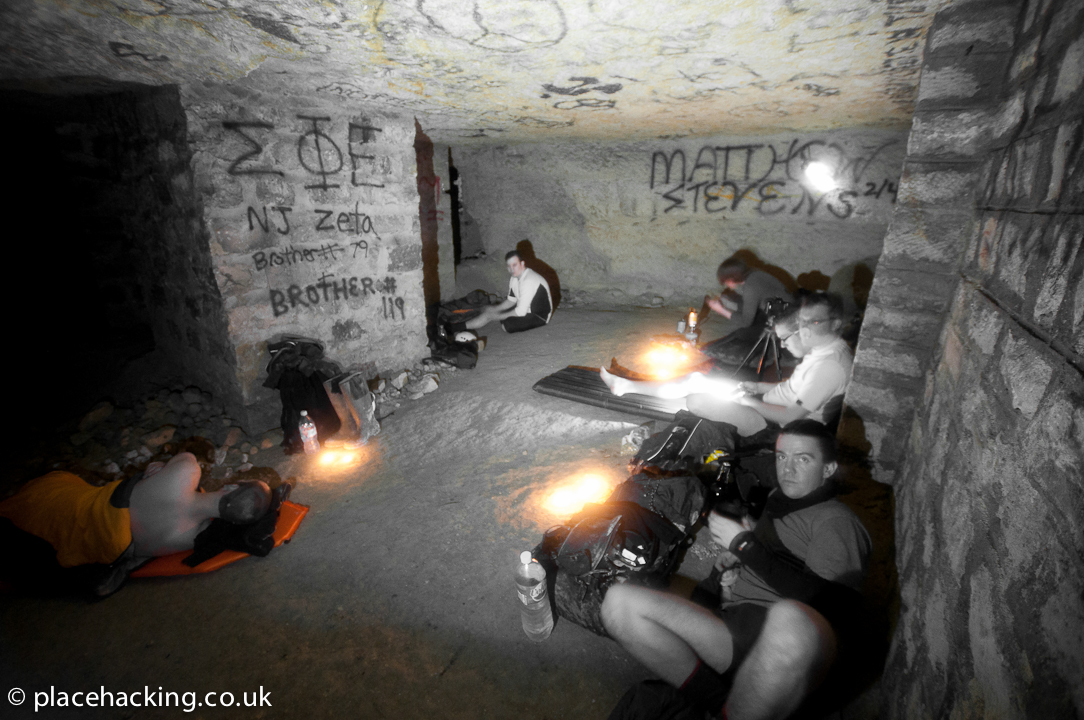
In the course of the following visual spectacle, I present two important case studies: an exploration of a derelict London Tube station paired with a live infiltration of a number of Paris Metro stations sprinkled with a sugar coated topping of French cathedral brachiation. The link between these seemingly disperate case studies in time-wastery, I will suggest, is desire.

Fragments

Of Time

Less interesting

Our desire to seek ruins is as obvious as the motivations behind the expeditions. We seek them to find pieces of what was, was is, what could have been. The failure of planning, execution and participation found in this empty station is comical and sad but not necessarily disappointing. We assure ourselves that the only thing that could make the situation more amusing would be if a train were suddenly to pass though, disrupting our notions of what we thought we barely understood. By the time we leave, we are pretty sure something happened. We can see it on our skin, taste it in our teeth, wash it out of our clothes but the experience remains so ephemeral that to speak about it is almost blasphemy. The satisfaction that comes with that feeling is almost as wonderful as the peals of laughter that ring out from our throats as we leap from the back of the speeding train into the dark tunnels, drunk on the screams of platform perambulators who are sure that we are the demons they heard about on the 10 o’clock news.

The multiplication of the third rail

The eminent anthropologist Marc Augé is disappointed with our play space. Throughout his entire book on ‘non-places’, poor Augé is a victim of one postmodern monstrosity after another, striking out at remnants of what remains with a panicked grab, decrying the end of history, implying that there is no place for us in a world of machines, of mobility, of ‘urban concentrations, movements of population, and the multiplication of what we call “non-places”, in opposition to the sociological notion of place…”. But as Alastair Bonnett writes, this ‘sociological’ notion of place is was a false consciousness imposed by bureaucratic minds ‘colonized by the language of academia’ be begin with.

Your illusion

I contend that place is what you make it and the responsibility to make space viable, vibrant and interesting, the responsibility to create places of desire is only limited by our individual and collective capacities for love and the level of our energies devoted to giving a shit. As Sartre has taught us, since we all share in the same situation, we must embrace our awesome freedoms, deliberately rejecting any (false) promise of authoritative moral determination. Freedom is not given, it is obtained. I hear Marc Explo teaches a seminar on the rooftops of Paris with beer in hand on this very topic.

7.5%

My comments are not intended to be solely derogatory. I am not suggesting that a vision of life which is guided by another person’s ideals is inauthentic. Indeed we are all, to some degree or another, remixing, reusing, embracing, contesting and disputing all that has come before. Individuals that I quote, in speech and text, have quoted others before me, a lineage stretching back as far as communicative origins. This continuum of thought and energy should be celebrated with toasts to the heavens for the graces of wisdom. We have inherited more knowledge, more beauty, more potential, than any human beings who have come before. To suggest that that knowledge and the possibilities that cause fragmentation of self awareness are disappointing is in itself disappointing. Join the party Augé, I have a bottle of Beaujolais Nouveau waiting. Make no mistake, it will be messy, it will be confusing, it will be the ruin and the construction site, Battersea Power Station and Heathrow Terminal 5. It will be the informal state of constant becoming but ‘to embrace the chaos is not to slide toward entropy but to emerge into an energy like the stars’.

Forming

Spontanous combustion

While we can all clearly see that within a capitalist system, the invitation to co-produce place often has a price or that the output of that production is expected to become commodified, we may choose to operate outside of that system. Maybe that operation requires giving up watching East Enders tonight. Maybe it requires operating at a loss. Maybe it means writing a shitty Ph.D. because you were in a sewer instead of resting up for the next wrestling match with Microsoft Word. Fuck it, people begin participating in informal modes of cultural production because they want human bonds and community to take precedence over outcome. People want becoming over being. People want the freedom of the present! ‘On the other hand, anyone trapped in the anemic and atomized everyday routine of our residential deserts might doubt that such determination could be found out there anymore. Reconnecting with such gestures, buried under years of normalized life, is the only practical means of not sinking down with the world, while we dream of an age that is equal to our passions.

Marinetti

As the Invisible Committee reminds us, the primary component of that freedom is not just enthusiasm but passion. And the passion for joy, for bonding, for shared experience and community goes beyond the specifics of the practice (read: UrbEx). The one thing ALL explorers of space share is a passion for life, ‘an exuberant and playful negation of the alienation and exclusion provoked through axiomatic consumeristic machinations.’ And here, we begin to see the contemporary critique of traditional notions of exploration in the rejection of the idea that only some can be involved or that a passion for adventure can only be satiated through grand international expeditions. Urban exploration teaches us that those stories, those adventures, are found in our backyards also – if you choose to chase them.

The Rabbit Hole

Follows no cardinals

If this sounds polemic, that’s because it is. I am tired of disappointment, resentment and critique being the only accepted modes of critical academic engagement. We do what we do because we love it. It produces nothing. It hurts no one. It endangers our lives. That is our choice and no one else’s. And in expectation of the showering critique, the next person who tells me that my happiness is subject to an economic audit can keep chewing on that corpse because my fingers are in my ears.

There's no such thing as ghosts!

Barthes writes that pleasure is continually disappointed, reduced and defeated, in favour of strong, noble values: Truth, Death, Progress, Struggle, etc. It seems that our society refuses (and ends up ignoring) bliss to such a point that it can produce only epistemologies of the law. Well if that’s the case then fuck the law. I never consented to it’s construction in the first place and I am pretty sure that democracy isn’t supposed to resemble a Mafia extortion scheme. But don’t take that as a threat, it is rather a populist invitation to playfully reinterpret what the state holds so sacred, it’s an invitation to critically and playfully engage with the humiliating notions of ‘morality’ and ‘progress’ that dehumanize, commodify and deterritorialize our places of occupation to create what Guy Debord called “an impotent utopia of pretensions and complicities.” We intend to end the humiliation of a sham democracy by resituating ‘strategic sites of power beyond the depersonalized representation of an impotent democracy and back into the multitude.’ Following Laurie Weeks’ Theory of Total Humiliation: “we don’t erect monolithic reified barriers against the humiliation; rather we welcome it, embrace it; then everyone wants to fuck us, for mysterious reasons.”

Fuck us

So that we come full circle here, what does an exploration of a derelict London Tube station paired wimh a live infiltration of a number of Paris Metro stations and some rogue climbing of outdated religious architecture have in common? The answer is desire. We desire, and take, opportunities to ‘slip into a paradoxical position between the “real “and “not-real” in that it incorporates “real” words, gestures, hopes and intentions, that are framed as “unreal” through playful context.’

_________________________

We play out of desire

Desire sprouts love

Love is like oxygen

Share
Tags : , , , , , , , , , , , , , , , , , , , , , , , , , , , , | 2 comments