Without contraries, there is no progression.
– William Blake

Everyone agrees. It’s about to explode.
The Coming Insurrection

Implosion

A lot of ink is spilled over urban exploration’s relationship to the past and I have previously written about how the anticipated transience of places, the act of bearing witness to their inevitable death, adds to our experience of exploring them in the present. These geographic imaginations of unrealized temporal iterations positively reinforce our notions of place in the world, giving us a sense of agency as we realise that in the midst of all of the endless death and decay, we live, even as we are reminded our time here is limited. This notion has guided historical attractions to ruination for centuries, stretching back to ancient Rome when Livy explored the Cloaca Maxima sewer. The nostalgic lust for derelict and crumbling spaces has never left us for as Alan Rapp writes ‘the metaphorical power of ruination is as relevant today as it was in an ostensibly more Romantic era’. Our love for things of the past, the nostalgia that Nietzsche found so crippling, is described by G.M. Trevelian who writes:

The poetry of history lies in the quasi-miraculous fact that once, on this earth, once, on this familiar spot of ground, walked other men and women, as actual as we are today, thinking their own thoughts, swayed by their own passions, but now all gone, one generation vanishing into another, gone as utterly as we ourselves shall shortly be gone…
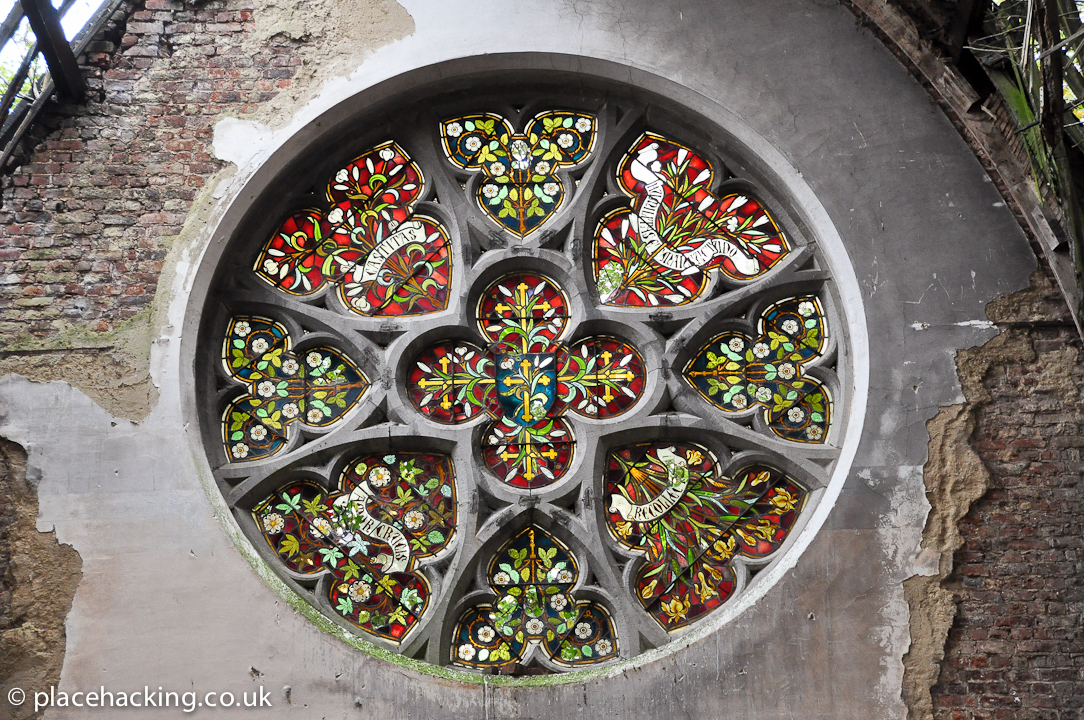
The nature of Post

Ruins, like dreams, pull us, in one direction, toward our innermost yearnings and, in another, towards a life beyond the constraints of the real; the romantic accounts of ruin exploration in the last 2000 years abound. But clearly part of our attraction to derelict space also has a darker component of an imagined ruined future that has not been written about nearly as much, a Ballardian formulation of urban apocalypse.
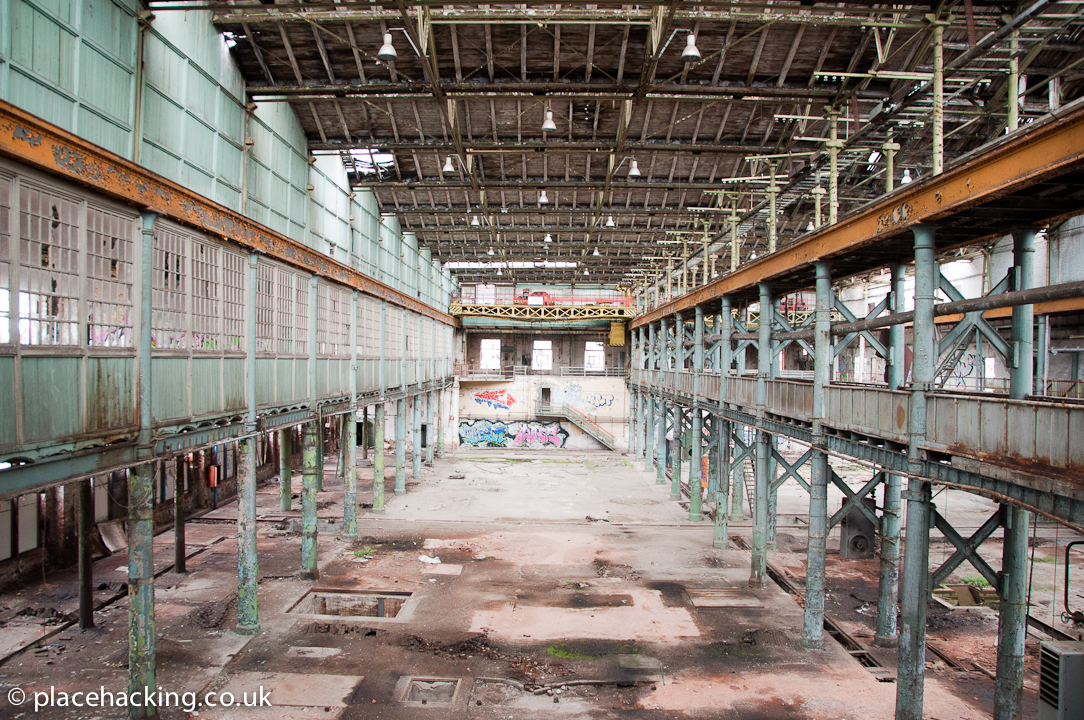
Crumble

Recently, Paul Dobraszczyk wrote a wonderful paper in the journal City where he describes his trip the to exploded nuclear reactor at Chernobyl which ‘incorporated elements of both dark tourism and urban exploration’ as he searched for what Susan Sontag referred to confrontations with ‘inconceivable terror’. Just a few years previous, Tom Vanderbilt penned the book Survival City in which he explores the ruins of atomic America and in the new book Ruins of Modernity (my review in Environment and Planning D: Society and Space forthcoming), Jonathan Veitch tours the Nevada Atomic Test Site where he finds not the expected response of melancholy or nostalgia upon entering the ruins but Baudelaire’s Satanic laughter, a terror that is so visceral the only possible response humour, as if the emotions have been short-wired by the horror.
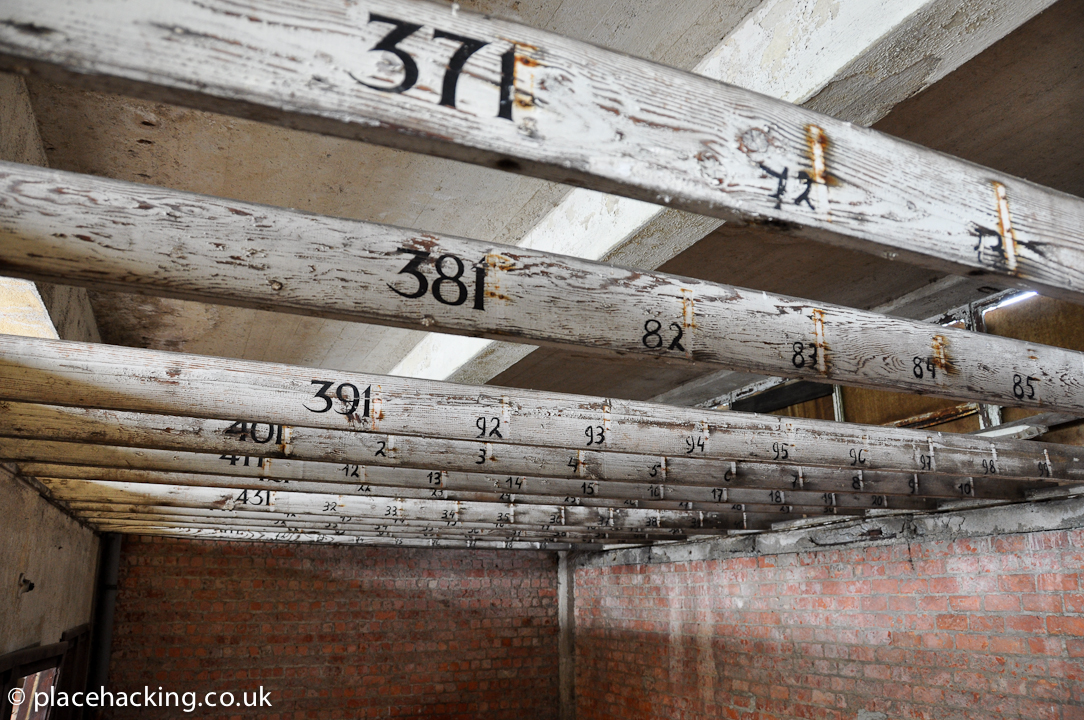
People as numbers

And so we come to the thesis. Part of the reason we enjoy exploring decaying architecture is rooted in an imagination of a post-apocalyptic future. These places are viscerally enticing in their wretchedness, in part, because imagining ourselves in a future where we populate them during imagined use-lives filled with heroism and adventure is so improbable that it forces one to meditate on the surreal nature of the past that had led us to this most improbable junction in time. Writing of Pripyat, one contributor to the new book Beauty in Decay which represents these sites with burning gothic intensity notes the Pripyat “continues to whisper of a ‘post-human’ earth which, in the end, may be the strongest fascination of them all.”

More than human?

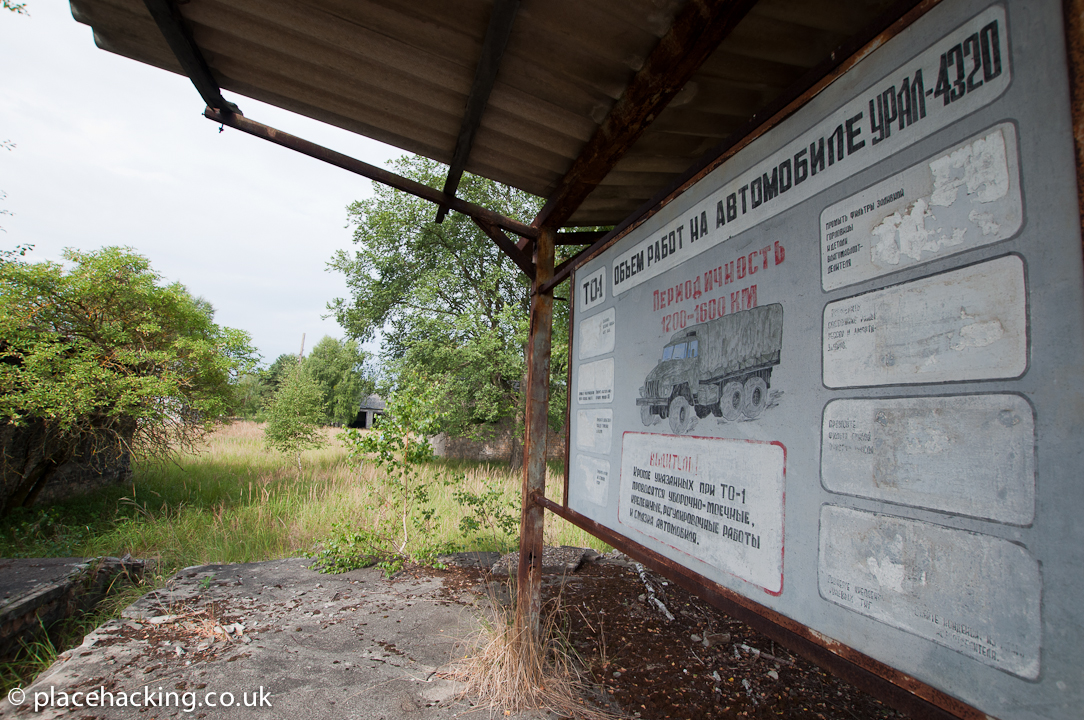
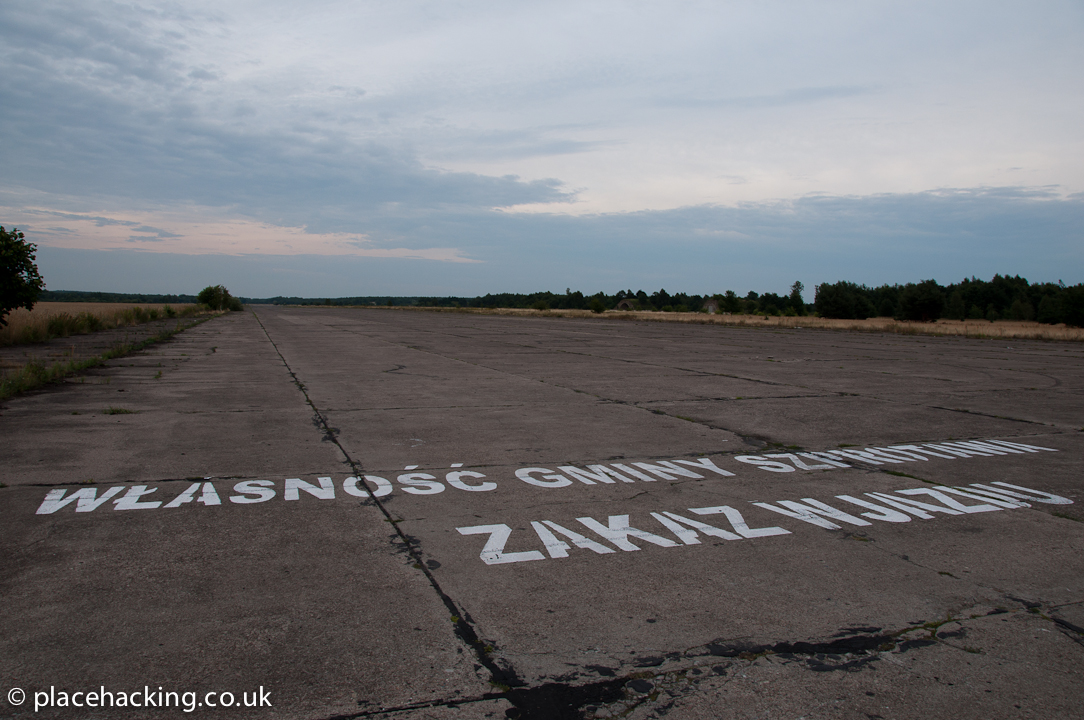
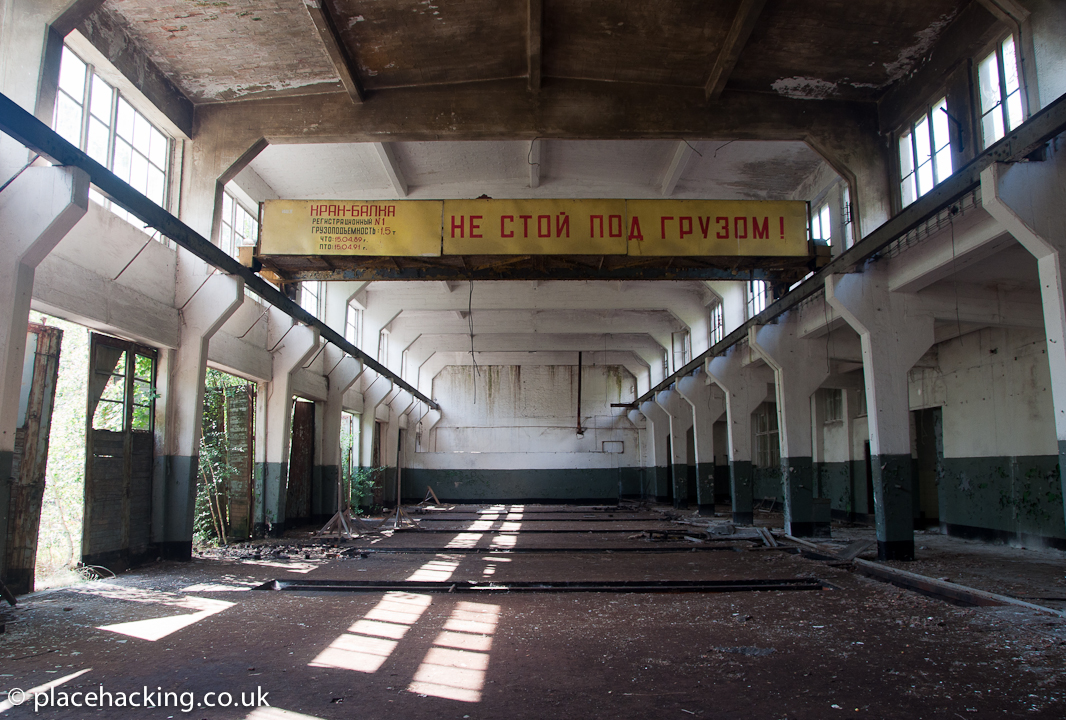
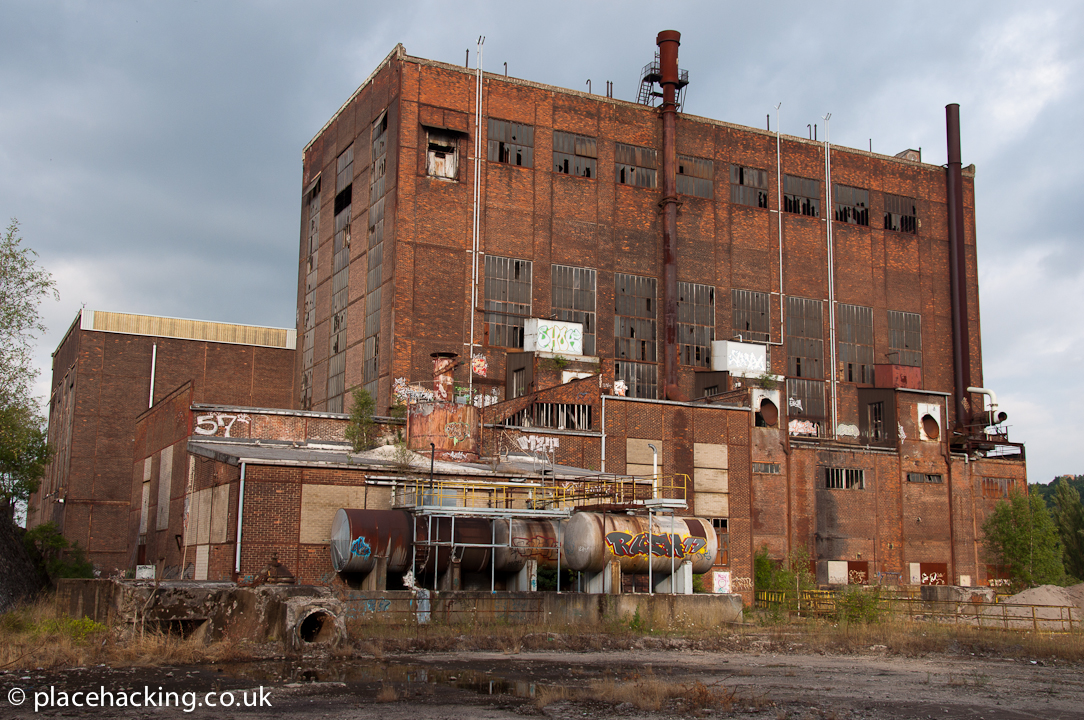
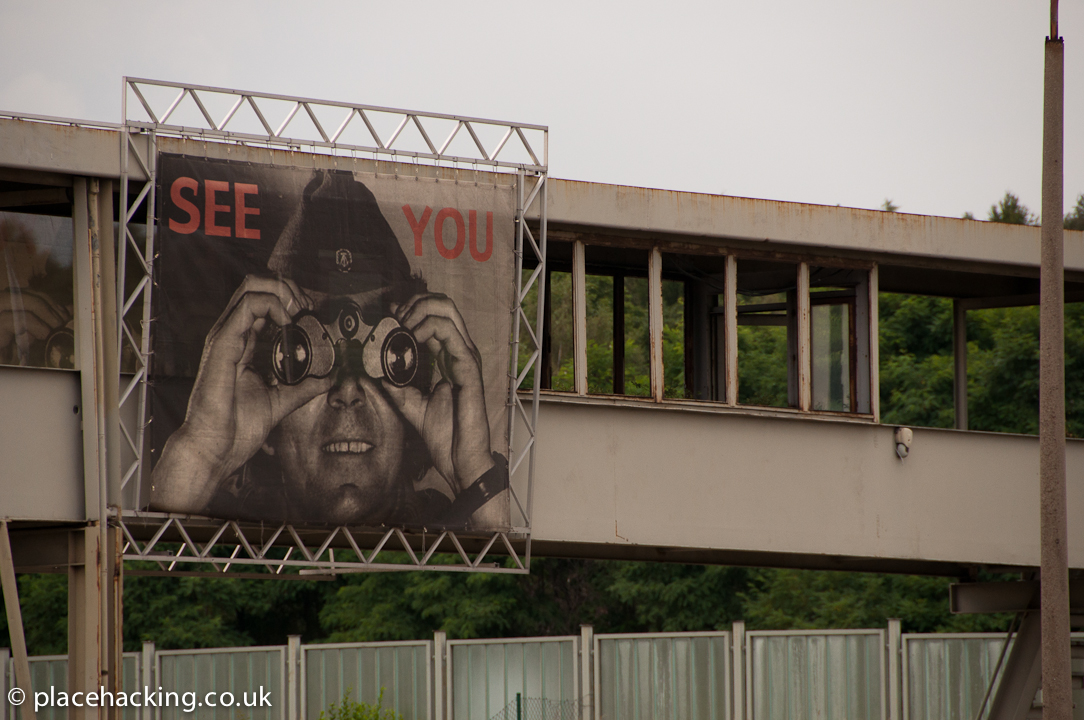
In our explorations of the ruins of Eastern Europe this past summer, we all took guilty pleasure in witnessing the remains of the failed Soviet Union and Nazi Germany, reacting, at times, absurdly to it. The experience left us in a distinctly different state than ruin exploration in the United Kingdom, the reverence for actual state failure (rather than imagined post-capitalist or “site-specific” failure) making our explorations both more poignant and more guilt-ridden.
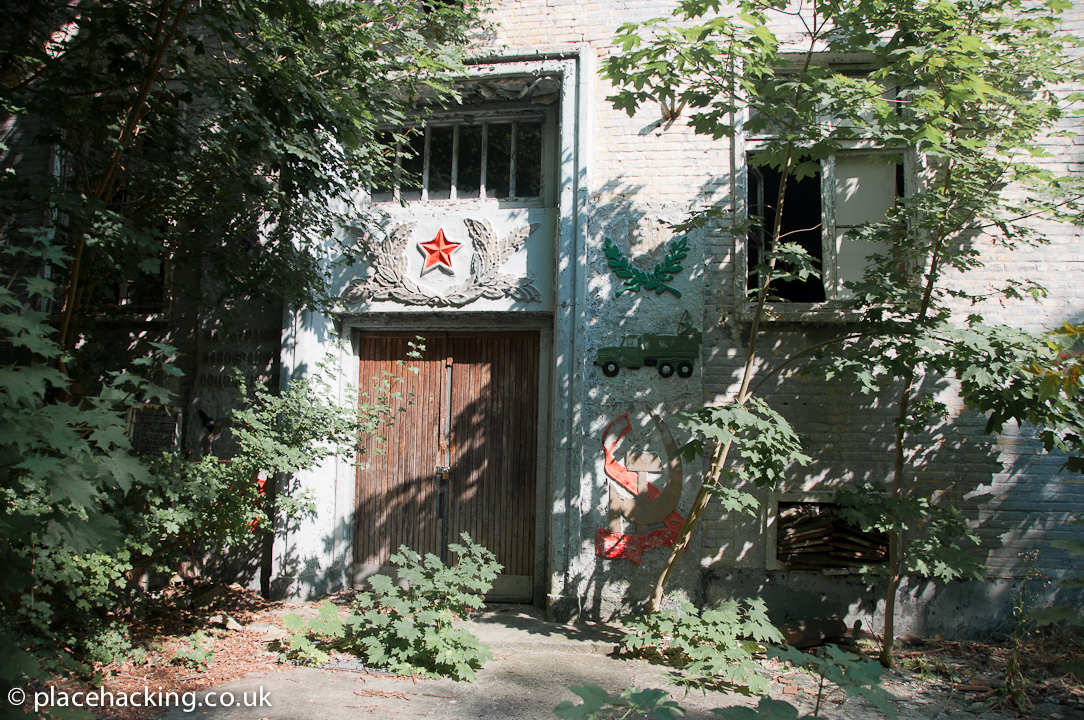
Our former 'enemies'

Invoked
By a history
Never witnessed
But felt

If, as Dylan Trigg writes in The Aesthetics of Decay, a derelict factory testifies to a failed past but also reminds us that the future may end in ruin, what does the ruin of a failed state say to us?

Get on, I guess

Henry James writes in Italian Hours that “to delight in the aspect of the sentient ruin might appear a heartless pastime, and the pleasure, I confess, shows a note of perversity”. This perversity takes on a different form as you leave “home”, the nostalgia wears a dark mask of exotic fetishism that beckons the days of Empire even as we participate in the beginnings of the failure of capitalism and the nation state at home. Of course, these expeditions are markedly less decadent than those of ages past but even speaking English marks us as a potentially dark and exploitative party even as we seek to avoid being “tourists” by following Steve Pile’s advice that in order to get at some of the real (really operative) processes in city life, attention should be paid to those things that appear marginal, or discarded, or lost, or that have disappeared or are in the process of disappearance.
A rapidly depleting resource

A year ago, we took a trip out to the Mojave Desert in California for a friend’s bachelor party. Our intention was to explore the Calico Mines under the ghost town. Which we did, finding all sort of mysterious chambers, boxes of dynamite, uninvited spectres and endless subterranean playgrounds. But always in the back of our minds, there was a fantasy playing out of someday taking refuge here. Whether that was from drought, famine, nuclear attack or a zombie infestation was never articulated but we all knew it was implied. We were collecting derelict site locations as a post-apocalypse insurance policy. As Susan Buck-Morss wrote in The Dialectics of Seeing, throughout Benjamin’s Arcades Project, the image of the “ruin”, is emblematic not only of the transitoriness and fragility of capitalist culture, but also its destructiveness. Our imaginations were all bolstered by the thought we were seeing ghosts from a future yet to come.

Indeed, as Hell and Schönle write in Ruins of Modernity, ruin exploration can involve “reflections about history: about the nature of the event, the meaning of the past for the present, that nature of history itself as eternal cycle, progress, apocalypse, or murderous dialectic process.” These inevitable intersections took grip firmly as we were leaving the mines. On the way out, we were confronted by survivalists from a militia who had dug into the caves to create desert shelters and were patrolling their territory in a weaponised 4×4 buggy. The father was clearly ex-military, barking orders at his kid to “get on the gun, son” for a photo op. As they sped away, they yelled back at us that the government was collapsing and we would do best to prepare to defend some territory, a new tribalism, they insisted, was on its way.

Apocalypse

These post-apocalyptic imaginaries are evident all over popular culture, from films like Mad Max28 Days Later12 Monkeys or Blade Runner, in books like After London, The World Made by HandThe RoadThe Stand, or The Plague and even in video games like Bioshock and Silent Hill. In all of these depictions, though the future may be bleak and dytopic, there is some underlying euphoria behind the freedom that comes with being released from the state, social life and cultural expectation that has an obvious relationship to the off-the-grid spaces that urban explorers go into. I have to wonder though, as we run into more and more people living this way now (primarily squatters and unsanctioned parties) rather than imagining to live this way in some distant future, what it takes to drive one off the grid like the Dad and son I met in the desert.
Hiding place

For thousands
Of disaffected

It seems to me that the imaginations of these distopic futures become increasingly realistic as our faith in the state to take care of us is eroded; as we see the world collapsing around us politically, environmentally and socially. Now that may be obvious. What isn’t obvious, what no one wants to say, is that we like the idea to some extent. In some part of all of us, we want the society of the spectacle to implode, to see how we would fare in a world not regulated by health and safety, to see what we might achieve when confronted with the most basic challenges of finding food, water and shelter.

Contamination

I argue that the interest in post-apocalyptic futures in nothing less than an interest in trying to get back to what we have lost in late capitalism, a sense of place, a sense of community, a sense of self. And although urban exploration passes through places rather than staking them out in any permanent way, urban exploration as a movement is a vital bridge, a gateway, because it finally makes to move from the imagined to the physical. When we explore, we take a step off the grid. It is only one more step to stay off it.
Always almost on the brink

Share
Tags : , , , , , , , , , , , , , , , , , , , , , , , , , , , , , , , , , , , , , , , , , , , , , , , | 9 comments

The opportunity to forge a personal, exclusive, and self-defined relationship with the city comes first in rejecting implicit assumptions and explicit regulations about sanctioned space. –Alan Rapp

Team takeover

Dr. Anja Kanngieser completed her PhD, Performative Encounters, Transformative Worlds: Creative Experiments as Radical Politics, Germany 2000-2006 at the University of Melbourne in 2009. I met Anja at the ESRC funded Experimenting with Geography workshop organized by Michael Gallagher and Jonathan Prior at the University of Edinburgh where we spoke about creativity, politics and rights to the city. Her ideas (and key reading lists) about the politics of space and the relationship between urban exploration and squatting have seeped their way into my work over the past year, inspiring me to invite her do a short interview for Place Hacking.

Probe

Anja, in addition to her current research projects, is also a collaborator with Dissident Island Radio, the shows of which are podcast live from London every first and third Friday of the month at 9pm and can be found at www.dissidentisland.org. The audio responses in answer to some of the following questions come from a recent conversation between Anja and Leila in response to my request for an interview. Leila, like Anja, collaborates with Dissident Island and is well versed in matters of squatting and political spaces.

Around

BLG: Anja, your work on political movements has seemed to centre on the idea of capitalism as crisis. Urban exploration, in its most basic form, seeks to explore the remains of failed capital projects, leading some explorers to celebrate the financial crisis as it ‘opens’ spaces to alternative (i.e. non-commercial) uses. Do you see the current financial crisis as an opportunity in any way?

AK: Firstly, I’m not sure I would describe the current state of capitalism as crisis, I think that using a discourse of crisis suggests a very event-based ontology, that is to say it doesn’t really address the everyday processual and structural elements of capitalism that mark out capitalism itself as a system contingent on dysfunction and reproduction. To say that now capitalism is in crisis is to infer that before it was somehow functional and can be functional again. What I like about the idea of dysfunctionality is that it allows for the view that there are chances to intervene. At the same time we should be aware of the ambivalences in that these interventions – they can also be appropriated and absorbed into this dysfunctionality.  I think that these chances have always existed and will always exist. And more so I think that people can be quite good at taking opportunities, when they feel that they can or feel that they must.

This is also why I think to speak of capitalism as failed is misleading. If we acknowledge that capitalism is contingent on breaks and discordances, if we acknowledge these ambivalences that both close and open conditions for new possibilities at the same time, we can see how even abandoned buildings can serve the purposes of capital. Just because they are empty does not mean they are without value to venture capitalists. I think we need to see how capital extracts value from things we might think are derelict or destitute. It’s true that the current financial crisis has meant in some senses a crisis in the property speculation market, which means that at the moment there are vacant properties. This is, of course, something that urban explorers can take advantage of. But it’s also imperative to recognise that even before the crisis there were empty buildings, and that there were buildings that housed non-commercial initiatives. If we are aware how capitalism compels affects, how it generates desires and fears, anxieties about scarcity and ideologies of risk and accumulation, then we can see that whatever ‘stage’ capitalism may be in we can find sites for making alternatives. We shouldn’t wait for a cry that capitalism is dead.

Inspection

To speak of the crisis as opportunity is also to speak of the detritus that opportunism is predicated upon. It is to speak about the process by which a building is made empty, in the US for instance the houses foreclosed by the banks [1]. In each case somebody left that space, possibly not by their own volition. In each space there are echoes and resonances of what has come before, and these need to be realised every time we enter these unoccupied homes. The crisis can both antagonise and paralyse action. Maybe it’s a matter of differentiating between opportunity and opportunism, and thinking about how we can utilise the spaces we re-inhabit to create new communities of care with some kind of ethico-political consciousness around what is happening. Finding a way to build links with people local to those empty places, and beginning conversations and relations with them to engender new common geographies. In this way we can open spaces for different ways of being.

Anja and Leila on capitalism

Sleepover

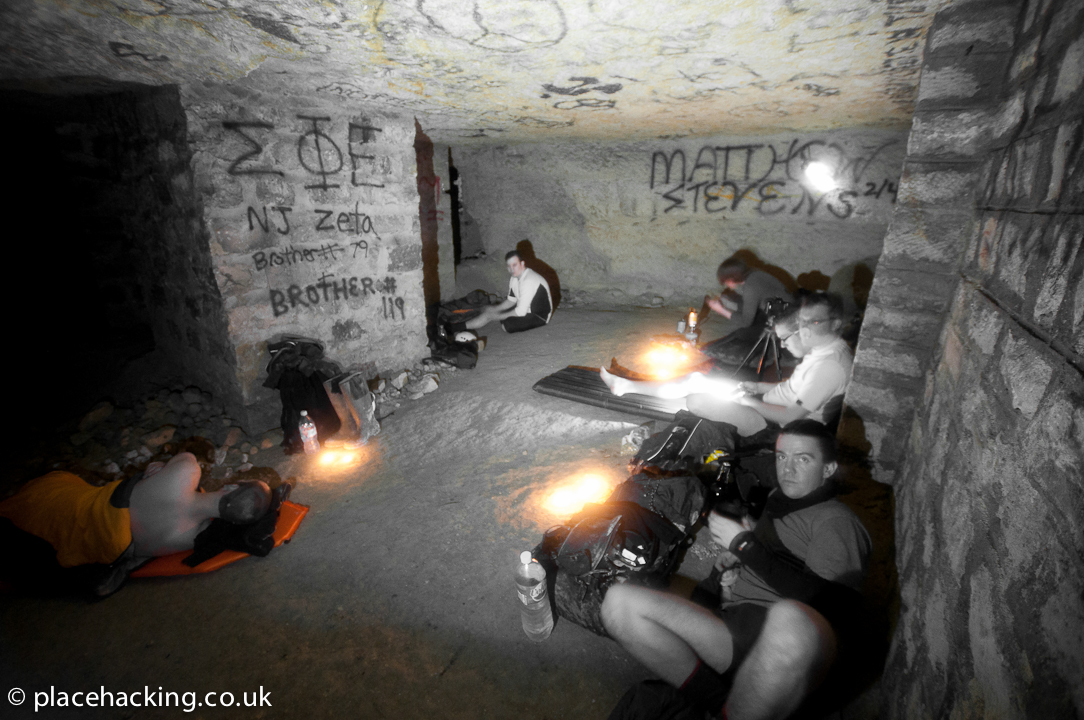
BLG: One of the things you advocate for is squatting in abandoned structures. I have taken a few trips around Europe with my project participants where we have slept in ruins and a number of urban explorers are now considering squatting as a viable option. Do you think that urban exploration, or squatting, could be an avenue toward a different relationship with the city?

Anja and Leila on squatting

Suspicious

BLG: Most urban explorers subscribe to a code of ethics that includes finding creative ways into buildings so as not to break into them, avoiding any possibility of prosecution (not to mention bad press). Do you see this as a crafty way of working around the law or a failure to confront laws we never agreed to in the first instance?

Anja and Leila on the urban exploration code of ethics

AK: Firstly, I’m not sure I entirely understand a code of ethics like this in the sense that it functions as a law (unwritten perhaps but a law or instruction nonetheless) dictating how people should behave, much in the same way that state governance does. I understand what function such a code may serve in terms of subverting or skating around the edges of the law, but I don’t entirely understand why one would wish to ascribe to a law that is symptomatic of a system that urban explorers seem to be trying to provoke or wrest themselves from. Maybe I have misunderstood what urban explorers are seeking but at any rate a desire to freely engage with space, to enter places that are closed to the public, to cross fences and borders despite explicit instructions not to, to go down into subterranean features and into forbidden territories, is a desire for self-determination and a desire to live without an imposed authority. It’s a desire for radical forms of play and fun, for excitement. What seems to delineate urban exploration from squatting in urban exploration discourse is this strangely complicit/subversive relationship to the law. But squatting is not illegal. Oftentimes squatters don’t even need to break into buildings, as Leila points out in the audio response, spaces are left open. So I’m not sure why a code of ethics like this is seen as a way that urban explorers are differentiated from squatters in terms of good or bad press.

Secondly, to me the idea that by not breaking into something you are preserving a kind of legal and spatial sanctity or integrity is also curious. I don’t know how deeply the idea of authentic spaces is ingrained in praxes of urban exploration, but from the moment you step over the threshold something is disturbed. This already assumes that the space itself is in a vacuum, that it hasn’t changed since it was last inhabited. The effects of degradation and wear, the kinds of ecologies that empty spaces breed means that a space is always in the process of changing. The re-intervention of humans into this space contributes to this, necessarily. At the same time I can see the romance and nostalgia in entering a space with the idea that you can come and go without leaving a trace, to document your adventure and then leave. Just as much as I can see how one might justify that if you don’t actively break in somewhere, it’s by inference not breaking the law. Maybe it could be less about seeing it dialectically and more about playing in the grey zones. Seeing the lines of desire and imagination, what they are for, and why they are there, as well as the processes of action they give rise to, rather than using the vocabularies of the state or of authenticity.

Anja and Leila – beyond UrbEx?

Getting out

BLG: Much of your research has used the framework of Gilles Deleuze and Felix Guattari. What do you think that duo can teach us in terms of urban exploration as a critical spatial practice?

AK: For me the work of Deleuze and Guattari is most interesting for their attention to desire as a constitutive force. I find them useful for thinking about how we are in the process of becoming subjects, how we relate to, produce and are produced by, ourselves, others, and the systems and institutions we are constellated within. Especially in terms of capitalism, heteronormativity, class, race and gender. With Guattari especially we find a lot to do with transversality, that is to say a multidirectional movement between institutions, bodies, organisations, state-craft etc over many levels. Where this is relevant for urban exploration is to see how desires and transversality can affect space and vice versa – how our relations to space are influenced by complex entanglements that are political, economic, social and cultural in nature. Rather than seeing space as inert and a-political this means we have to see space as processual and dynamic.

Getting up

What also resonates with me is their take on failure, and how failure is never only a shutting down but an opening up to something else. Guattari talks about this with respect to Sartre, and how in the experimental leaps that Sartre takes there is a thrilling beauty even when he falls flat. Perhaps precisely because he takes those risks, and does miss. This conception of experimentation and failure is something quite important to any kind of exploration, when there is a high element of process, what I mean to say with that is when the process of undertaking the action is in many ways just as or more significant that the final outcomes.

Cameo

BLG: Finally, building on the work we began together at the Experimenting with Geography workshop and your work with experiments in sound and radio, how do you think that the spaces that urban explorers frequent could be experienced in different ways using different audio techniques?

AK: There has been some amazing sound work done on abandoned places and sites, especially within areas like acoustic ecology, which invest a great deal of energy and technologies into field recording. For me Louise K. Wilson’s recordings of the centrifuge at the secret military testing site Orford Ness in Suffolk stand out as really evoking a sense of place in a quite affective way. I very much appreciate the translation of space and atmosphere into sound when it articulates those echoes and reverberations of what was once there, but has now passed. Such audio translations can be utterly compelling in a way that I often find visuals aren’t. They can also speak to the politics of spaces and can express both subjective and meta critiques and affirmations of a particular place and its history, without reliance on linguistic and ideological discourses.

What I’ve found intriguing for awhile is EVP, Electronic Voice Phenomenon, where people put recording devices into empty places to capture sounds of the deceased. They then interpret the sounds they record into speech, slowing down, speeding up, distorting the acoustics to find the words the ‘voices’ shape. EVP arose from a belief that the spirits of the dead are attracted to electrical devices and can communicate via telephones and radio frequencies. Most of the time this was the result of crossed wires or AM transmissions but nonetheless I like the imaginaries it gave rise to. It reminds me of the Philip. K. Dick book in which people can be caught in a state between life and death, in stasis housed in coffins, talking to their loved ones through a telephone-like apparatus, and as they expire over time their voice grows less and less audible at the other end of the line. I like the peculiar understanding or lack of understanding of ephemera like radio waves that gives you a sense of mystery and fascination with natural phenomena that are in many ways quite archaic. There are still people constantly developing specialised devices said to be able to catch these voices, so it shows the intensity with which some people engage with EVP. So this could be another way to experience histories, memories and imaginaries of ruins and derelict sites.

Dr. Anja Kanngieser run the blog Transversal Geographies.

Real

Share
Tags : , , , , , , , , , , , , , , , , , , , , , , , , , , , , , | 3 comments