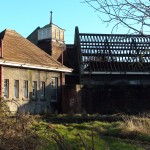
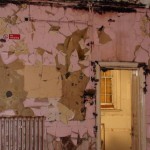
Everyday you look on the forums, there seems to be some ‘breaking’ news about one of the derelict asylums around London being damaged or demolished. London UrbExers love these asylums for their unique histories, aesthetics and affectual qualities and often on weekends you can find dozens of groups roaming their corridors. But with the (almost complete) destruction of Cane Hill, perhaps the most famous of these asylums, I began thinking about what happens when these places disappear. I also began thinking, naturally, about how the anticipated transience of a place affects our experiences while in them.

Anticipated transience is a term I heard used by geographer Dr. Caitlin Desilvey at the Royal Geographic Society / Institute of British Geographers conference last week. As soon as she said the words, they stuck in my mind and got the gears turning about experiencing ruins as braided strands of past, present and future. I could make a case for these thoughts by discussing my visit yesterday to the West Park asylum with Marc.

West Park Courtyard

Working linearly through these three concepts, we can first imagine that we go to ruins to read their histories. Sometimes this is actually literal. Yesterday is West Park, I found countless ledgers, notepads, pamphlets and newspapers.
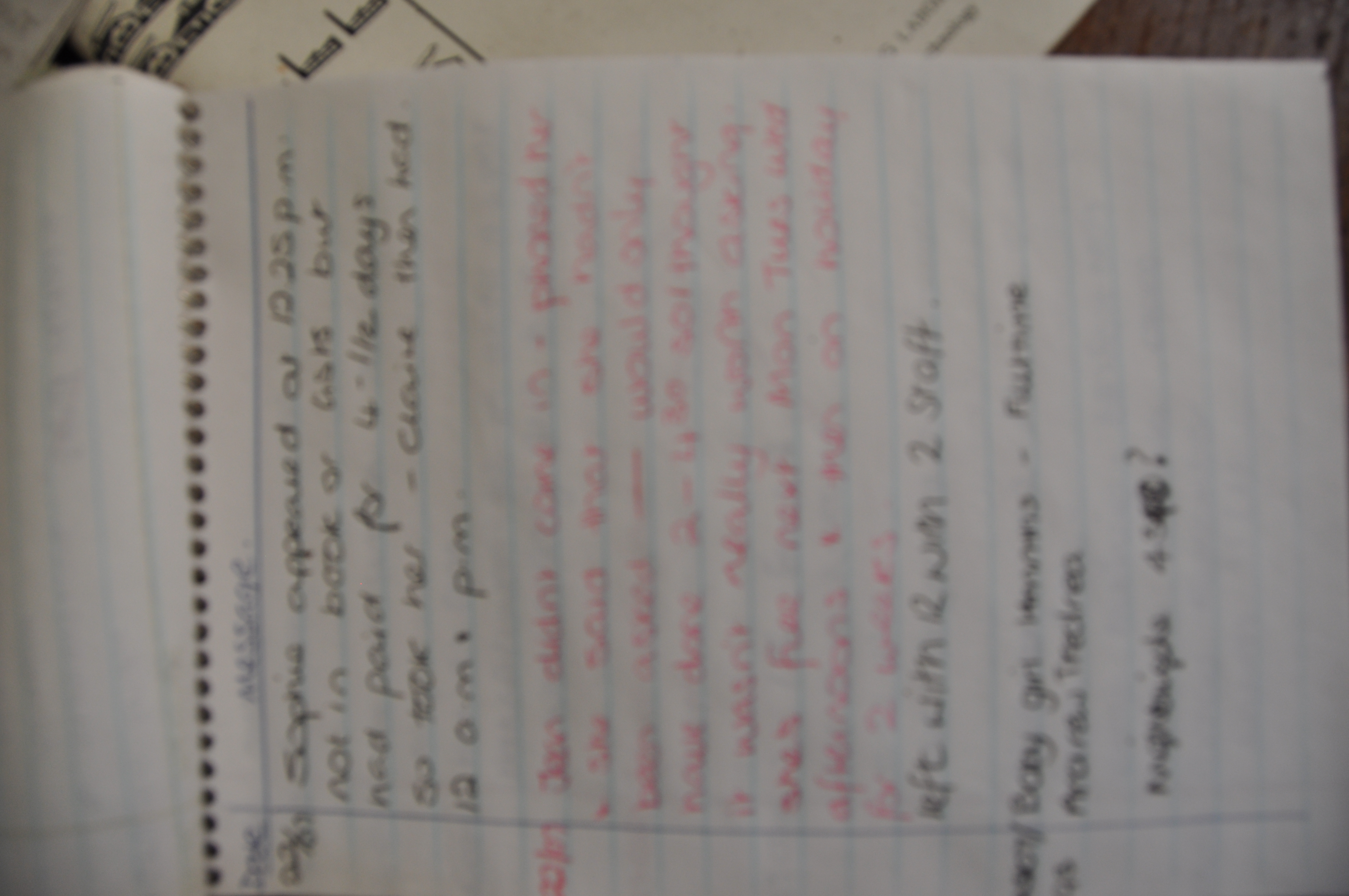
A shitty picture of handwritten notes

Images of bodies are conjured up often in ruins, particularly by people’s jettisoned clothing and empty chairs which held bodies, but these other artefacts reveal that these ghosts also had minds. Notepads with logs of playtime activities in the child ward remind us that this was a work space/place for some and of childhood memories for others. Do these people still live? Do they think of this place? Is it full of their childhood memories, inscribed in the walls, peeling off with the puke-coloured yellow wallpaper? Would these artefacts that I am photographing be important to them, do these objects contain love or demons?

Love?

Demons?

So these histories, fair enough, are enticing, but what about the present? Here we might begin to think about our experience, not in contrast with, but interwoven with these residual emotions and fleeting memories. We go to these places to read the inscriptions, to have bodily encounters which challenge our conception of everyday experience and to eventually begin writing ourselves into the landscape by photographing it / photographing ourselves in it. But we can also imagine the tendrils of emotion that we leave behind, the shared moments of fear and excitement that are left floating in the corners like smoke in a still room.
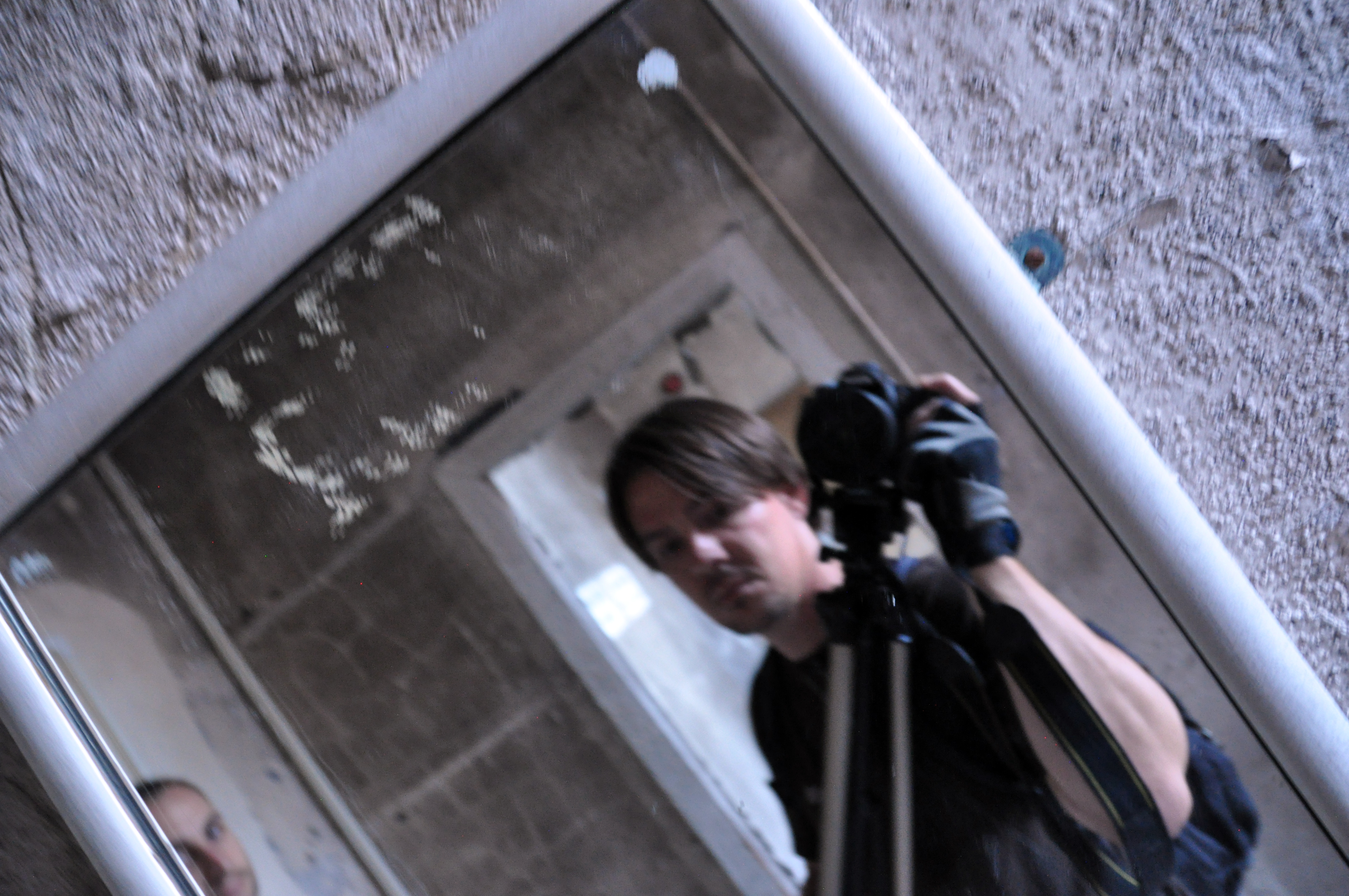
Writing ourselves into local history?

At some point we arrive at door of the future, and this is where I really get fired up about these new ideas. Part of our enjoyment of these places is clearly because of their ephemeral qualities – every time we go back to an asylum, it is different. Some explorer moved an old typewriter a meter to get better lighting on it, some chav tagged the place up, a group of kids had a party here., security put up a new board, a fox dragged the outside in. At the same time, the surrounding foliage is doing its slow work, with ivy creeping though the windows, mould taking down the walls, trees pushing through the floorboards, rain slowly picking at the roof tiles, encouraging the mould like a cheering fan in the stadium, “Yes, it screams, we can have this back too! Quick, they are not looking!” Our excitement registers when we see these changes because of our imagination of the future, because of the anticipated transience of these places. It gives us an image our ourselves written into this decaying future, our footprints in the dust.

And this, I would argue, is exactly what is missing from interpreted historic spaces or managed heritage sites – we cannot anticipate their transience because their material and memorial trajectory is regulated. We cannot see ourselves written into their futures because we are not ‘allowed’ to write ourselves into them. This is a point that heritage managers would be remiss to ignore.

But Marc was quick to reveal yet another aspect of these possible futures; that it is not just decaying places with are in a state of exciting anticipated transience. Infiltration of live sites such as construction sites also reveal potential futures, ones that we can imagine but may be difficult to see.

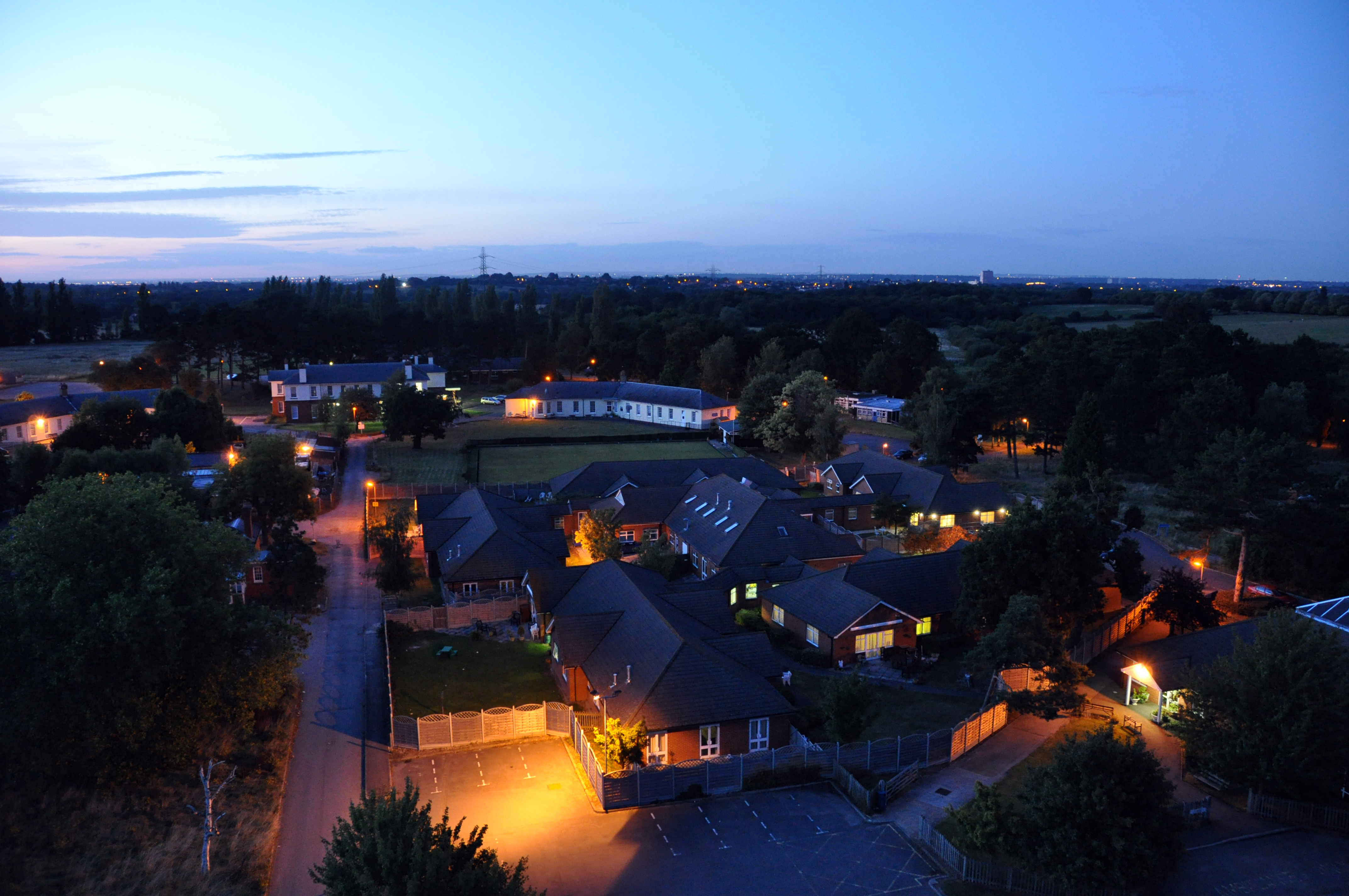
With rumours swirling about the imminent death of the West Park asylum, reinforced by the loss of Cane Hill, I thought about the fact that yesterday might be my first and last visit to West Park. Although it was bittersweet, I have to say that the awareness heightened my experience, creating an impetus for appreciation that may not otherwise have been as sharp. Maybe this is the point (conscious or unconscious) of these sorts of rumours – to heighten our experiences of exploration.
A premature goodbye?


Share
Tags : , , , , , , , , , , , , , , , , , , , , , | 5 comments

Overt Camouflage

Posted by Bradley L. Garrett on Friday Mar 13, 2009 Under Urban Exploration, Visual Ethnography

Yesterday, I was invited by LutEx and Hydra to explore some World War II air raid shelters near London. The experience of being in shelters invoked a lot of new feelings for me, being American and never knowing what it would feel like to have your city bombed. Although we have many cold war shelters throughout the United States, these shelters were a precautionary measure, likely never to be used.

The shelters we went to yesterday, on the other hand, were inhabited by people who had left simple, isolated artifacts in these generally empty shelters, small reminders of the hidden history of this spectacularized city. A can of something evaporated, stone benches lining the walls, a few pots and pans, now surrounded by newly forming stalactites and stalagmites of minerals dripping in from the rainy city above.

Most interesting for me was Lutex’s technique for entering the shelters though manholes in the middle of the street, which he called overt camouflage. The idea basically is that is you look like you belong there, people will assume you do. I have seen similar techniques used by street artists that a fellow student at Royal Holloway, Luke Dickens, has been studying.

Lutex mystified me with his calm, organized and rational approach to the concept. He pulled his car up to the curb, coned off the area, adorned himself with a high visibility vest and proceeded to tape of the cones to keep pedestrians out and give the site the look of a public project. He then produced two keys which we fit into the manhole, lifted it up and voila! 60 years of history is ours to experience.

I am interested in other ways overt camouflage could be used but also had another thought about this idea. Basically, this only works if you have the appearance of someone who ‘belongs’ there. This means that people with body jewellery, tattoos, even dreadlocks would become more suspect immediately.

Which leads me to suggest that the real revolutionaries may not be the kids with purple mohawks, but the people who look quite normal but work to resist the complacency of modernity in their thoughts, word and actions in very subtle ways.

Here is the video from the explore (a little present for LutEx and Hydra):

Share
Tags : , , , , , , , , | Comments Off on Overt Camouflage

West Park and St. Ebba's

Posted by Bradley L. Garrett on Monday Jan 19, 2009 Under Archaeology, Cultural Geography, Film, Urban Exploration, Visual Ethnography

Yesterday I went for an explore with four from London. Our destination was the West Park Asylum, part of a ring of asylums around London which were at one time run by the NHS (National Health System I think). Apparently Margaret Thatcher decided these places were better off either

1. Shut down or

2. Privatized

As a result, many of the workers and patients walked away from these places leaving everything in perfect order, just as it was when the asylum was up and running. What happened next, some of the explores tell me, many of these places are not seen as worth preserving because either

1. They are two ‘new’ to be of historic value or

2. The land is simply needed for something else on this little island

Because of this, the explorers take it upon themselves to record this history, and the slow decay of these places with their cameras. Despite this, many are seen as criminals, ‘trespassing’ on this recently privatized land.

When we arrived at West Park, we quietly walked in over a broken fence, and walked around the bushes keeping an eye out for the single security guard that patrols the area. Not seeing him, we proceeded to slip into the service shaft under the building. Unfortunately, our man magically appears after only one of the four of us get in and we are escorted out.

On to plan B. We headed over the St. Ebba’s and strangely, given what had just taken place, parked in the parking lot and walked in. Although part of this hospital is still ‘live’ (meaning patients still roam the grounds) they did not seem to mind, nor did the nurses who probably had personal histories in the derelict buildings on the property and were quite aware that we were going in the archive them, in a sense.

Turns out, it was a good thing we arrived when we did because demolition has begun and half of this beautiful derelict hospital in now gone.

On to the next explore…

Share
Tags : , , , , , , , , , , | 2 comments

Urban Exploration Research

Posted by Bradley L. Garrett on Monday Nov 24, 2008 Under Anthropology, Archaeology, Cultural Geography, Film

Well, I have officially started pulling together my research for my first enthnographic interviews. I am trying to arrange to go film groups of urban explorers and infiltrators in London.

Unfortunately, this has been more difficult than I planned. Turns out that people who are trespassing as a hobby don’t really want to be filmed and/or interviewed. Makes life a little more difficult, but it is all good data on the practicality of doing ethnography and the difficulties of using video for research.

As of now, I am trying to post of 4 different Urban Exploration facebook groups, on a website called UER (where people were incredibly rude/incredulous/suspicious), on urbexforums and on 28 Days Later, all of which require months as a member before you are ‘trusted’ (which I guess means I have to prove I am not ‘the man’).

So much for jumping right into my research – I guess its back to reading Lefevre.

Share
Tags : , , , , , , , | Comments Off on Urban Exploration Research