I am a proponent of the idea that everything we do as academics should be public. Therefore, this post is both the text and video from my PhD research proposal defense on urban exploration. As with all research, it is a work in progress and I hope to refine it over the next 2 years!
I hope you enjoy it, please feel free to email me or comment on the blog with any comments, questions or hate letters.
__________________________________________________________________________
Heritage Infiltration: Quests to Find Myth, Mystery and Meaning through Urban Exploration
Bradley L. Garrett
Introduction to Topic
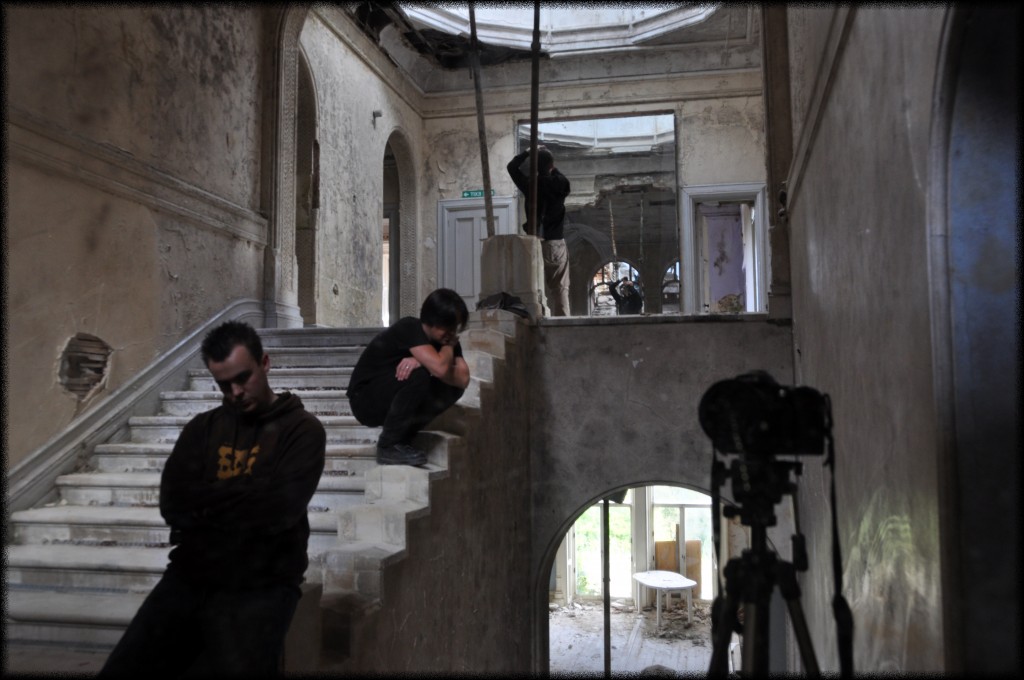
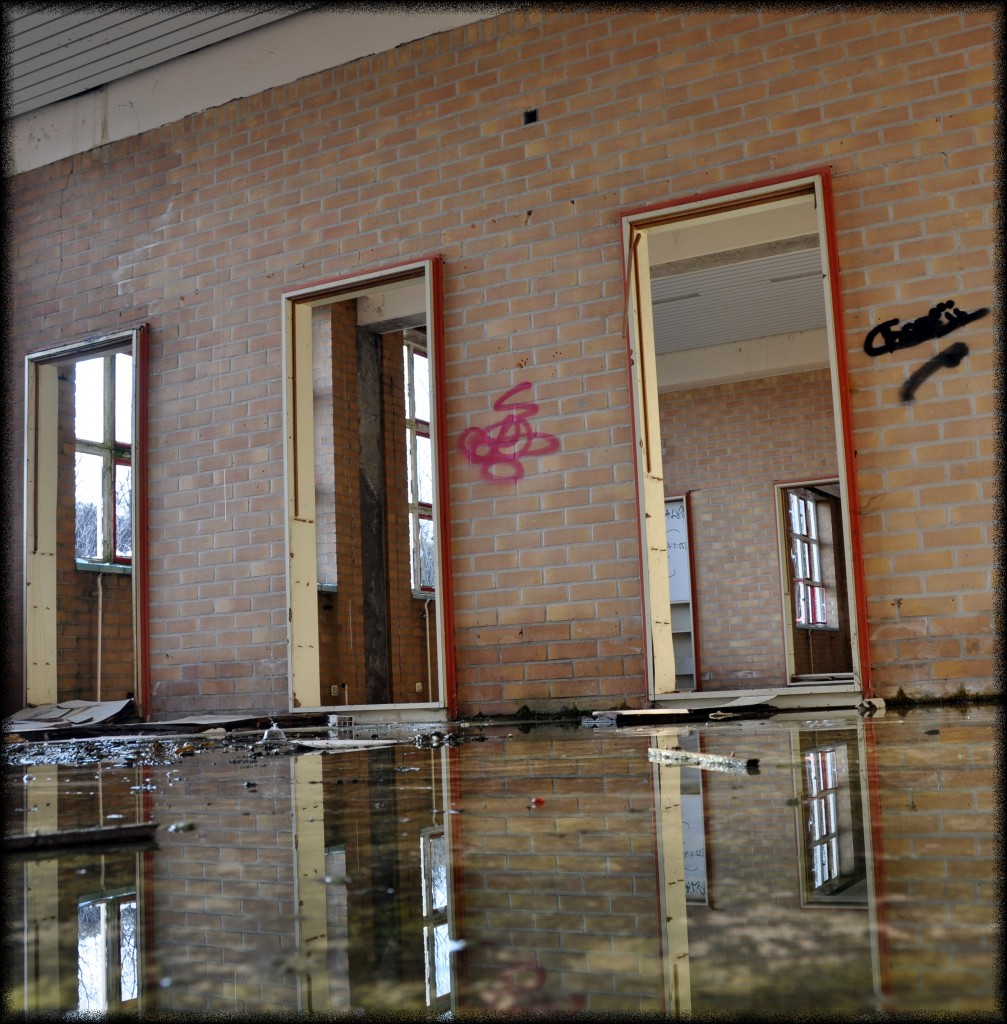
The term urban exploration conjures up a multifaceted set of interlaced images and ideas. I expect that each person reading this will have a slightly different idea of what exactly those words mean. Perhaps they even makes you cringe But for one group, individuals who call themselves urban explorers, UrbExers or simply UErs, the phrase is unabashedly precise. Urban exploration is an “interior tourism that allows the curious-minded to discover a world of behind-the-scenes sights” (Ninjalicious 2005). In my own words, I might describe the urban exploration “scene” as a transnational enthusiasm focused on exploring and recording liminal zones and derelict places, rooted in an interest for the past and a passion for the photography of the forgotten.
I will spend the next three years getting to know urban explorers, embedding myself in their practice and hopefully becoming an UrbExer myself. Although I must admit that despite the seductiveness of my participant’s definition of their practice, I have misgivings about calling myself, or them, urban explorers. My reasons for this are rooted in the academic geographical imagination.
Firstly, what is “urban”? Can we still use the term when an exploration of built structures or human remnants takes place in a rural environment? Do we need to bound and separate the urban and the rural? Secondly, what narratives does the term “exploration” conjure up? We are all aware of the cultural baggage the terms carries: visions of colonial expeditions, invasions, subjugated populations, disease and occupation (Johnston 2000). It is language of conquest.
Because of these misgivings, I suggested a new term for what it is I have come to do every weekend. I began to call it heritage infiltration. It seemed to me that this term encapsulated the rogue adventure into humanity’s largely forgotten past that we were undertaking, while avoiding the negative associations I saw with the term urban exploration. When I suggested the new nomenclature to the urban explorers who I was working with, they hated it. In fact, they reprimanded me for suggesting that I knew better than them what it was they were doing. Consider it a lesson learned in doing ethnography: project participants are always the experts, and the researcher never has a right to make expert claims about the regulation, bounding or designation of identity markers.
In the end, I decided to use both terms (hence the title), one to describe my participant’s vision of what it is they do and one to describe my personal characterization of the experience.
Methods
So, the cat is out of the bag. I said I was doing ethnography, a term thrown around rather loosely in geography circles. Coming from anthropology, I realize the boldness of this claim. I know that building an ethnography is a deep process; maybe too deep for me to realize in three years. Ethnography, by a traditional definition, will include observation of people’s daily lives for an extended period of time (Hammersley and Atkinson 1995). Visual ethnographer Sarah Pink defines ethnography as “an approach to experiencing, interpreting and representing culture” (Pink 2007: 18). It is Pink’s definition, with the acknowledgment of personal experience in fieldwork that I find most appealing.
The experience of the researcher is often missing from ethnographic accounts, and I believe that the narration of my visceral, bodily experience as a heritage infiltrator is an important story to tell. I have realized early on that these explorations are about inscribing corporeal existence into place while absorbing enough memories, experiences, lead paint, asbestos and scars to take also the places with you.
Finding Hidden Community
It took me 8 months (beginning before I started the PhD!) to get an urban explorer to invite me on an explore here in London. The reason for this is that the urban exploration community is full of sneaks, shades, specters and rats. In fact, after offering my services as a “videographer” on an UrbEx forum board called 28 Days Later shortly after arriving in London, I was accused of being a federal agent infiltrating the network to collect evidence for prosecution. The realization of the difficulty of gaining access to project participants has led me to use a variation of snowball sampling or respondent-driven sampling (Salganik and Heckathorn 2004). Basically, by meeting one person and building trust, I can ask them to introduce me to someone else. Using the mythological law of 7 degrees of separation, this should lead me to everyone eventually (though maybe not within 3 years)! The technique has worked well so far; after my first explore on Jan 15th 2009, the two Kent explorers I went out with called friends in London to give me the “green light”, leading to the 16 person (and ever-growing) research group I now have! This process was greatly assisted by virtual social networking sites such as facebook and internet forum boards.
Virtual Networks ←→ Physical Encounter
Online networks are quickly becoming very important for cultural research. In my case, I have chosen a community who has had their own web-based networks long before facebook, myspace or even friendster. A quick search of “Urban Exploration UK” in google brings up dozens of sites, all associated with different cliques, some quite hostile to each other. On the forums, identities are fiercely guarded. The reason for this is that law enforcement and private security firms patrol the web spaces looking for information about member identities and access points into sites. As a result, the biggest “noob” (newcomer) offences in the forums include:
1. Not blurring out faces in a pictoral forum posting
2. Using someone’s real name
3. Revealing how you gained access to a site (especially when this leads to the access point then being sealed!)
Aliases and costumes have become increasingly important in recent years, I am told, with the proliferation of CCTV and the general air of suspicion regarding urban explorer’s motives, to the point that even on an explore, people will not reveal their real names. Interestingly, off of the forum boards, I have built a group of friends on facebook who, of course, have revealed to me their real names. All of our profiles are set to only be viewable by “friends”, and we frequently post pictures of explores with our faces shown, with the assumption that these posts are “internal”. In some cases, explorers will ask me not to “tag” them to keep visibility to a minimum.
As you may have guessed, being an urban explorer, at least a part of this community, requires some degree of technical prowess, a fair dose of paranoia and, I might add, a nice still camera and some skill with it if you want to build recognition on forum boards. I knew at the beginning of this project that I did not have the technical skills with a still camera to gain access to this group. I did however have videographic experience, which prompted me to begin using video to build my ethnographic stories. Ironically, I have found that video does some really fantastic things in the field and my role as a videographer is seen as anomalous but increasingly desired as I produce youtube videos that can be embedded into forum postings, one of my gifts that I give back to participants.
From Virtual Geographies to Visual Geographies
Again, claiming to be making an ethnographic film is a bold claim, but as Sarah Pink points out, “a video is ‘ethnographic’ when its viewer(s) judge that it represents information of ethnographic interest” (Pink 2007: 79). Ethnographic interviews are perhaps the most useful area for video collection and production. The reason for this is that video allows project participants to speak for themselves. Photographs, as Hastrup (1992: 10) argues, are a thin description, capturing form but not meaning. Hastrup goes on to argue that in order for the photograph to become a piece of ethnographic thick description, it must be contextualized by text, an argument also made recently by Gillian Rose (2001). Video, on the other hand, is capable of capturing experience (both yours and your participants), and does so in a way that I believe is respectful and accurate in terms of ethnographic storytelling. I hope to use both “in the field” interviews and more focused formal interviews once a sufficient level of trust has been built to request these.
By the end of my research, I expect to not only have written a thesis, but to have also produced a feature length ethnographic film, a film that my participants have expressed much more interest in than the written component.
Some Parameters
In an effort to increase participant control over the project, my parameters have been defined largely by my research groups. Basically, to be part of this project participants are expected to:
1. Define themselves as an urban explorer and consider urban exploration an important part of their life.
2. Actively post on an online community of like-minded individuals or at least have an avatar on the forums.
3. Following this, participants must subscribe to the urban explorer community code of ethics.
4. Agree to be filmed, and agree to have me use that film for my research (on whatever terms they choose i.e. face-blurring, anonymity, audio-only etc.).
5. Agree to having their alias used to describe their practice in the film and in any writing.
Finally, in terms of location, I am following participant leads, where they take me is where I study. At the present time, it looks as if this study may involve 5 countries and dozens (if not hundreds) of locations.
Other Aspects of the Study
There are a wide range of themes connected to the topic of urban exploration that I have not touched on here including, but not limited to, ghosts and hauntings, gender roles, urban adventure (extreme sports in derelict places), policing and authority resistance, childhood play, homelessness and squatting, emotional adventure, adrenaline addiction, political and cultural nostalgia, localized mapping, dystopian fantasy, alternative archaeologies, building hacking and heritage hijacking. All of this can and should be unpacked through experience and interviews.
Why is This Worth Researching?
Urban exploration is an international movement, a shared global culture that defies language barriers, national borders, and conceptions of private ownership over space. It is a form of activism, an art, a hobby, a sport, an addiction and, to many, a way of life. Urban exploration is a way to resist the smooth spaces of the city and to seize heritage in a very personal way.
I believe that there are also deep roots in urban exploration, roots that tendril into themes about life in the city, desires for emotional freedom, the need for unmediated expression, associations with childhood memory and historic materiality, and desires for physical human connection and bonds through shared experiences of peaked emotions (Cahill and McGaugh 1998). These are issues explored by phenomenology, psychogeography, ontology and cognitive archaeology. I believe that tracing the roots of urban exploration will reveal a philosophical rabbit hole that does not end at the smooth pavement of everyday life.
It is also a topic which has been little discussed. In the course of my first few months of research, I have found two films on the topic (Faninatto 2005; Gilbert 2007), a few television shows (Duncan 2004; Wildman 2007; Zuiker, et al. 2006), a handful of popular books (Deyo and Leibowitz 2003; Ninjalicious 2005; Talling 2008; Toth 1993; Vanderbilt 2002), a single academic text (Edensor 2005), two M.A. dissertations (Lipman 2004; McRae 2008), a few journal articles (Genosko 2009; Pinder 2005) and a very large stack of zines (locally printed fanzines). Actually, the most coverage I have seen of urban exploration is in popular magazines and newspapers, where the press is almost assuredly negative. Obviously, this ever-growing and increasingly popular pastime is ripe for infiltration.
References
Cahill, L. and J. McGaugh
1998 Mechanisms of Emotional Arousal and Lasting Declarative Memory Trends Neurosci 21 (7):1-6.
Deyo, L. B. and D. Leibowitz
2003 Invisible Frontier : Exploring the Tunnels, Ruins, and Rooftops of Hidden New York. 1st ed. Three Rivers Press, New York.
Duncan, S.
2004 Urban Explorers. Hoggard Productions, United States of America.
Edensor, T.
2005 Industrial Ruins : Spaces, Aesthetics, and Materiality. Berg Publishers, Oxford, U.K.
Faninatto, R.
2005 Echoes of Forgotten Places. Scribble Media.
Genosko, G.
2009 Illness as Metonym: Writing Urban Exploration in Infiltration. Space and Culture 12(1):63-75.
Gilbert, M.
2007 Urban Explorers: Into the Darkness. Channel Z Films, United States of America.
Hammersley, M. and P. Atkinson
1995 Ethnography: Principles and Practice. 2nd ed. Routledge, London.
Hastrup, K.
1992 Anthropological Visions: Some Notes on Visual and Textual Authority. In Film as Ethnography, edited by P. I. Crawford and D. Turton. Manchester University Press in association with the Granada Centre for Visual Anthropology, Manchester.
Johnston, R. J.
2000 The Dictionary of Human Geography. 4th ed. Blackwell Publishers, Oxford, UK
Lipman, C.
2004 Tresspassing in the Ruins: Urban Exploration at the CRX, Royal Holloway, University of London.
McRae, J. D.
2008 Play City Life: Henri Lefebvre, Urban Exploration and Re-Imagined Possibilities for Urban Life M.A., Queen’s University.
Ninjalicious
2005 Access All Areas: A User’s Guide to the Art of Urban Exploration. Infilpress, Canada.
Pinder, D.
2005 Arts of Urban Exploration. Cultural Geographies 12(4):383-411.
Pink, S.
2007 Doing Visual Ethnography : Images, Media and Representation in Research. Manchester University Press in association with the Granada Centre for Visual Anthropology, New York.
Rose, G.
2001 Visual Methodologies : An Introduction to the Interpretation of Visual Materials. Sage, Thousand Oaks, California.
Salganik, M. J. and D. D. Heckathorn
2004 Sampling and Estimation in Hidden Populations Using Respondant-Driven Sampling Sociological Methodology 34:1-48.
Talling, P.
2008 Derelict London. Random House Books, London.
Toth, J.
1993 The Mole People : Life in the Tunnels Beneath New York City. Chicago Review Press, Chicago, Ill.
Vanderbilt, T.
2002 Survival City : Adventures Among the Ruins of Atomic America. 1st ed. Princeton Architectural Press, New York, N.Y.
Wildman, D.
2007 Cities of the Underworld. The History Channel, United States of America.
Zuiker, A. E., C. Mendelsohn and A. Donahue
2006 Free Fall (Season 4, Episode 20). In CSI: Miami. CBS Paramount Television, United States of America.[
[vimeo vimeo.com/4665841]




 RSS
RSS Twitter
 Scribd