Urban Camping in Belgium

Posted by Bradley L. Garrett on Monday Oct 12, 2009 Under Anthropology, Archaeology, Cultural Geography, Film, Urban Exploration, Visual Ethnography
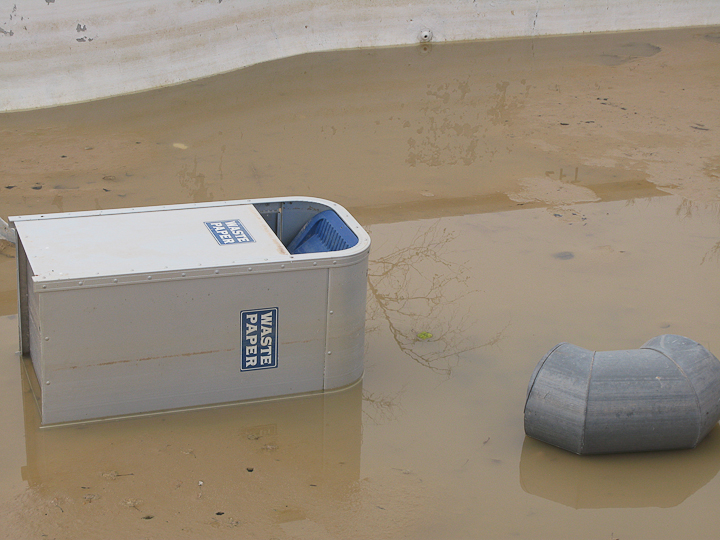
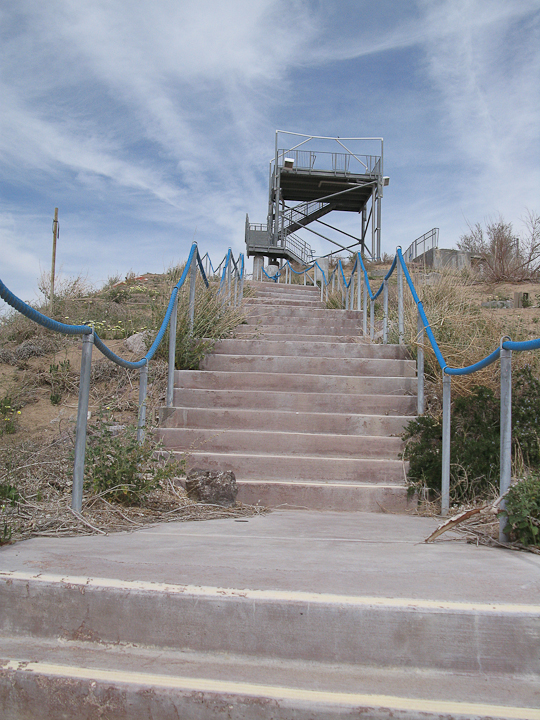
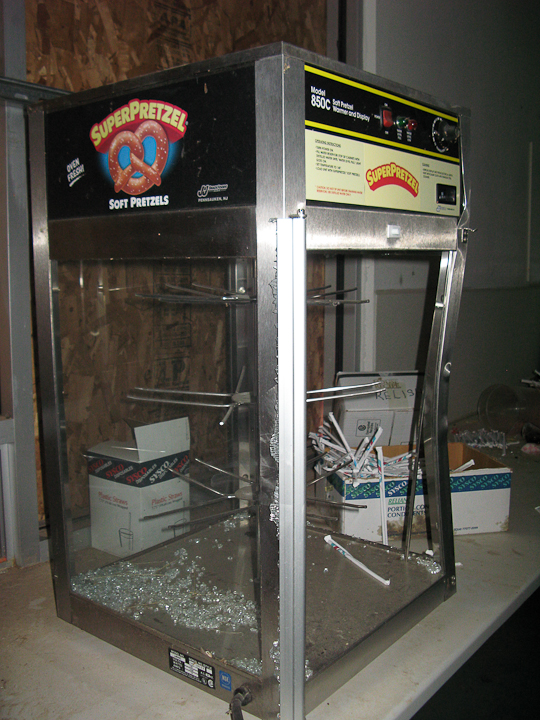
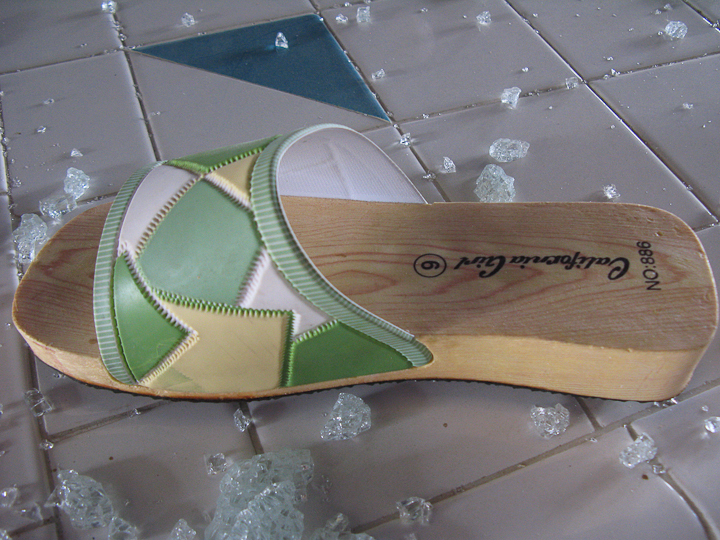
Hidden Monuments

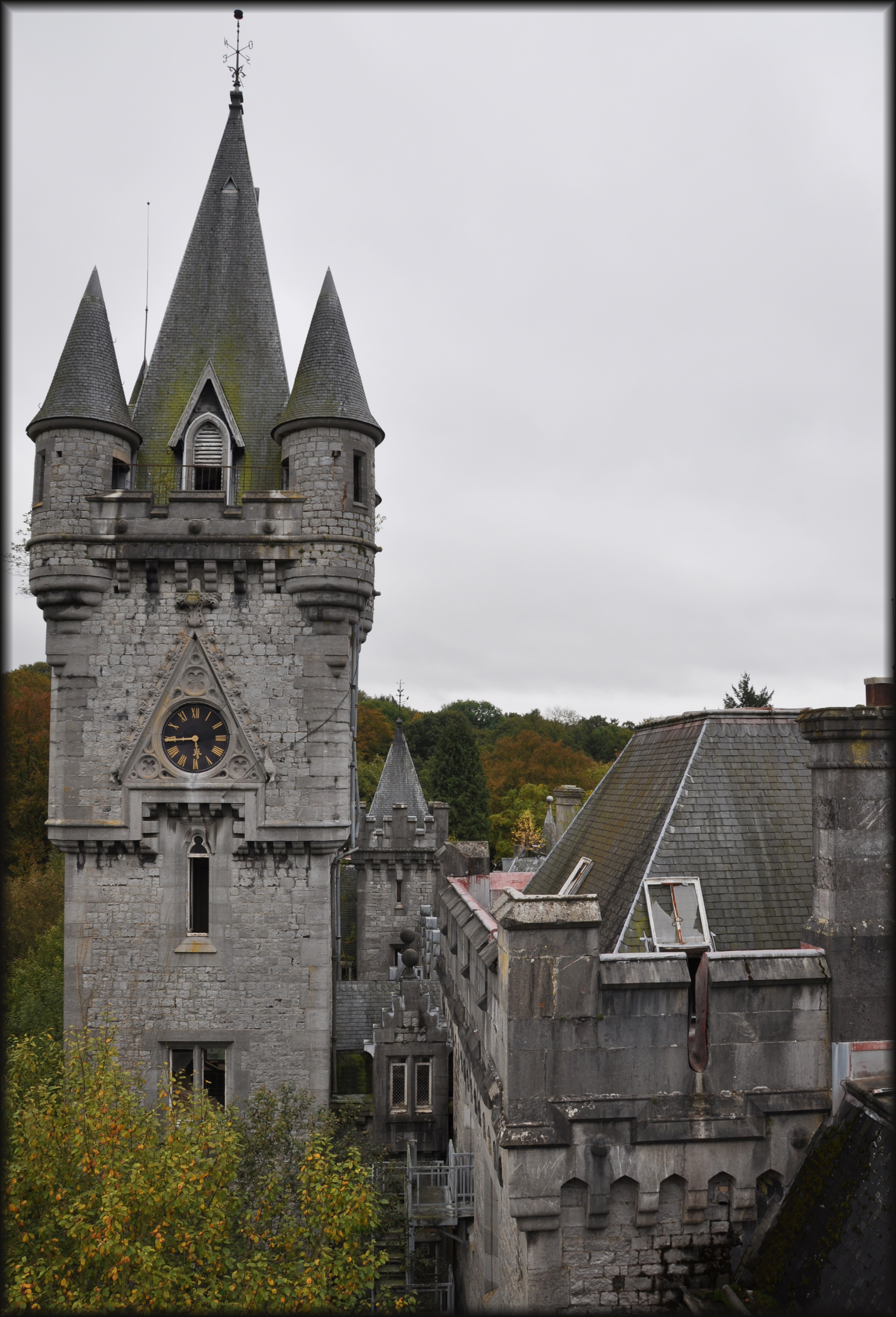
The time? About 11pm. The place? In the parking lot of a Carrefour supermarket somewhere near Liege, Belgium. It’s a weird place to begin the story of my recent road trip with Winchester, Statler, Tigger, Rivermonkey and Furtle but the urge to do so was prompted by something Winchester said.

As we were unpacking/repacking the vehicles for what seemed like the 20th time in a day, pulling out bags of clothes, sleeping gear, food, a pith helmet, Mary Poppins DVDs and a stuffed squawking bird, preparing for our second night sleeping in an abandoned place, Winch says ‘this is like urban camping.’

I have to agree. I have only had one such experience, a few months ago when I slept in the Paris catacombs with Marc and Hydra, but I have come to conclude, as did Winch, that this sort of camping (primarily prompted by the fact that we are all poor as dirt) surely puts ‘wilderness’ camping in a new light. I later asked the group what they thought camping in a place ‘added’ to the explore and although everyone had different ideas about this, everyone agreed that it definitely changed the nature of the explore, heightened it to some extent.

Camping with ghosts

A recently received a new book called Interior Wilderness, a nice little collection of photographs from a guy called Ed Roppo (rustyjaw). On the back of the book, Ed writes that “abandoned buildings are a kind of wilderness turned inside-out. He also notes that “the most beautiful sites in abandonments are the result of natural processes left to operate on man-made materials”.

I wonder if part of our fascination as urbanites living in areas where nature in sometimes not readily accessible is that we can feel it in ruins. It humbles us, it reminds us of our place in the world, it reminds us that Mother Nature can take back what she has given at any time. Any small vine can collapse a concrete wall within years, sometime months, and in a few hundred, or a few thousand, as Alan Weisman so poignantly points out in his book The World Without Us, the great remnants of human civilization would be buried in the matrix of memory, almost invisible to the world, useful to the plants and animal left behind in ways we can never imagine.

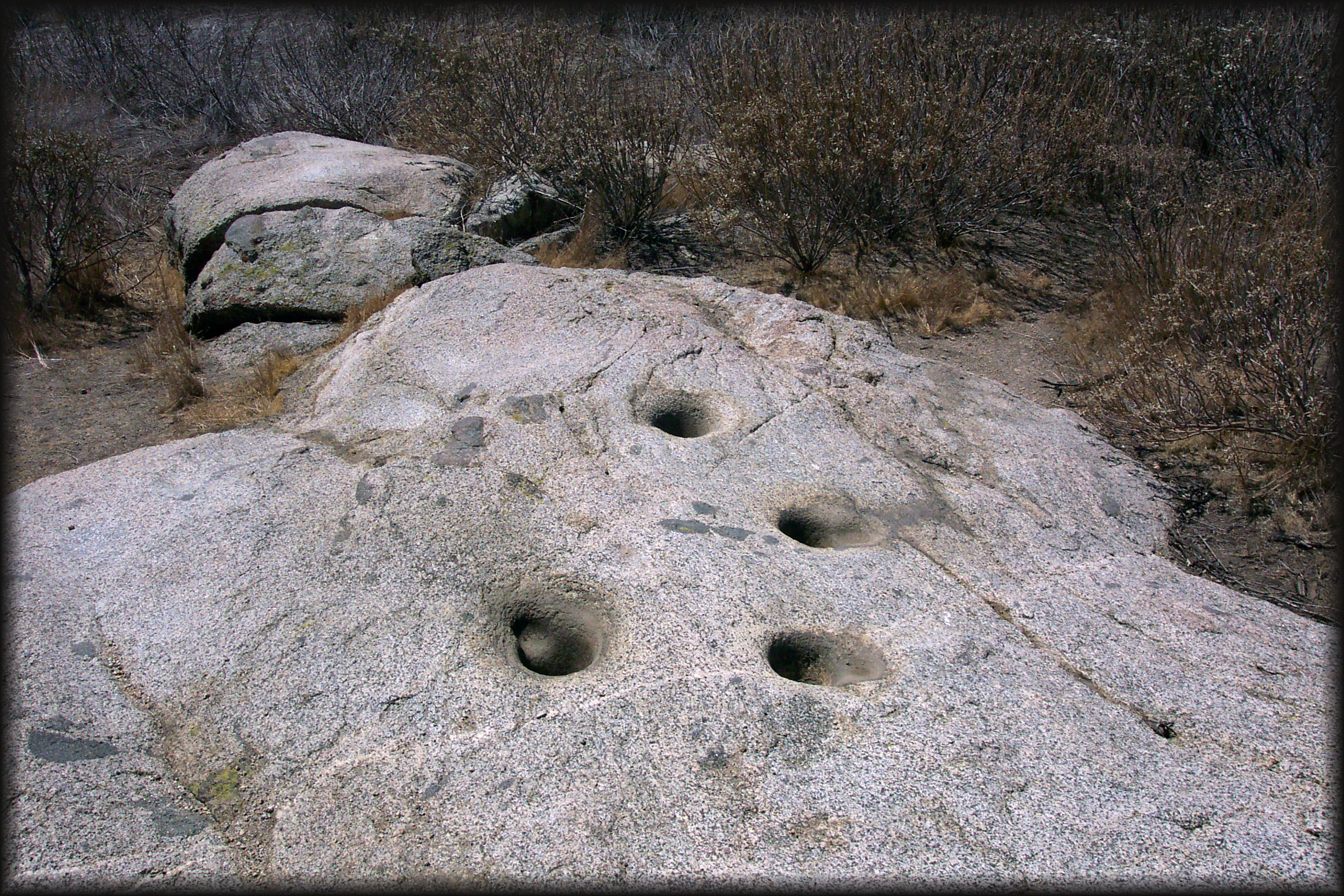
I once saw a deer drinking from a mortar hole in a large rock in Lake Elsinore, California.
Older stuff

I thought of the Luiseno Indian who sat there for years grinding out that hole with a pestle and wondered if they were ever curious about the possibility that this grinding slap might one day becoming a drinking hole for deer no longer hunted.
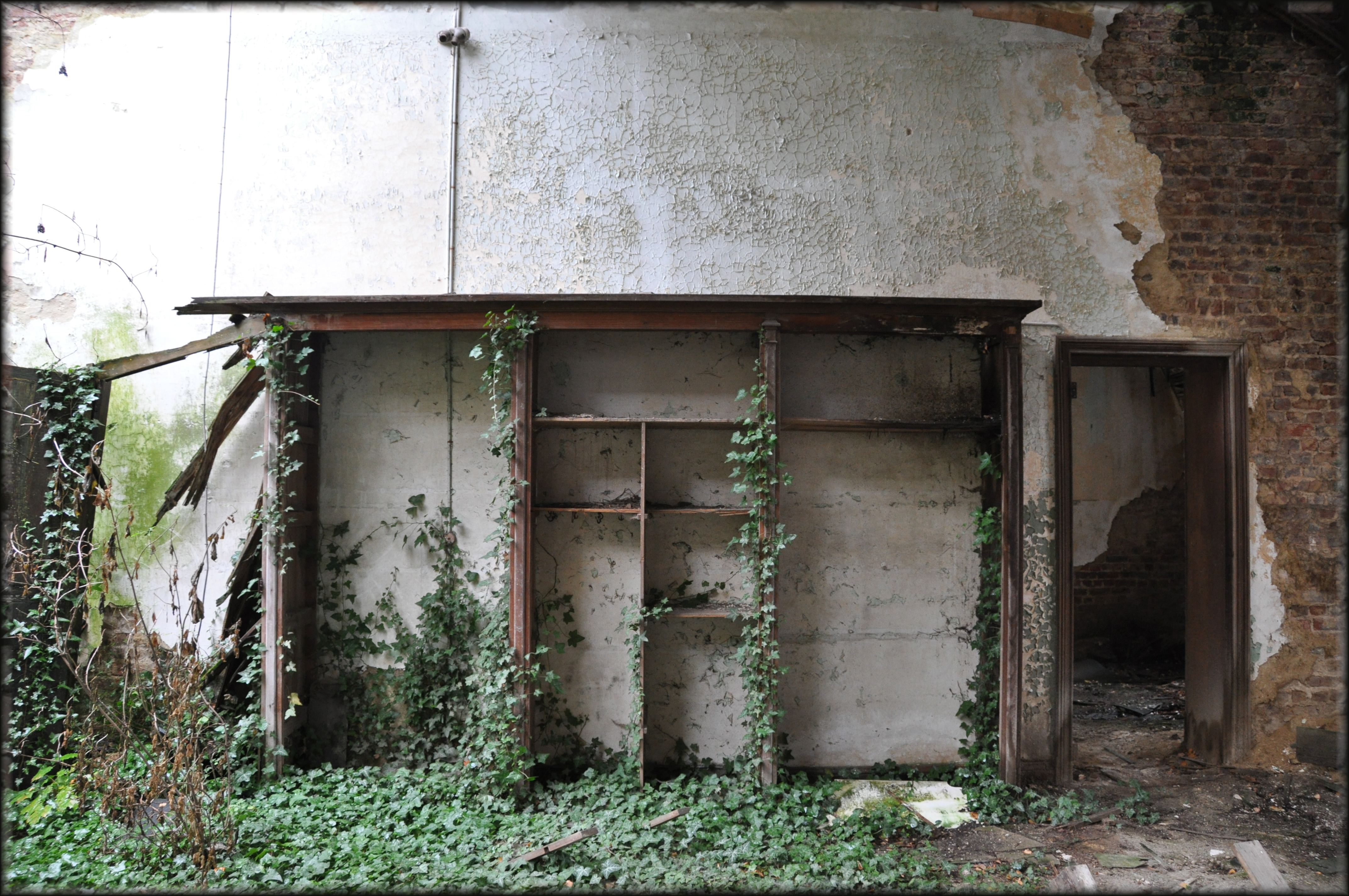
Nature climbing up
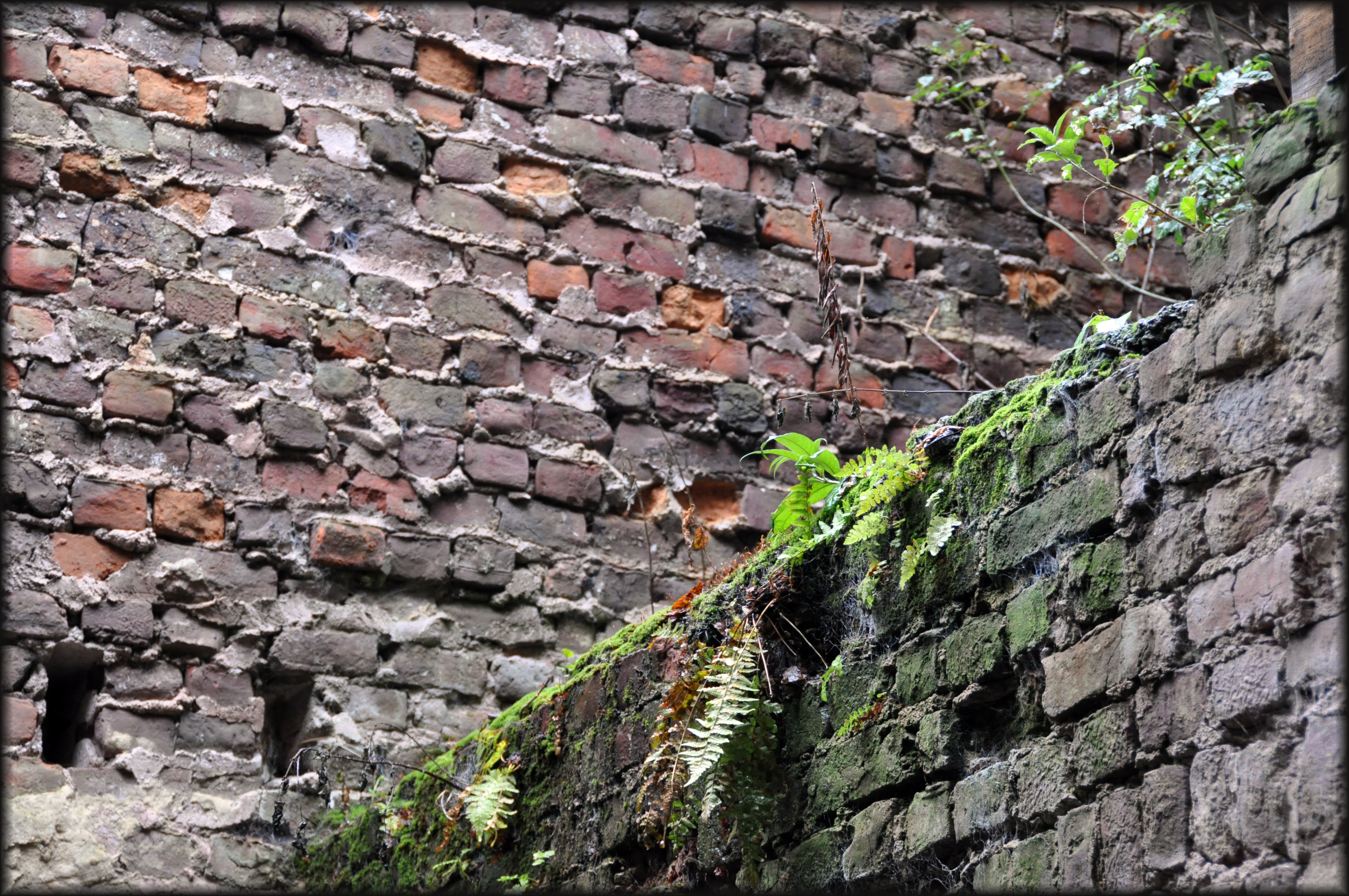
Nature crawling up

Urban camping is about adventure, yes, but it also about reminding ourselves what are place is in the world. A night in a ruin puts you in touch with reality, with homelessness, with decay, with nature, and over a few sips off good whiskey and some photograph sharing, with our friends.
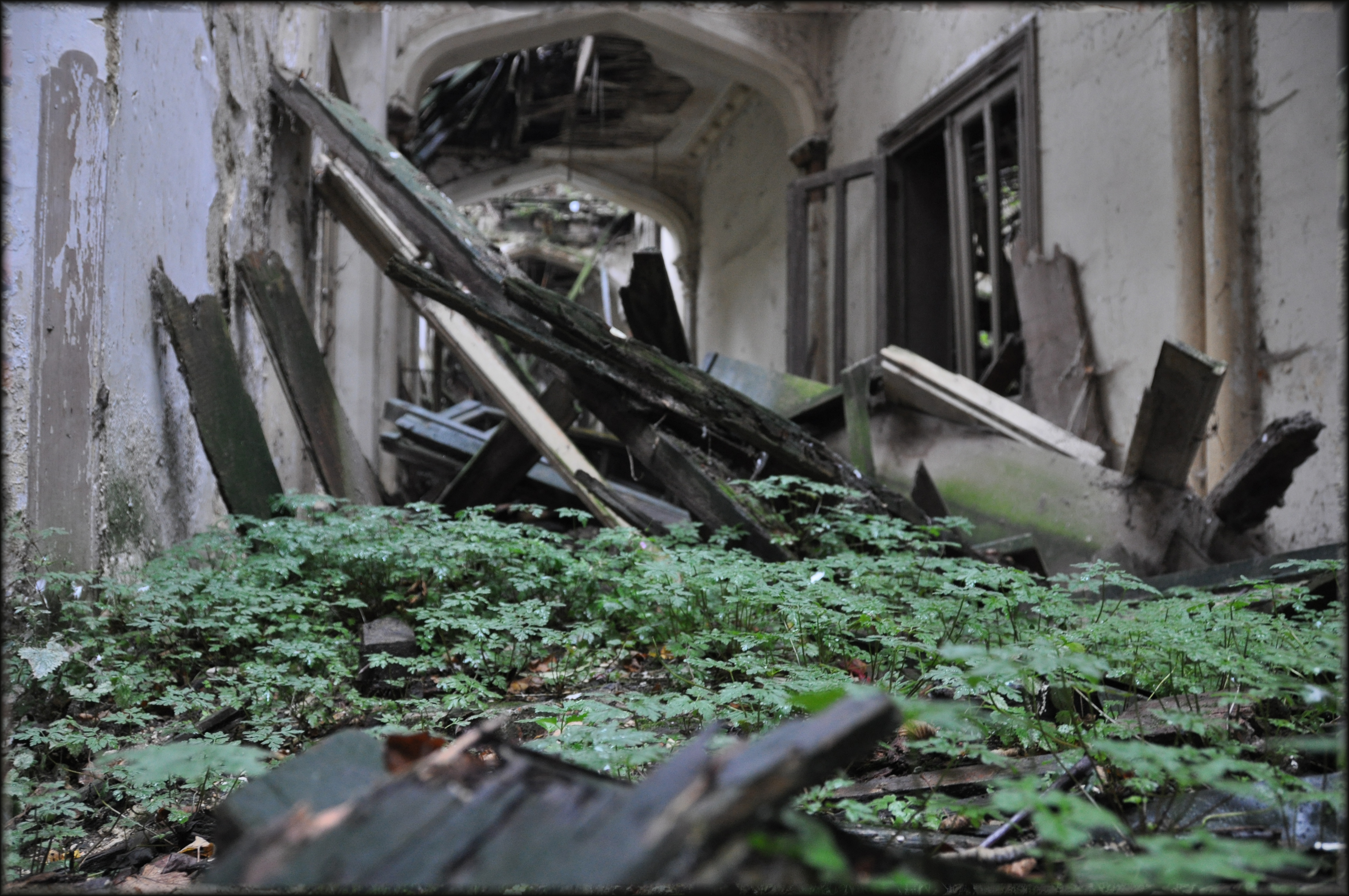
Old or new?

I have fond childhood memories of camping, backpacking and road tripping. For me, these activities were always something done in solitude, something done alone to give one time to reflect. But this new camping that I am doing is an echo of my life in London. Social, active, full of encounter, danger, inspiration and intrigue. My research is building a piece of work (now my new solitude), but it is also building a new self, an identity that I never knew I loved. And perhaps, after all is said and done, urban camping is not about camping at all, it is about finding meaning in life.

Share
Tags : , , , , , , , , , , , , , , , , , , , , , , , , , | 4 comments

Paris Catacombs July 2009

Posted by Bradley L. Garrett on Thursday Jul 9, 2009 Under Uncategorized

Ever since becoming interested in UrbEx, I had heard the legends of the Paris Catacombs. It seemed to be some distant dream, the unobtainable pinnacle of UrbEx protected by cataflics and catophiles alike. But a few weeks ago, a phone call from Hydra handed me the golden key. A friend of ours in Paris (who is consequently one of the best photographers I have ever seen) invited us for a four day trip deep into the catacombs, a trip which was to cover dozens of kilometers, sleeping, eating, dreaming and crawling through the various galleries.

The trip began with a 8 hour coach ride from London, across the channel on the ferry, and into Paris at 7am. After spending the morning rounding up supplies, we crawled into the catas in the afternoon, finding them pretty much empty on a Friday. Although my gear was carefully minimized and I was in good shape for the explore, the catas required a different sort of stride than I was used to. It was low, head turned to one side, many times through deep water, waddling quickly after our guide who had endless energy and an incredible drive to explore.


photo by Hydra 2009

photo by Hydra 2009

photo by Hydra 2009

photo by Hydra 2009

The galleries underneath Paris seem to go on forever, punctuated by brief stops in various rooms (chatières) which have been lovingly dug out and maintained by the cataphiles who care for this place.


photo by Hydra 2009

photo by Hydra 2009

photo by Hydra 2009

photo by Hydra 2009

We slept in a tight chamber which became increasingly cold as the night wore on. At some point, about 2am, an explorer woke us up, looking for a place to sleep himself. He asked if we could wake him when we left but was not very amused when we started crawling at 7am again! We ran into a few other groups of people over the weekend, mostly people going down casually to party. The most interesting person we met however, was a cataphile who demonstrated the proper use of a smoke bomb to evade subterranean authorities. When we finally exited the room where he lit it, we had to feel our way along the walls and our torches only made it worse!

photo by Hydra 2009

photo by Hydra 2009

photo by Hydra 2009

photo by Hydra 2009

One of the things that struck me about the experience was the constant reminders of death. I guess this is inevitable, given that we are in a place full of the bones of the dead, a place underground where the dead are though to dwell, a place where one could die anytime. It seemed that everywhere you look, there is a skull, real or iconic, a death mask, a memorial or alter. Perhaps this is what makes this place so sacred, perhaps this is why the days I spent in the catacombs felt like a dream, like the sleep that the Buddhists call a “small death”. Perhaps this is why, for the last two days since I have been home, the catacombs still live in my dreams.


photo by Bradley L. Garrett

photo by Bradley L. Garrett

photo by Bradley L. Garrett

photo by Bradley L. Garrett

The end to our catajourney was somewhat comical. After days underground, we thought it would be funny to pop out of a manhole cover in the sidewalk and walk home. Unfortunately for us, the cover was incredibly heavy and we spent far too long trying to move it. Eventually, the police drove by and noticed the cover being moved and stopped to find out what was happening. After some assurances that we were safe and not up to mischief, they opened the cover for us, allowing for a safe exit from our 100 foot underground wander.

Our guide was an expert blagger and chatted up the police who eventually just wanted to ask questions about what was below and see our pictures and video. They even left us take some pictures of our exit and scrape with the gendarmes on our way home. I have to say that this experience, being American, was as surreal for me as the explore and I have an entirely new love and respect for France. Now maybe I should spend some time seeing it above ground!

photo by Bradley L. Garrett

photo by Bradley L. Garrett

Share
Tags : , , , , , , , , , , , , , , , , , | 1 comment

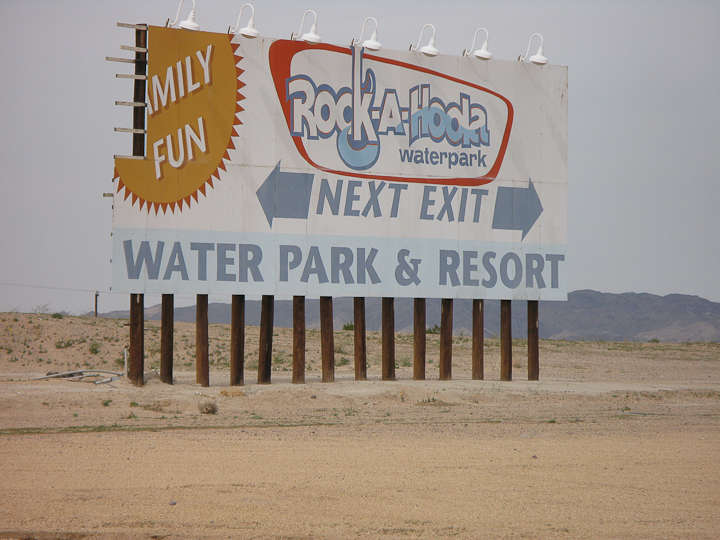
Rock-a-Hoola water Park, Mojave Desert, CA

Posted by Bradley L. Garrett on Friday May 1, 2009 Under Archaeology, Cultural Geography, Film, Urban Exploration

After two months of presenting, travelling and doing fieldwork in various locations, I have a 2-month long 3-in-1 report for the site. On March 26th, I presented a paper entitled Submerged Tribal Memory: the Case of the Winnemem Wintu at the 2009 American Association of Geographers conference. Despite some minor technical difficulties, the presentation went well. Check that off the list!

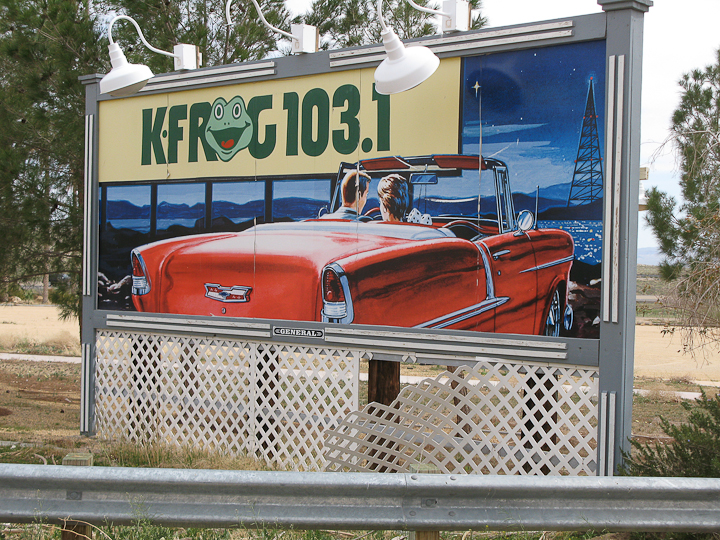
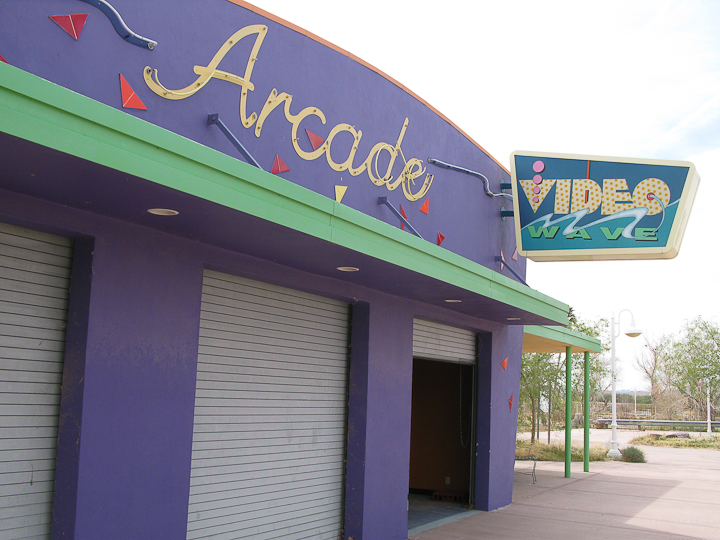
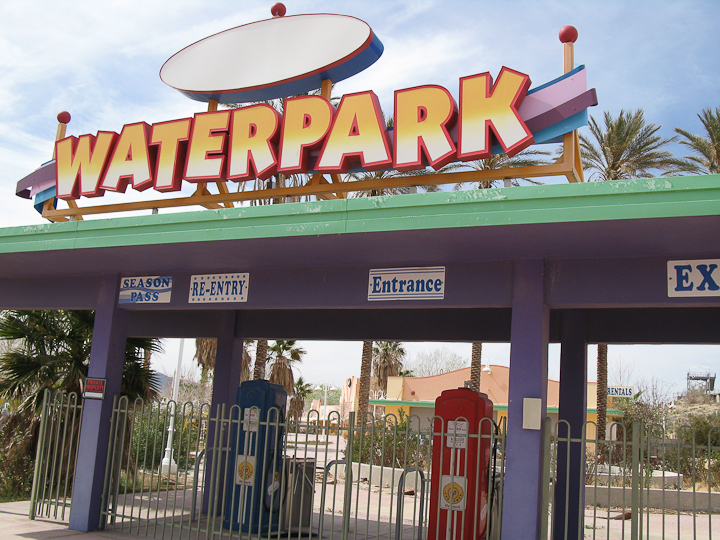
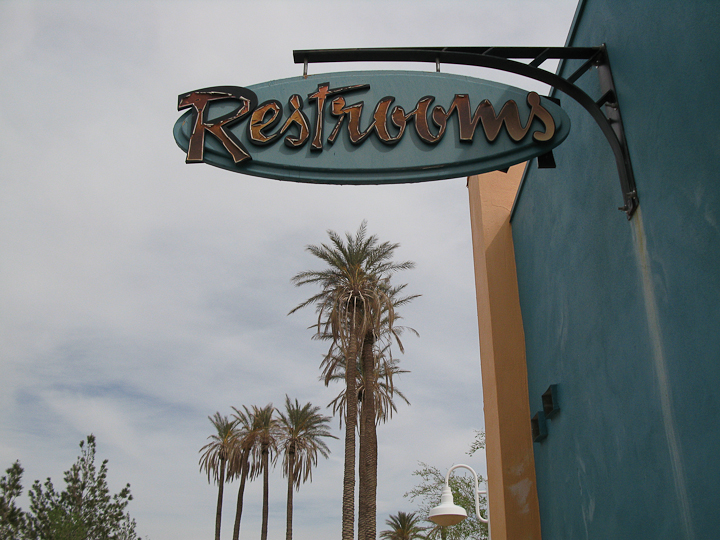
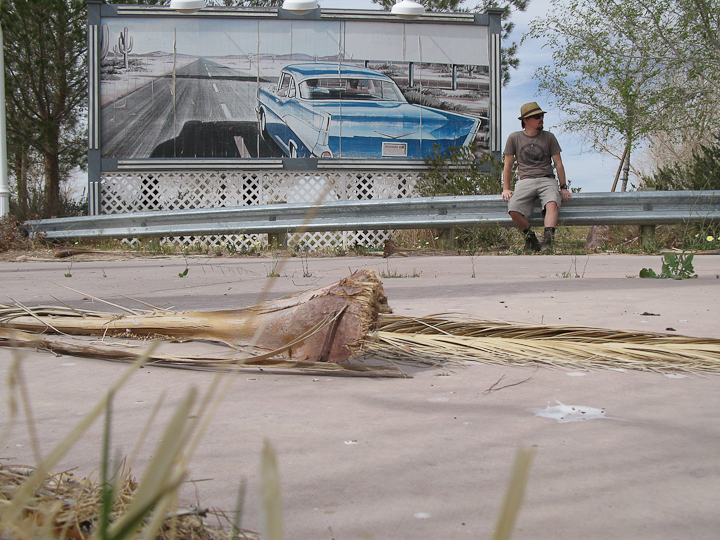
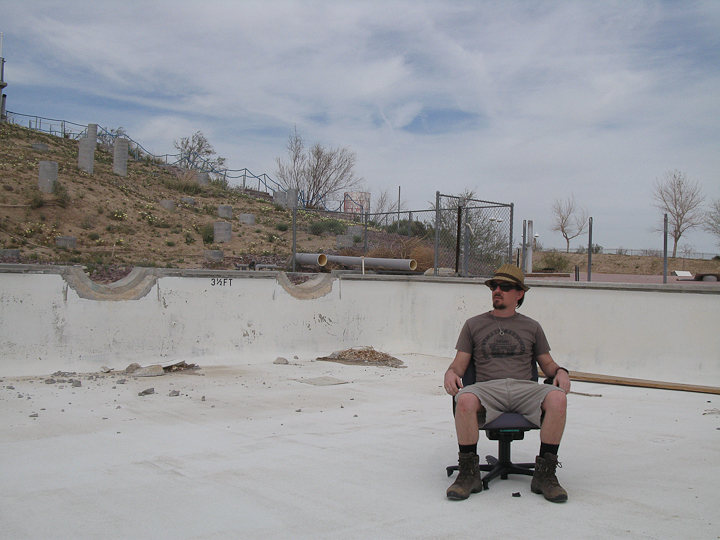
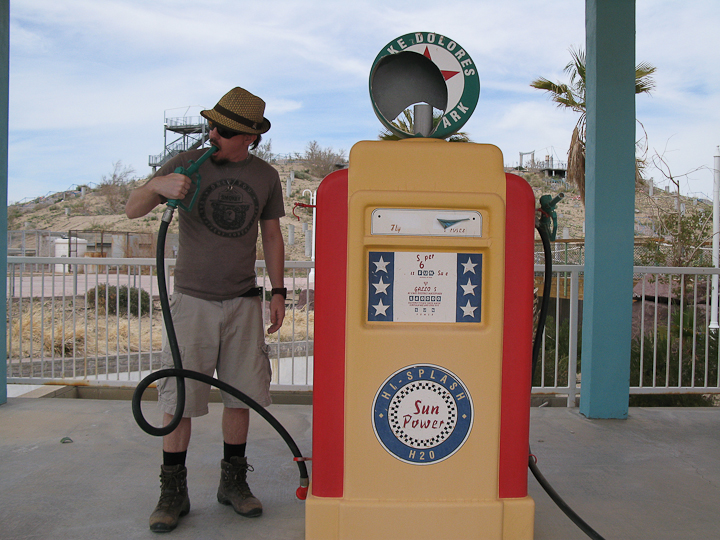
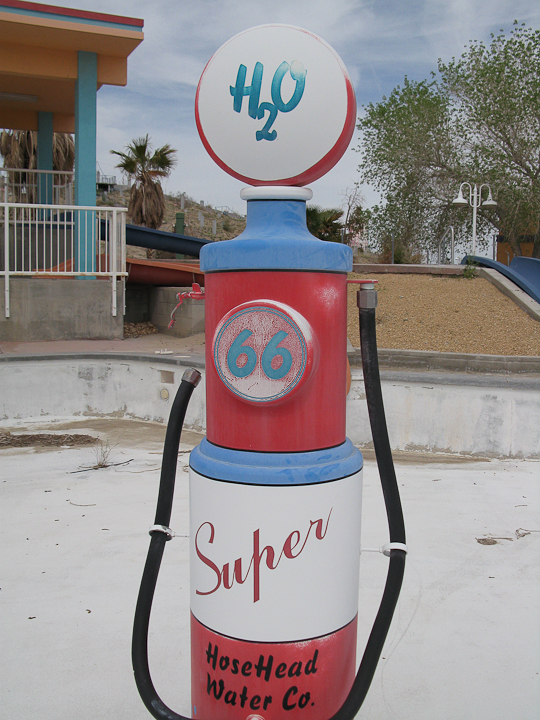
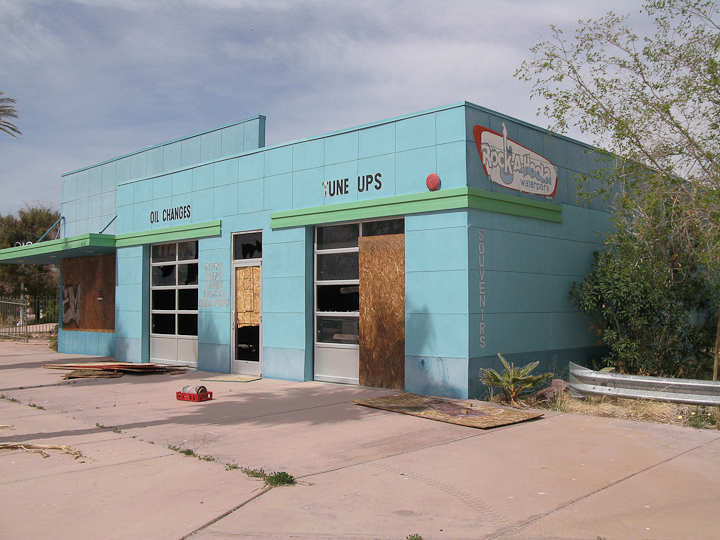
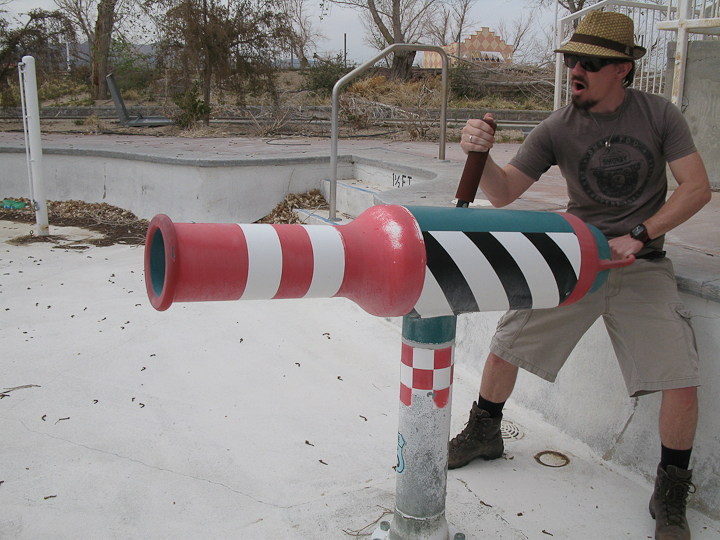
On the way back from Vegas, I stopped at the abandoned Rock-a Hoola Water park in the Mojave Desert smack dab in between Las Vegas and Los Angeles for a little bit of UE with sYnOnYx, a Las Vegas explorer. The park closed down in 2004 and is an eerie explore despite the recent removal of the slides form the park in recent years. Before the removal of the slides, the park was on an episode of MTV’s Rob and Big where they skate it:

With slightly less daring, I returned with my own photos:

So, with that little post, we are nowhere near up to date! I will play more catch up soon!

Share
Tags : , , , , , , , , , , , , | 4 comments

West Park and St. Ebba's

Posted by Bradley L. Garrett on Monday Jan 19, 2009 Under Archaeology, Cultural Geography, Film, Urban Exploration, Visual Ethnography

Yesterday I went for an explore with four from London. Our destination was the West Park Asylum, part of a ring of asylums around London which were at one time run by the NHS (National Health System I think). Apparently Margaret Thatcher decided these places were better off either

1. Shut down or

2. Privatized

As a result, many of the workers and patients walked away from these places leaving everything in perfect order, just as it was when the asylum was up and running. What happened next, some of the explores tell me, many of these places are not seen as worth preserving because either

1. They are two ‘new’ to be of historic value or

2. The land is simply needed for something else on this little island

Because of this, the explorers take it upon themselves to record this history, and the slow decay of these places with their cameras. Despite this, many are seen as criminals, ‘trespassing’ on this recently privatized land.

When we arrived at West Park, we quietly walked in over a broken fence, and walked around the bushes keeping an eye out for the single security guard that patrols the area. Not seeing him, we proceeded to slip into the service shaft under the building. Unfortunately, our man magically appears after only one of the four of us get in and we are escorted out.

On to plan B. We headed over the St. Ebba’s and strangely, given what had just taken place, parked in the parking lot and walked in. Although part of this hospital is still ‘live’ (meaning patients still roam the grounds) they did not seem to mind, nor did the nurses who probably had personal histories in the derelict buildings on the property and were quite aware that we were going in the archive them, in a sense.

Turns out, it was a good thing we arrived when we did because demolition has begun and half of this beautiful derelict hospital in now gone.

On to the next explore…

Share
Tags : , , , , , , , , , , | 2 comments

UrbEx in Kent

Posted by Bradley L. Garrett on Friday Jan 16, 2009 Under Anthropology, Archaeology, Cultural Geography, Film, Urban Exploration, Visual Ethnography

August 1st. That was the day I began working on pulling together my ethnography. I took 6 1/2 months to pull together my fieldwork. By anthropology’s standards, I guess it is not bad but if this was simply a documentary I would have shot myself in the foot.

So, the good news is that this past weekend, two new friends took me to four mysterious abandoned places in Gillingham, Kent. Vanishing Days and Solar Powered we extremely generous, articulate and helpful, driving me back and forth from Napoleonic-era stone forts to World War II gun turrets to an equestrian center abandoned in 1986. It was a surreal day (as it usually is behind the camera) with this added affectation that desolate places tend to have.

I also find, the more that I explore, is that the more intact a place is, and the more recently is was abandoned, the more eerie it is. Perhaps it is easier to connect with the history of those places when you imagine the people who lived their still roaming the earth and reminiscing about the places that you are watching sink into the earth for some future archaeologist to uncover.

This weekend I will be headed to an abandoned asylum with my second group of informants. More to come.

Now back to editing these three hours of derelict beauty!

Share
Tags : , , , , , , , , | 1 comment