You give a man his daily bread so that he can be creative and he just goes to sleep; victorious a conqueror grows soft, a magnanimous man turns miser as he gains in wealth.    -Antoine de Saint-Exupéry

Are we at the top of the ladder or at the bottom of a new ladder?    -Silent Motion

Saddle up for

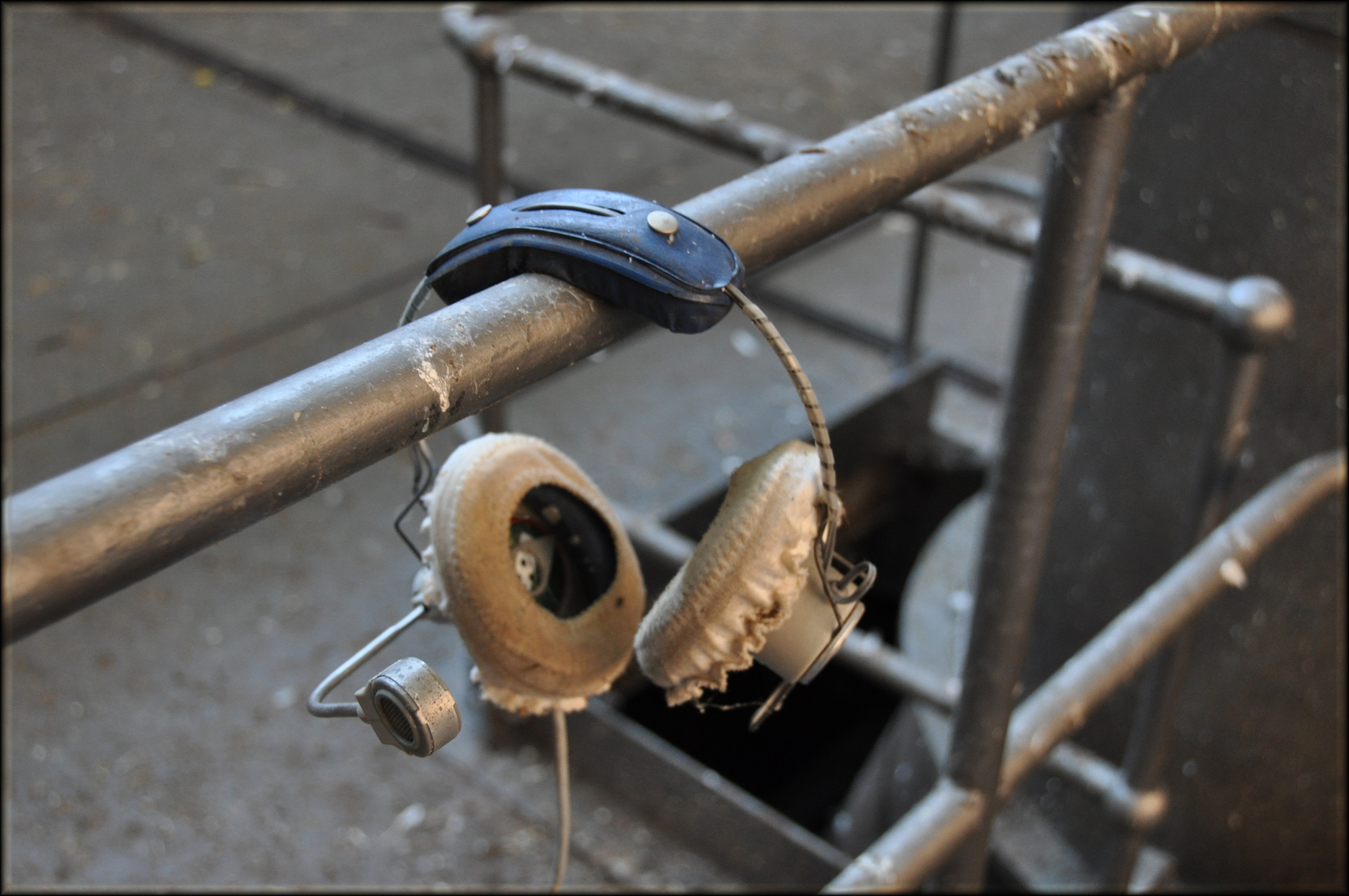
On our recent ProHobo trip into Europe, lovingly (if in the end somewhat flippantly) referred to as 3.0: ProhoBohemia, we pulled back from the infrastructural infiltrations that have become our daily grind here in London and went looking for ruins again. Coming back to ruins was like returning to a pleasant dream.

Magical realism

In our hired car, which we intended to push 3300 miles into Poland, our most ambitious trip to date, we cut through the corner of France as we have twice before and headed into Belgium. After a brief climb up a notable public building in a major capital city, we crept into an old train yard to spend the night. As you do.

Industrial nights

We woke up early full of enthusiasm and over the next week, we moved through Europe like a storm with an efficiency built over the course of three trips to the continent over the past year. We knew the sites we wanted to hit, we knew how to avoid security where necessary, we knew what to pack and, more importantly, what not to. We had, in fact, taken being temporary nomadic vagabonds to a whole new level. During the trip, we read passages from Tim Cresswell’s book The Tramp in America where he discusses the work of homeless-turned-Chicago-School-sociologist Ben Anderson. As we came to the realization that we could all likely keep this nomadic lifestyle going for a very long time (if not forever) I couldn’t help but think that we were working the other way around – there was a real possibility, is a real possibility that we could in fact drop it all and live like this indefinitely.

Probo

Looking for

Pure living

But the further East we went, the heavier our bourgeois baggage became. As we crossed the border into Poland, the car was filled with excited cheers quickly followed by confused murmurs. While the landscape here offered what we have come to expect from Europe – endless ruins – we found ourselves confronted with a place in which the relationship to derelict space was entirely different.

Secular

Imaginaries

Remembered

Here ruins were spaces not of bounded exclusion but of potential utilization. After driving for hours through a forest hunting for a soviet base called Keszwca Lesla, we arrived at 10pm to find rows of buildings, clearly Soviet-built, surrounding an undecipherable war memorial that looked like our standard fare with the addition of satellite dishes hanging off the sides of buildings. It seemed the local population here had turned this place into a summer holiday encampment after the collapse of the USSR and the abandonment of the base. Gangs of teenagers roamed the streets late at night in track suits and mullets, running in and out of the derelict buildings and bunkers. Inhabited buildings looked derelict, folding them right into the fabric of a lived landscape. There were no fences or security to be found, no rules, boundaries or exclusionary practices in evidence. It should have been paradise for us. Except that things felt different here.

Clearly

Something else

To be found

As we moved on from this site, we became more brazen, braving the sullen stares of thick-necked Polish men who could clearly throw us across a room to run in Soviet concrete blocks, shutters snapping. But what we captured in these places looked less like the western notions of the aesthetic sublime than we were accustomed to encountering and more like the war-ravaged Chechnyan ruins depicted in The 3 Rooms of Melancholia.

USSR

Afloat

No more

Site after site, I kept feeling that something was different here, something was missing here, but I couldn’t pinpoint it. It was something missing beyond a buoyant economy and door frames.

And then it hit me. It was nostalgia. As David Lowenthal writes, ‘nostalgia is memory with the pain removed.’ There wasn’t a hint of nostalgia to be found here. No one cared about stripping soviet blocks of all they were worth because they were still in pain here. It was probably, rather, a delicious catharsis to smash out those windows and excavate the rusting hunks of artillery from the ground.In the same way that we, in London, feel a need to write our own stories of places and to define our own boundaries for space, the Polish people who lived under communist control probably felt a need to assert their rights to newly reclaimed space by destroying the remnants of control that the Soviet Union has exerted over them for so many years. Like Scipio Africanis at the end of the 3rd Punic war, the only thing that would satisfy the pain of generations of struggle is to do everything possible to erase the memory of that pain, razing the buildings and sewing the Earth with salt.

The heritage manager in me is terrified by these ideas but the anthropologist and geographer in me tells me I have no right to dictate how others should interpret and interact with their places. We can’t know their memories; we can’t know their pain.

Pain

Lived

There a was a particular guilt that came with exploring Poland.  I think that guilt came from the clashing of different value systems in regards to derelict space. Perhaps it is an indication of a larger clash between capitalism and communism. Where east meets west, desire meets utility, nostalgia meets future promise and mobility meets placemaking. We all knew we brought the West with us and we all knew, deep down, that the social conditioning that resides in those templates can never be erased.

While we didn’t necessary find the ruins we were looking for in Poland, we did find a meeting point on that shifting frontier of Western values that is pushing its way inexorably East, met not with open arms but with suspicious stares. After what Poland has been through over the last 100 years, who can blame them?

Easterly

Share
Tags : , , , , , , , , , , , , , , , , , , , , , , , , , , , , , , , , , | 1 comment

Ride of the vagueries (conquest of Paris)

Posted by Bradley L. Garrett on Saturday Mar 6, 2010 Under Cultural Geography, Uncategorized, Urban Exploration

“They rolled down the Champs de Lise in these armored vehicles. They were dressed in black, carrying tripods and camera gear, saying the would explore every inch of the city. It was terrifying.” – Constant Conscious, Baker

“One of them said he had been under the Musee du Louvre bowling with skulls and I was like ‘what the fuck is happening here?'” – Achille Chevalier, Town Watchman

War games

Leave no one alive

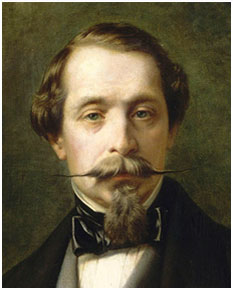
Marc called us from Paris where he remains in exile after murdering that poor Gurkha security guard at Pyestock. The Parisian populace was getting downright menacing he said, throwing instead of blowing kisses at President Sarkozy. The wet smooches were slapping him in the face with soppy smacks, knocking him down on every street corner, leaving him sapped of mojo. And a flaccid emperor can’t run this city, as Napoleon III learned 300 years ago, despite his glorious mustache.

Tashe

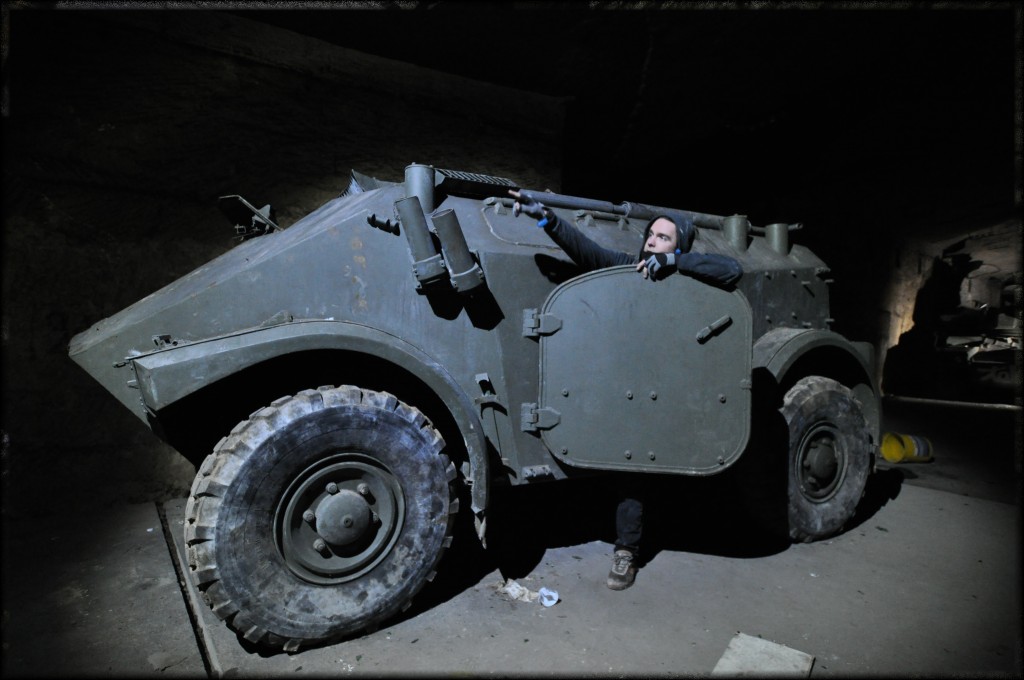
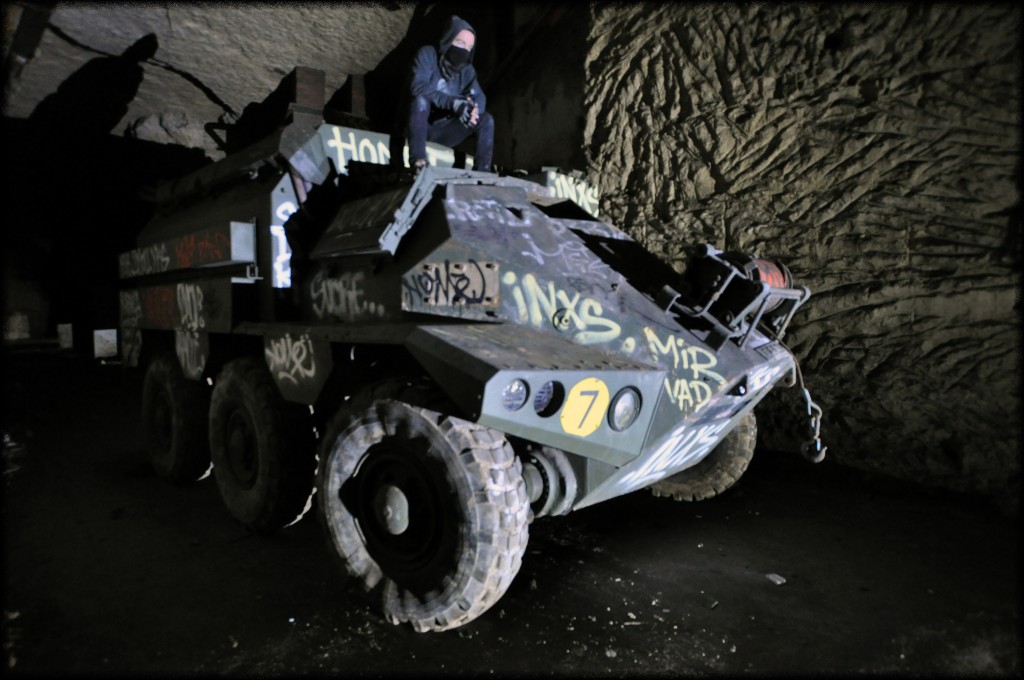
Turns out, Marc had been rummaging around (as he does) the other week and had located a fleet of abandoned military vehicles, perfect for quelling French proletariat rebellions. He imagined us piloting them down the wide toward the city centre, just as Baron Georges-Eugène Haussmann built it to be used, setting all right once again.

Under the cover of darkness, we crept in, leaving behind two operatives to secure the vegetable supplies in a adjacent quarry. I hopped into a small Humvee and ordered the doors battered down. Can’t believe they left the keys in this puppy.

Charge!

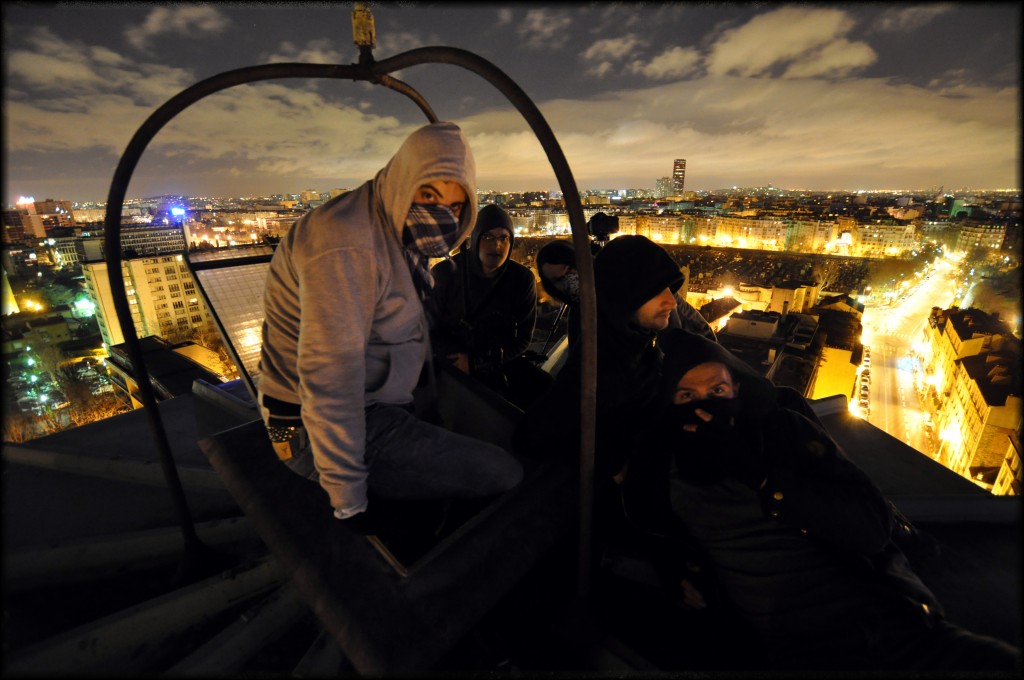
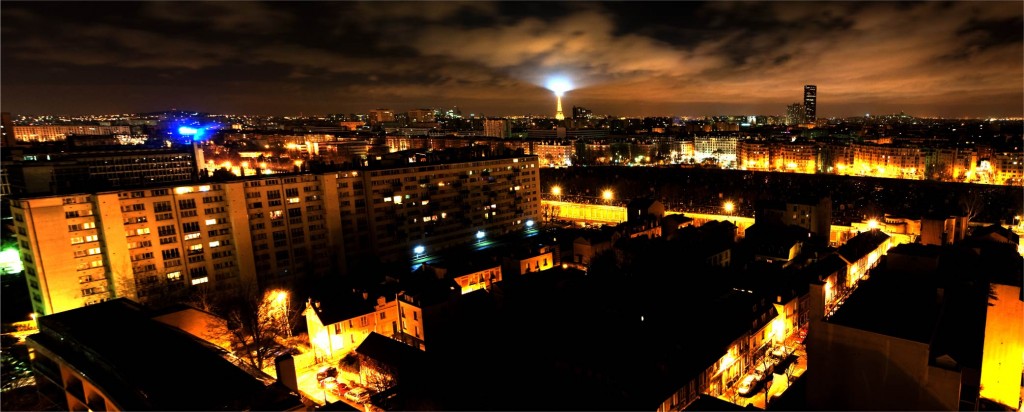
We rolled into central Paris in our new acquisitions bumping Del The Funkee Homosapien and drinking blue Chimay, throwing baguettes at hopeless romantics, police and cataphiles alike in a transparent attempt to capture hearts and minds. Implementing an age old audacious tactical maneuver passed down through the Statler family for 40 generations, we climbed every tall building in the city to survey the scene.

Seizure

Just then, Silent Motion cried out, pointing to the horizon, an almost inarticulable gasp pouring out of the side of his mouth. In the distance there was what appeared to be a rift opening in the sky.

Holy smokes!

We took decisive action, speeding over the the rift only to find that it was a reincarnation of Zuul, back from Ghostbusters I to invade Paris the same night as us. Damnation!

This party's over!

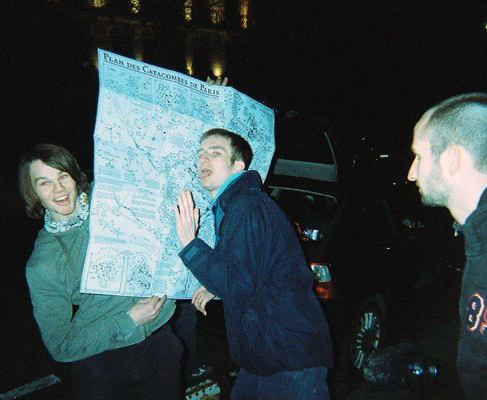
With a stroke of luck, LutEx arrived, fresh off the Eurostar, answering our Craigslist ad for reinforcements. Right then and there, he pulled out this horrendous map of some underground city where he claimed previous failed revolutionaries had gone into hiding. Clearly drunk at this point, we decided he was the man to follow.
And then the revolution died

The dejected revolutionaries crawled into the underground maze through a manhole at rush hour, dragging the bodies of their dead comrades, pussing fang marks and all, hopes and dreams tied up in little canvas sacks, squirming and wiggling, screaming for acknowledgment.

Shouldn't have crossed the Rubicon

]

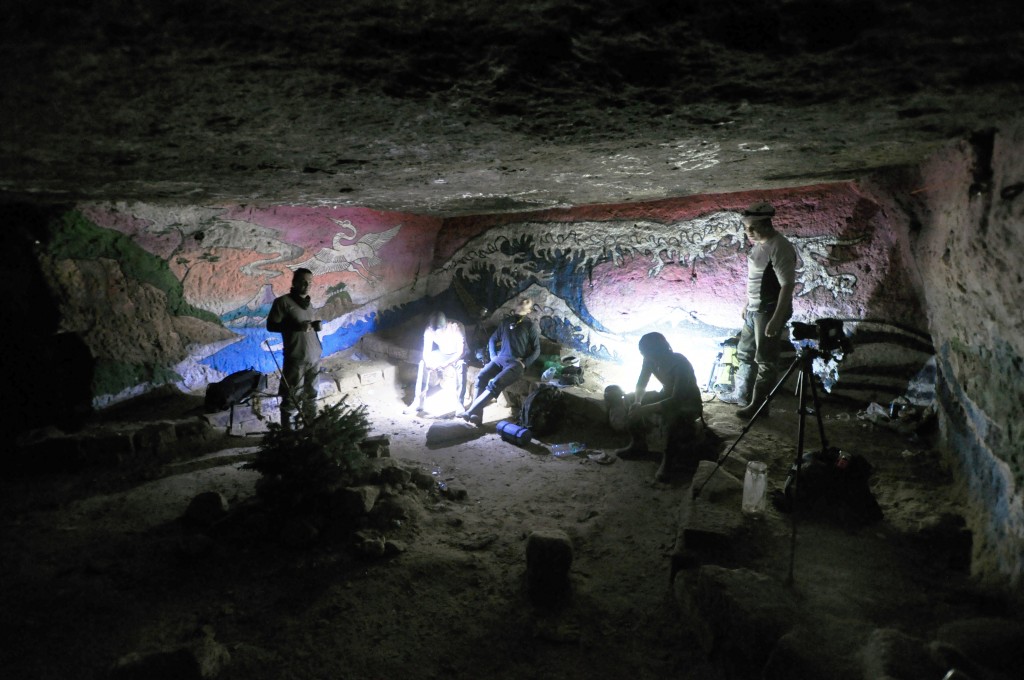
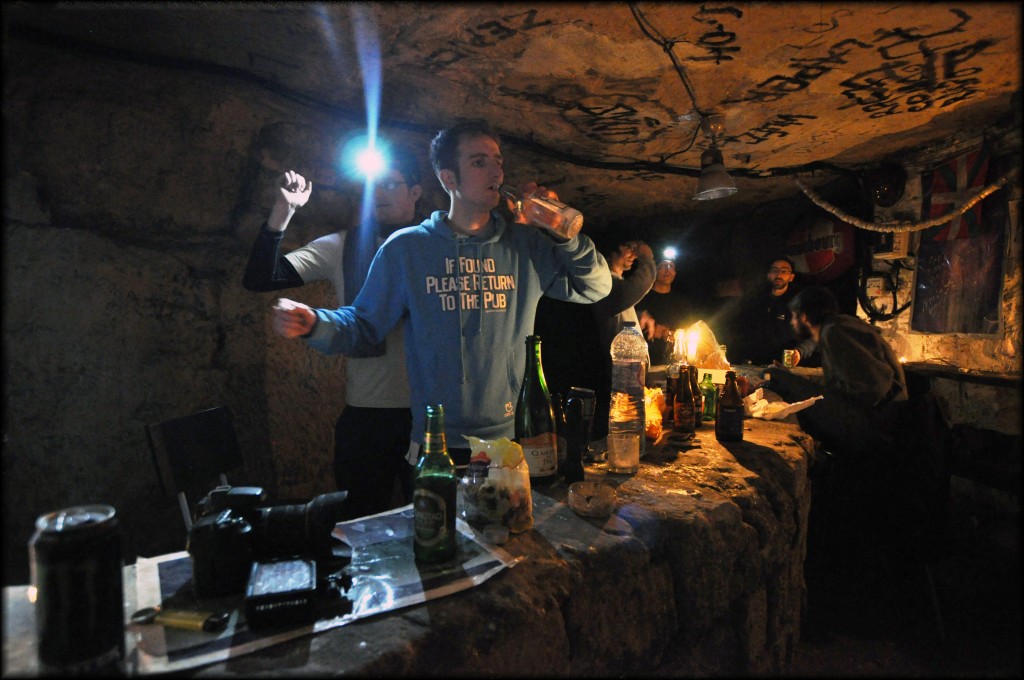
Lest our hopes get the best of us, we left them in the bags and trampled them while we danced to our failures, praying that Zuul had been lenient with the people after her extraterrestrial takeover. And that’s how Marc’s dream of a new Parisian republic died, in a bout of inebriated dirty dancing, headtorches waving in little battery powered gestures, light painting the the walls of the cave we all knew we would never be able to leave.

Here's to failure!

_____________________________________________________

This post is dedicated to that little Swedish boy that died exploring in Stockholm last week. I celebrate you for not sitting inside playing video games like your friends kid.

Share
Tags : , , , , , , , , , , , , , , , , , , , , , , , , , , , , | 6 comments

4 explorers, 5 Countries, 2000 miles, 16 abandoned sites, 5000 photographs, 3 hours of video footage, a pocket full of loose change to live on and a car full of $7000 worth of camera gear. It’s these last two bits that I find so amusing, these are the pieces of the puzzle that turn this from a hobo trip to a pro hobo trip I suppose. That and the radical mobility of our opt-in faux homelessness.

After our last trip to Europe, I wrote about urban camping. I felt like that long weekend away was a sort of like a wilderness retreat, a little escape from work and obligations to see something unstraited. Some people choose go to a pine forest for these retreats, we go to abandoned châteaus in Belgium. Seems fair enough.

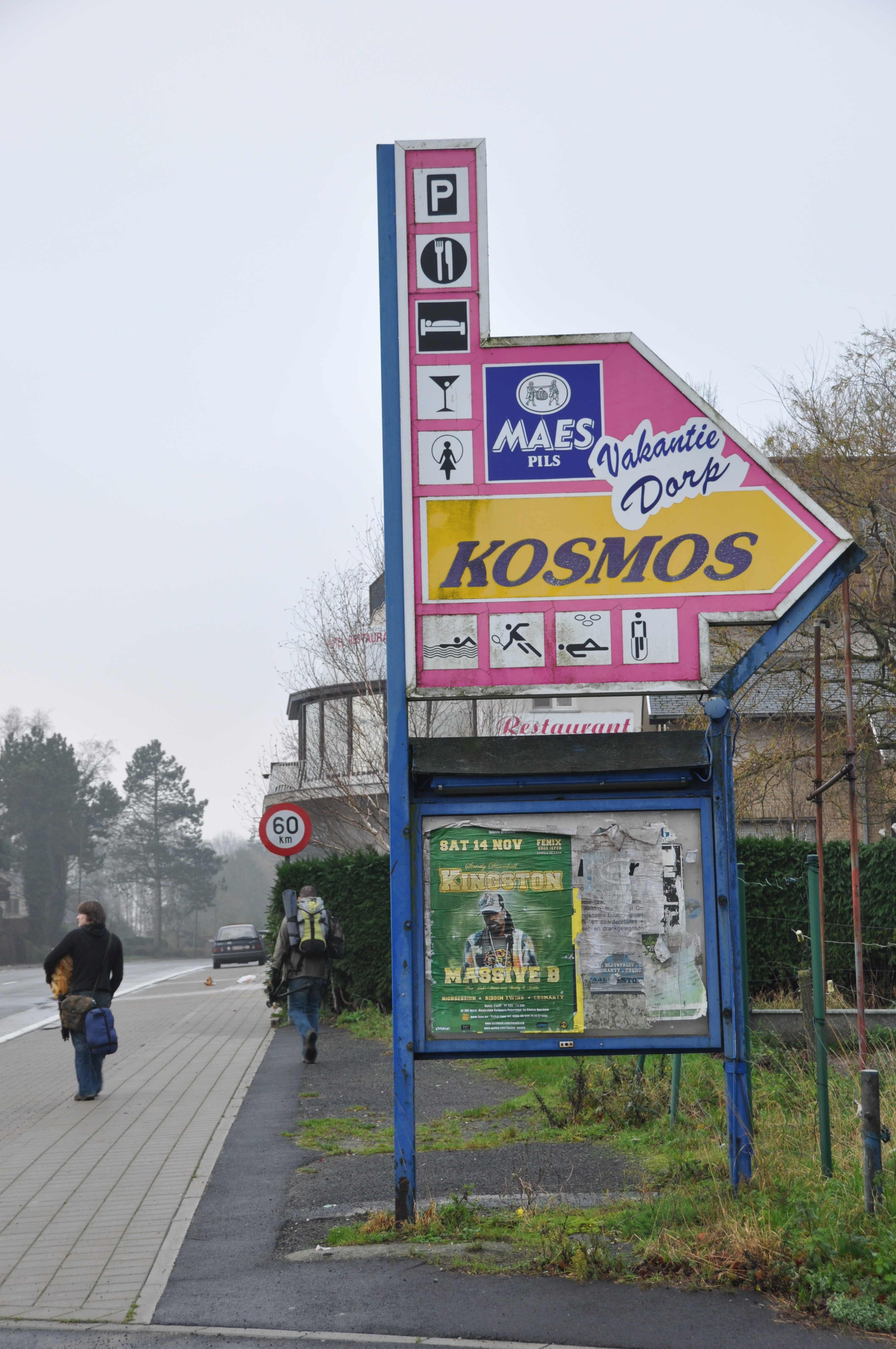
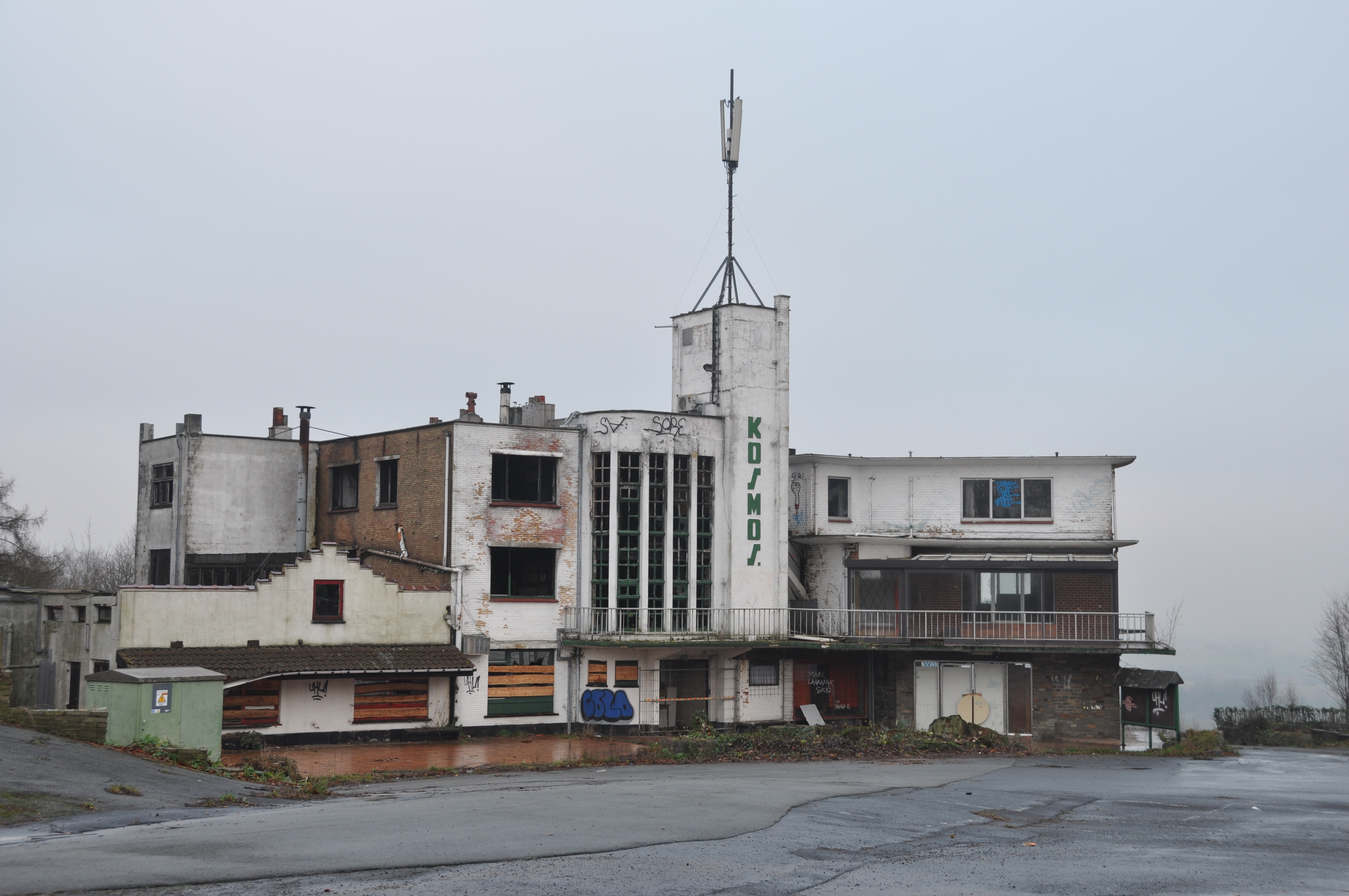
But this trip was different right from the beginning. Part of it was due to the length of our expedition, part of it due to the dynamics of the crew. We had a crew of 4 – myself, Statler, Winch and Silent Motion, all up for it in a big way. We were long inspired by the perpetual homeless adventures of Dsankt at Sleepy City which seemed to pry open a new level of UrbEx or, at the least, open up new possibilities for adventurous play. So we struck out on a Sunday night from Reading, UK, across the channel on the P&O car ferry, through the sadness of Calais, France, just across the border into Belgium to Kosmos, a hotel with a weird Russian art-deco theme that had closed in 1996 where we planned to stay the night.

Transgressive Mobilities

What a shithole

Tourism?

Getting into it

Rated 1 Star on Travelocity

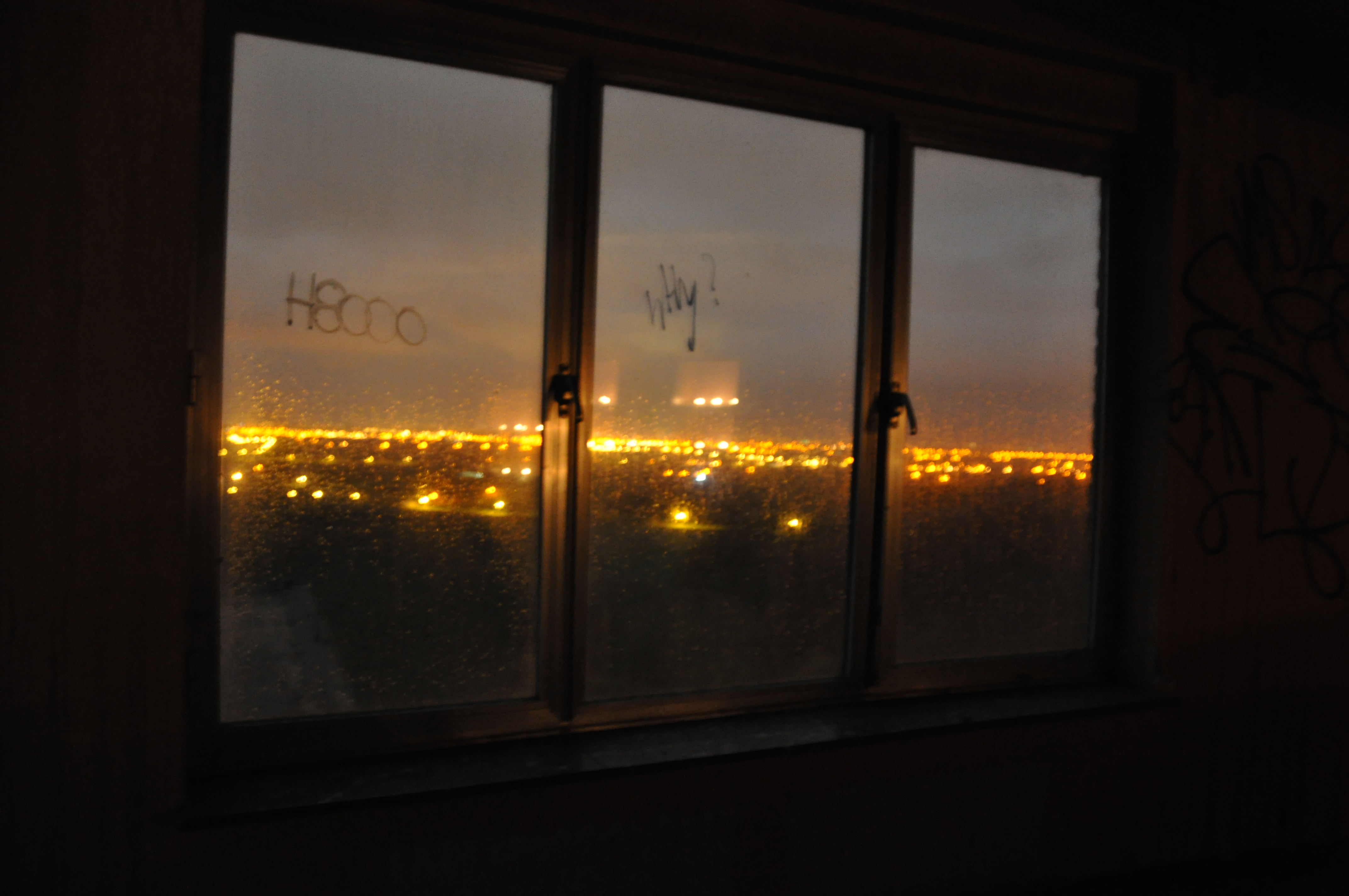
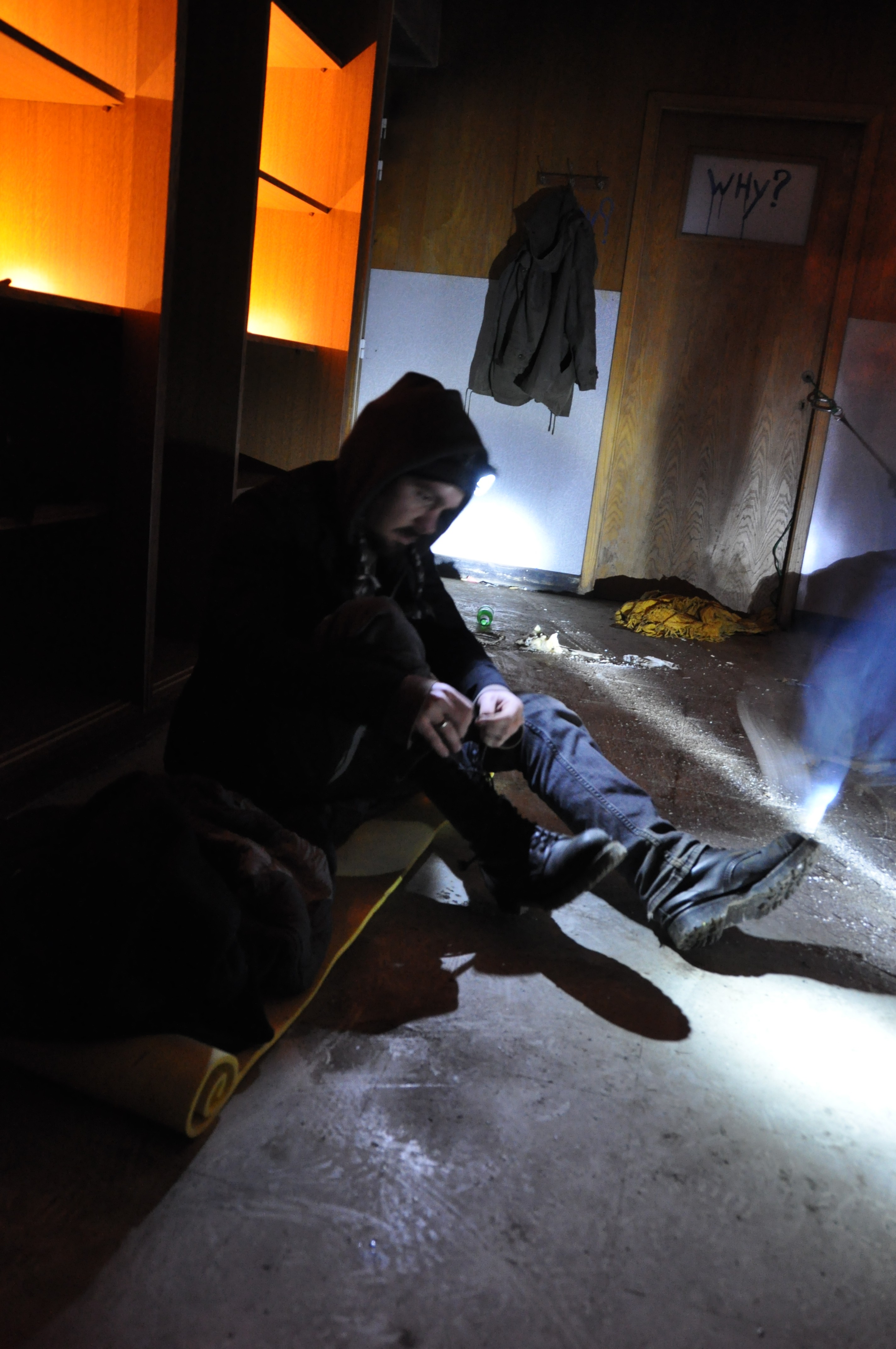
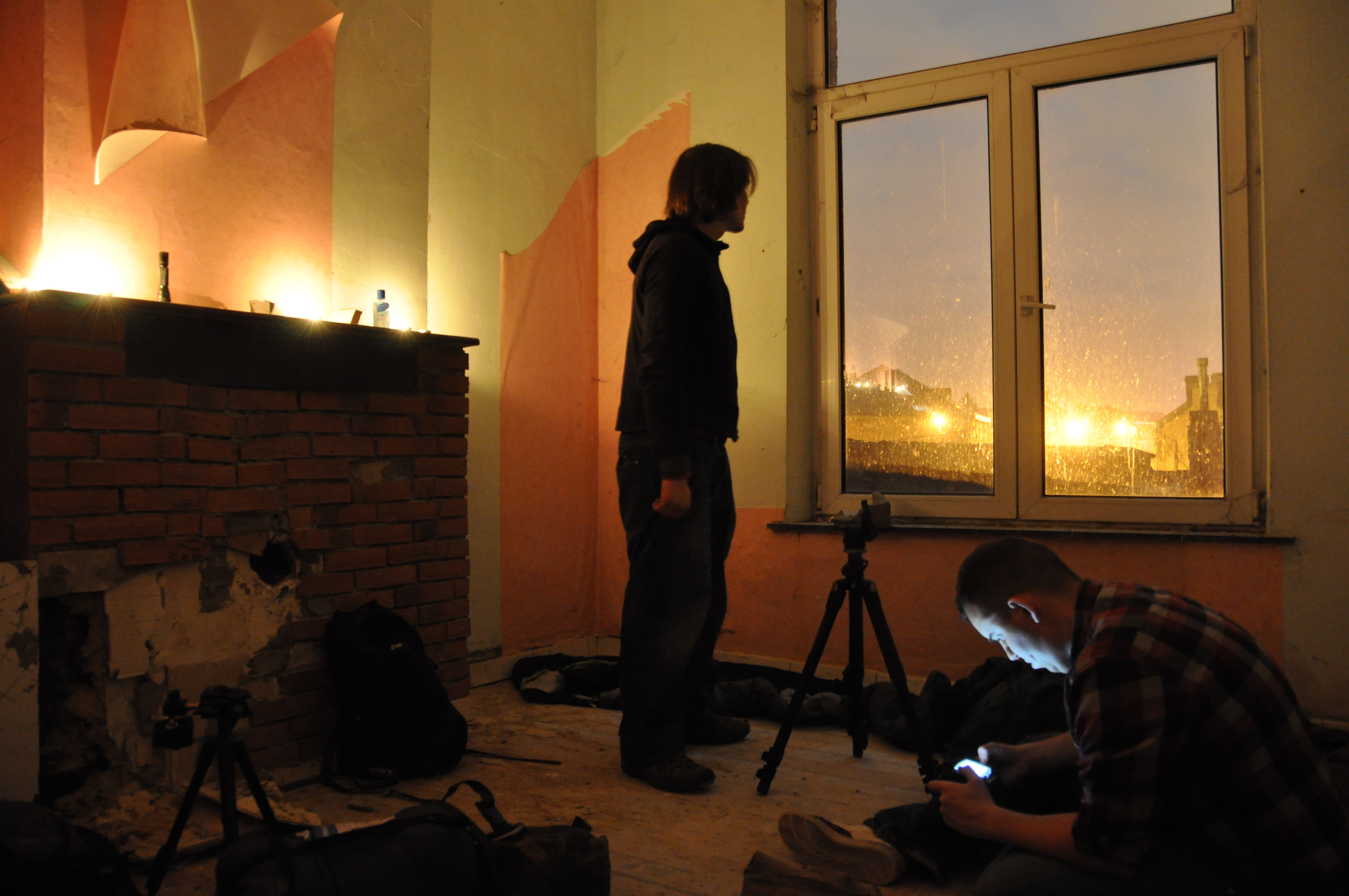
Strangely enough, given what a pile of crap this place was, it was really hard to get into. Finally, after making our way in, ferrying in bags of clothes, food, whiskey and 8 bottles of Chimay looted from a road side stop, we settled in for the night, with a gorgeous view of a random Belgian valley spread out before us, full P&O shot glasses of cheap drink and a horrible rattling noise from the winds assaulting some loose flap on the roof above us.
Not broken yet

Penthouse

Winch

Winch taking in the epicness of first night

Unstrap

The Goblinmerchant get naked

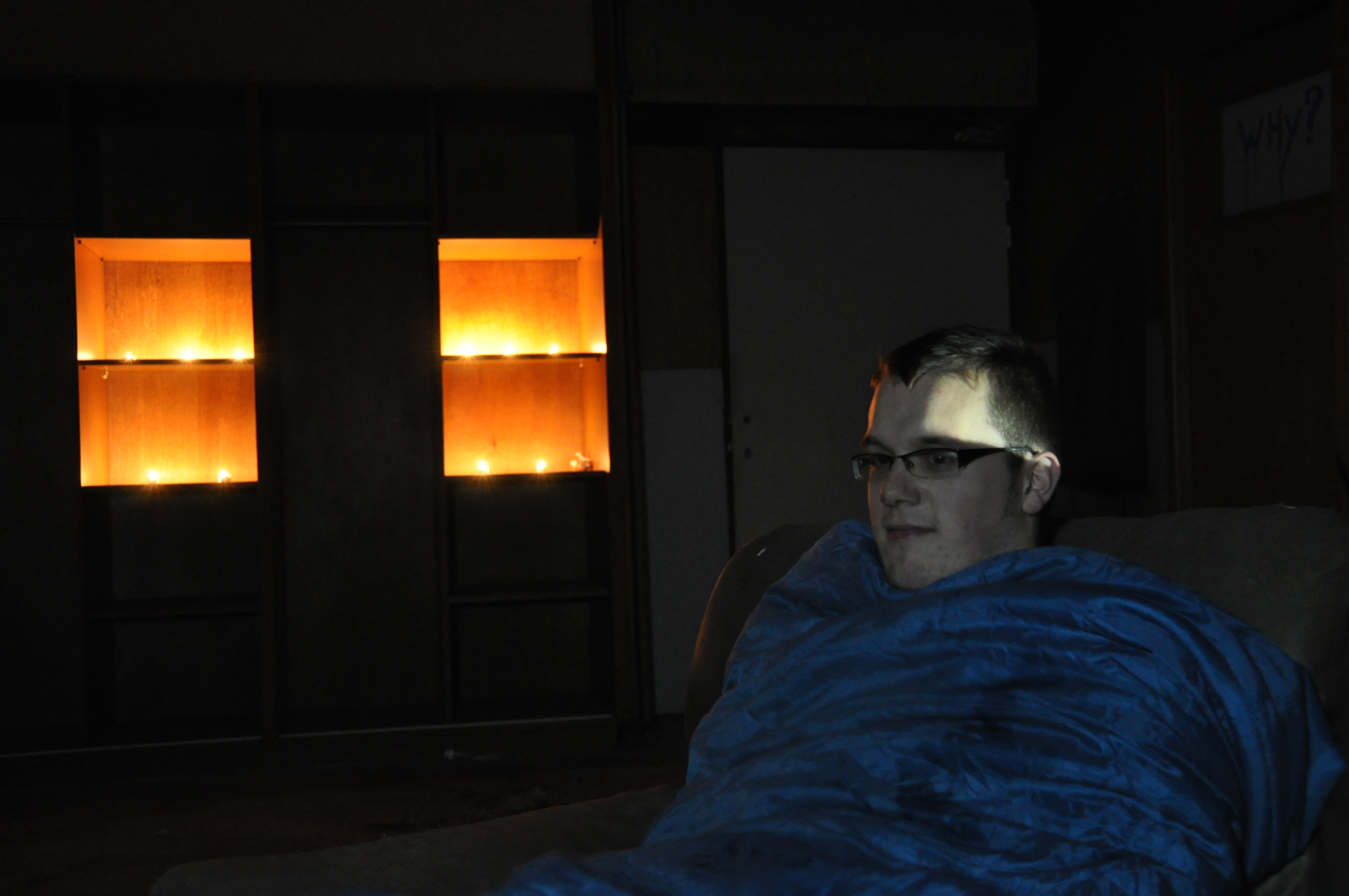
We ended up finally dragging tables and chairs from other rooms to board up the windows which were allowing massive gust of wind and rain into our sleeping quarters. Essentially, we started doing home repairs. That night, falling asleep to Aphex Twin’s Selected Ambient Works Volume II playing softly on my phone, I had dreams about the property owner showing up weeks later to find that somebody had actually repaired their building, boarded up windows, brought in and cleaned up couches, filled the bookshelves with tea lights. I imagined them being, at first, dismayed and confused and then… amused, a small smile cracking their stoically disappointed Belgian head.

The thing I started thinking was that our move from UrbEx into pro hoboness was actually a move that benefited property owners because, as Silent Motion put it, “our sleeping in the space builds a more intimate connection with it, we become a part of the fabric.” So going pro hobo, in my mind, even the documentation aspect that you are scrolling through right now, is about place hacking, about finding intimacy in a world full of sterile engagement.

This idea was made even more funny when the property owners showed up at 8am the next morning and started putting up more fencing on the site. Between us and them, the place was going to be completely remodelled soon. We waiting 30 minutes or so for them to leave and made our hasty escape.

Although I am tempted to write about all 16 sites we went to, I can’t. The reason for this is, quite simply, that I cannot relay the epic nature of the experience to you in a blog posting, try as I might. With every day that passed, the crew got more raw, more volatile, more energetic, in a weird, confused sort of way. It was a delirious panic that I think would have even made Dionysus proud. I was drunk for most of it, partly because I do better fieldwork after a few beers and partly because the experience was so raw that it had to be shielded, it was like trying to stare into the sun. Now I know why so many homeless people drink.

Staring at the sun

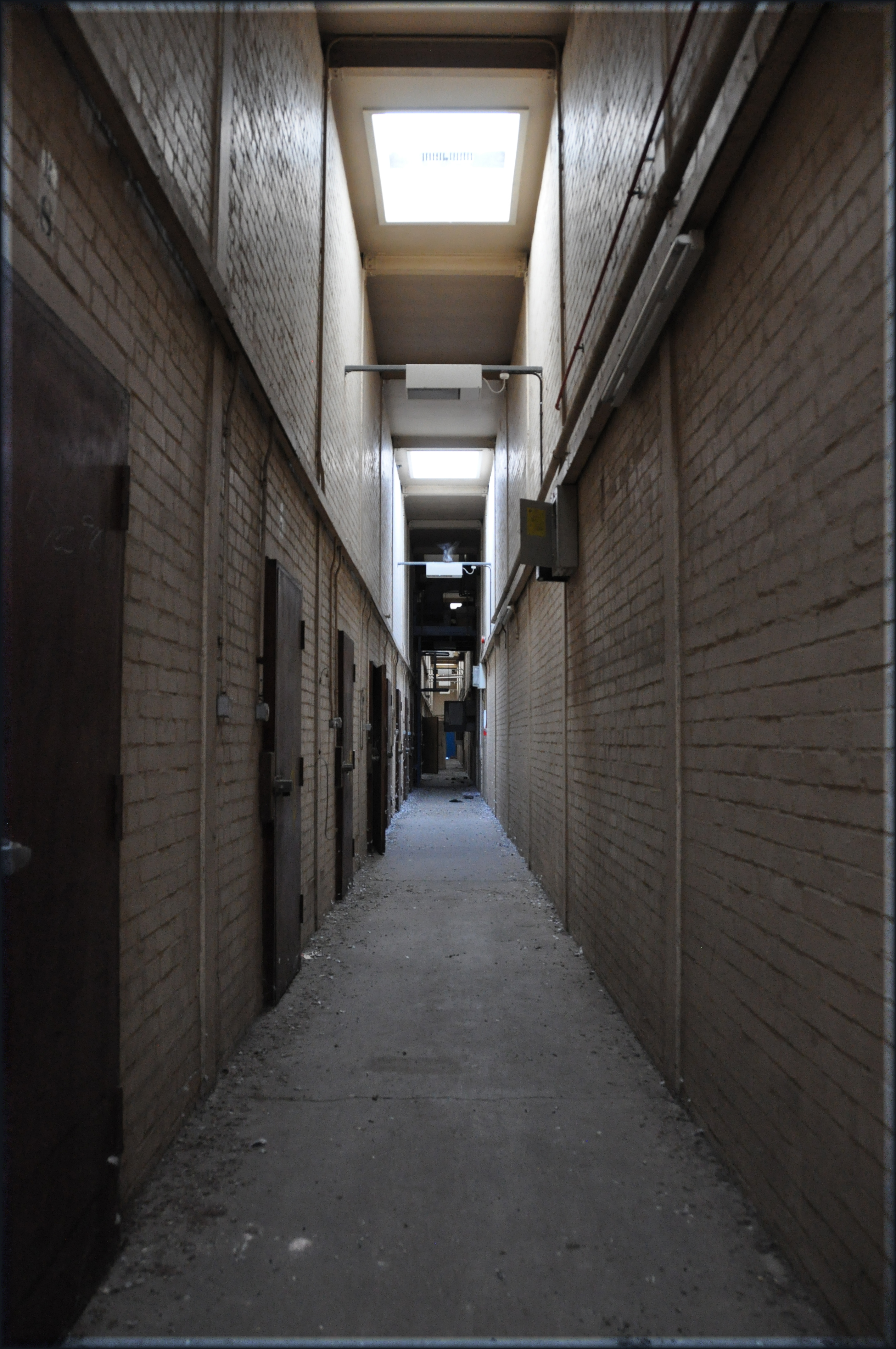
Hallway

The raw light of experience

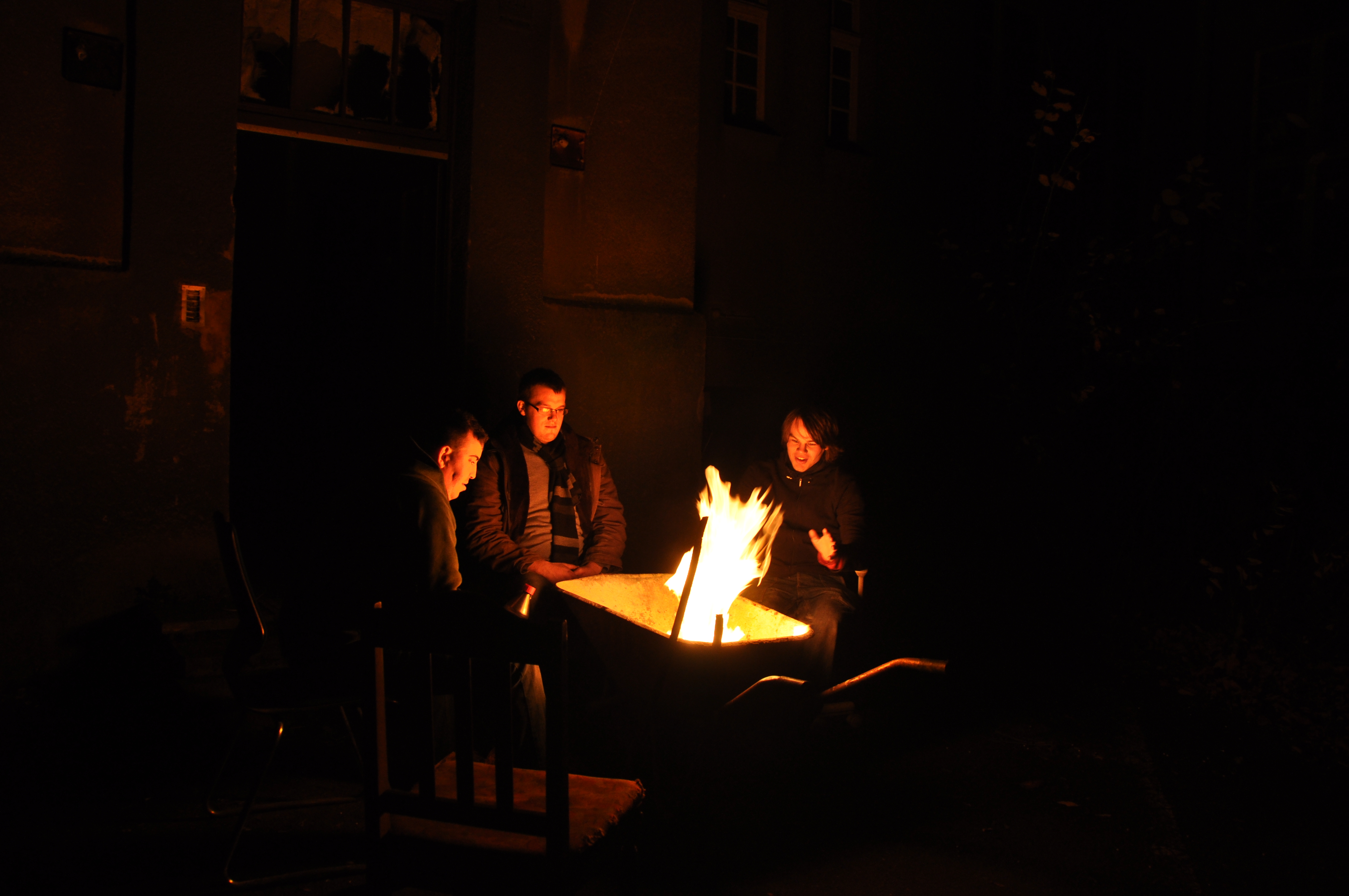
Boundaries that existed in our little UK bubble began to break down. We did not speak the language, we did not meet a single person outside of the grocery stores and petrol stations we ravaged, washing our hair in their bathroom sinks and leaving piles of trash in their parking spaces, running under the turnstiles at the restrooms that demanded 50 cents. All that existed, all that mattered was the adventure and the bond between us which grew tighter with every sip of Jupiler in the back seat of Statler’s car, with every step walked over squishy mold/carpet. We could not think about what was happening because as Dostoevsky points out “one must love life before loving it’s meaning.” And this love was on fire. We began infiltrating live sites, barbecuing dinner in wheelbarrows, lighting dozens of candles in random rooms of Nazi extermination camps and free climbing timber into bell towers in crumbling buildings to photograph the holes in the roof veiled in cloudy continental morning mist.

The film here were shit

Dinner sorted

Dinner cooked over pieces of the gas chamber

Europro

Do they know we're in here?

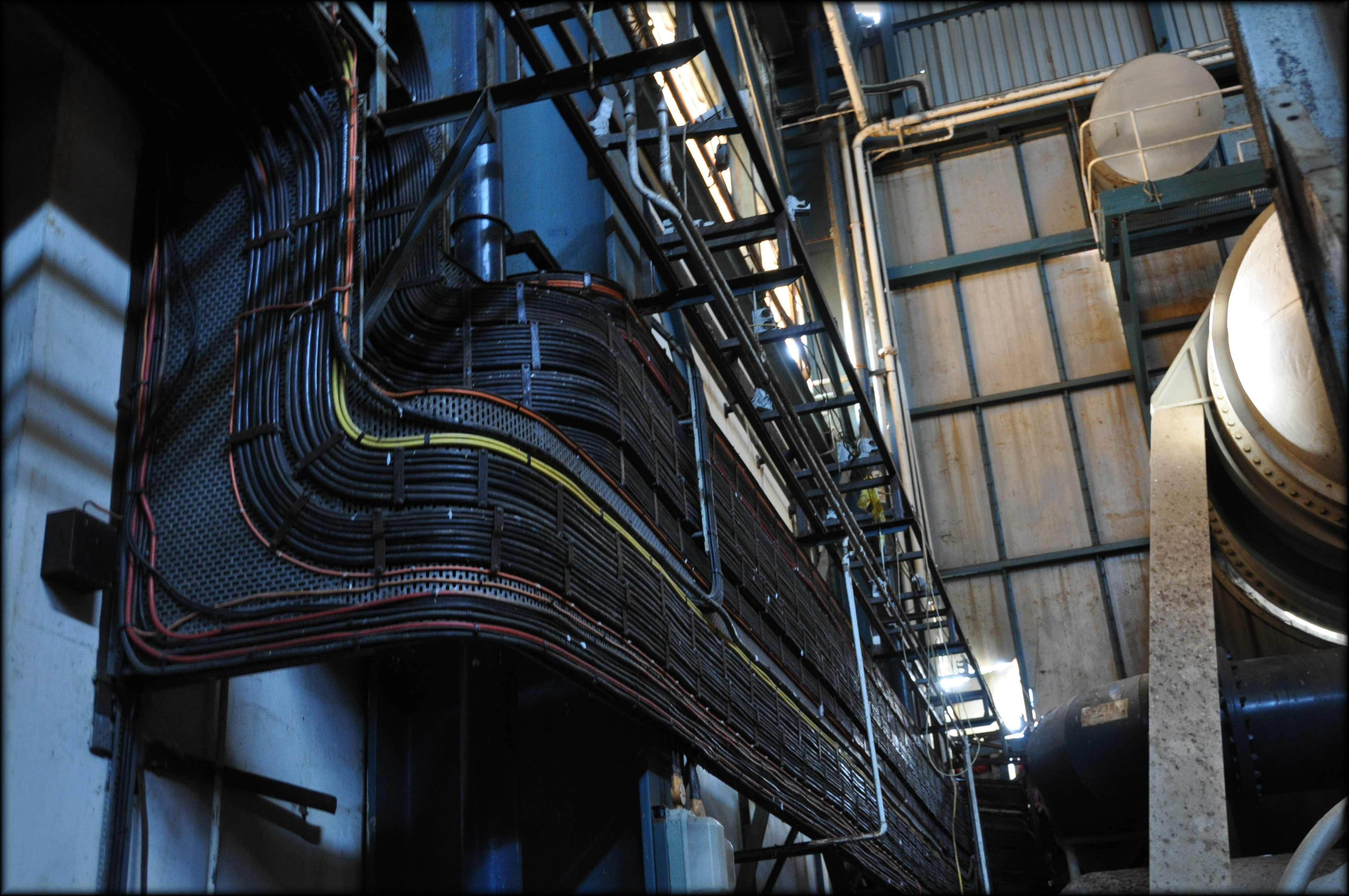
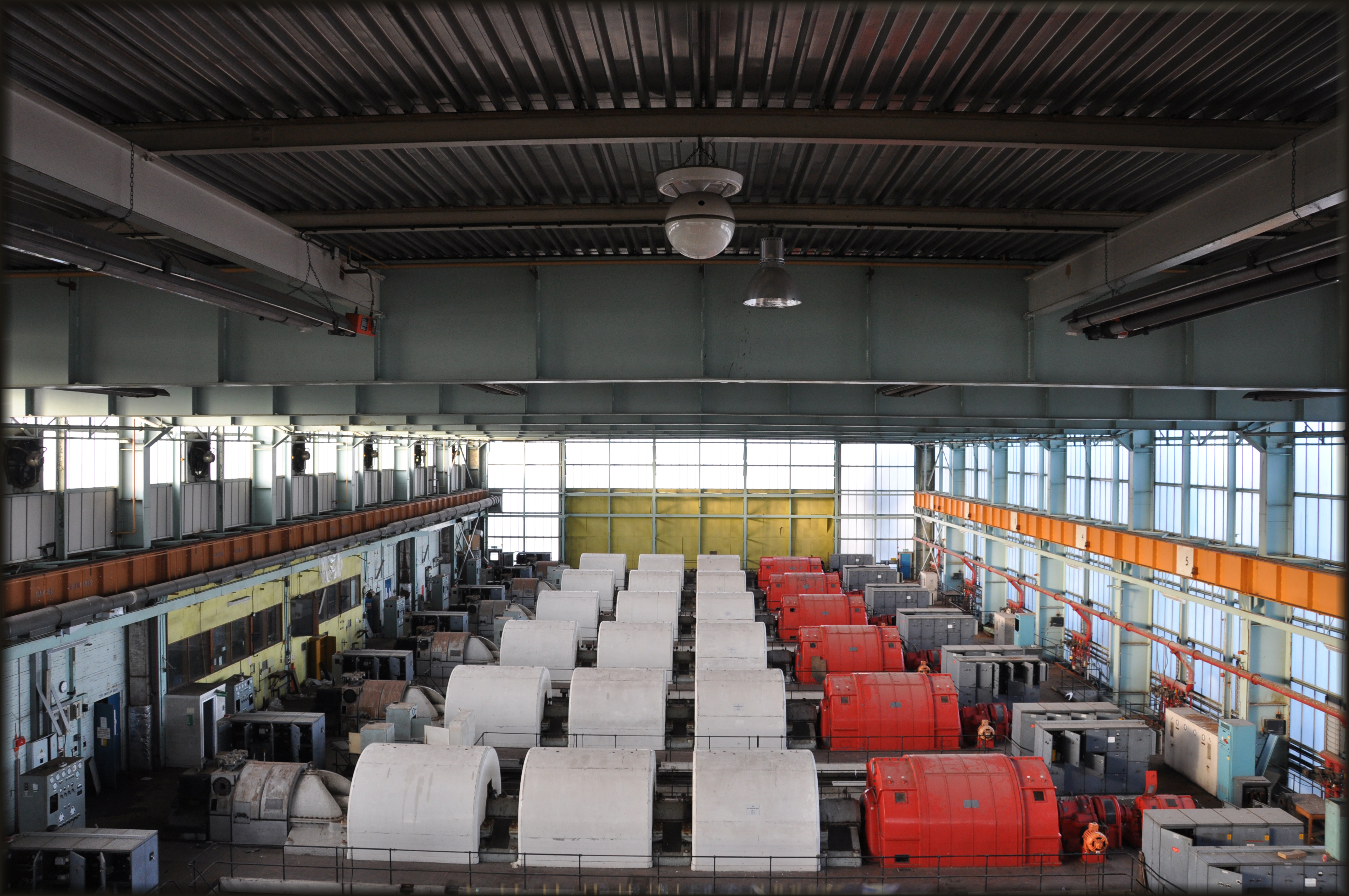
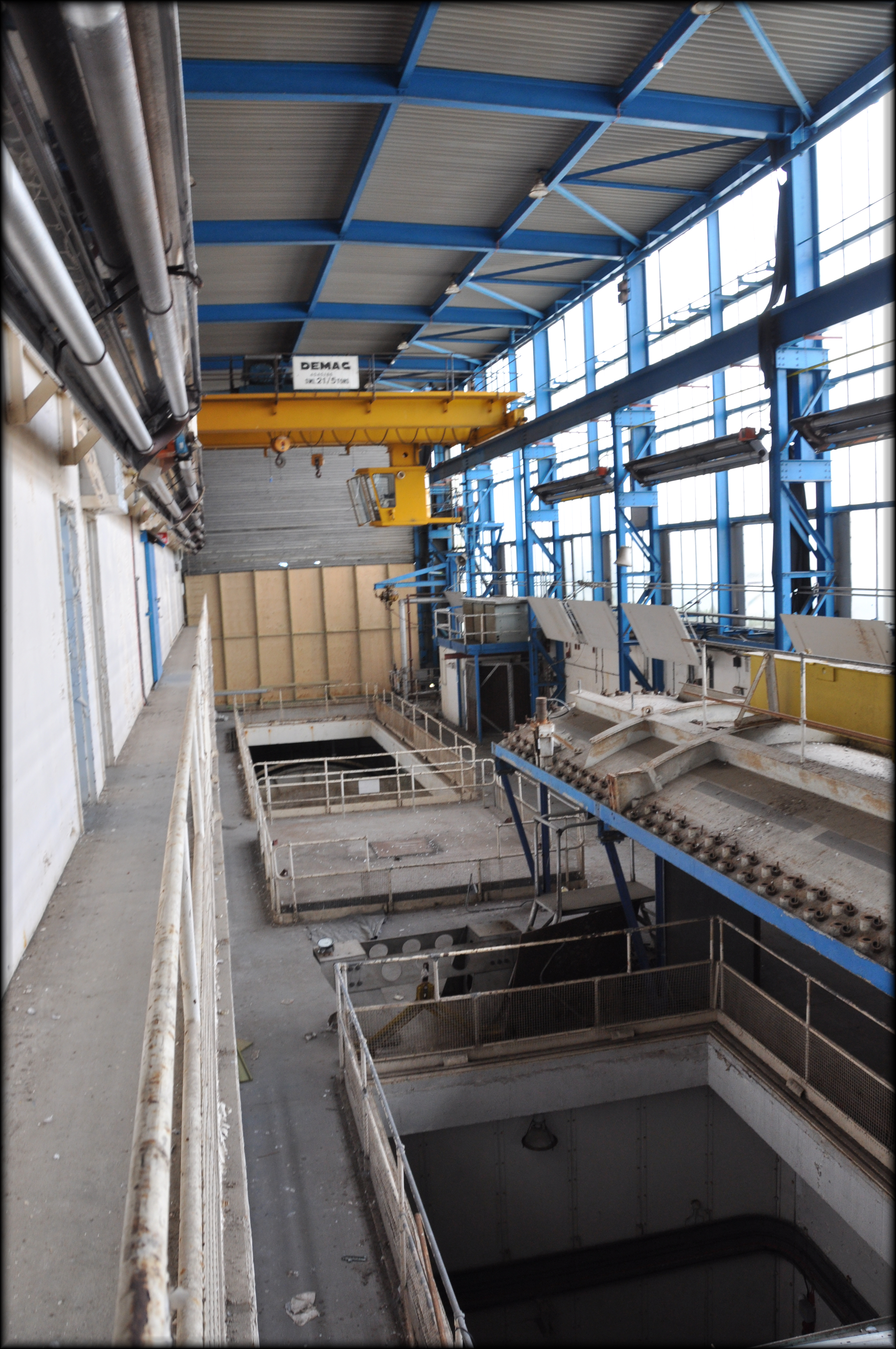
Winch was the primary conspirator of this little frozen-toed expedition. Always up for a challenge and a laugh, he had booked this absurd holiday in December, I think, to break our will. After all, only the broken can be admitted into the ranks of legend. After taking in a few leisure sites over the first few days, he hits us with the news – we are going after heavy industry. Now, given that I am about to give a paper on reanimating industrial spaces through urban exploration at the 2009 Theoretical Archaeology Group conference in Durham at the end of the month, I thought this is a grand idea. Until it actually started going down.

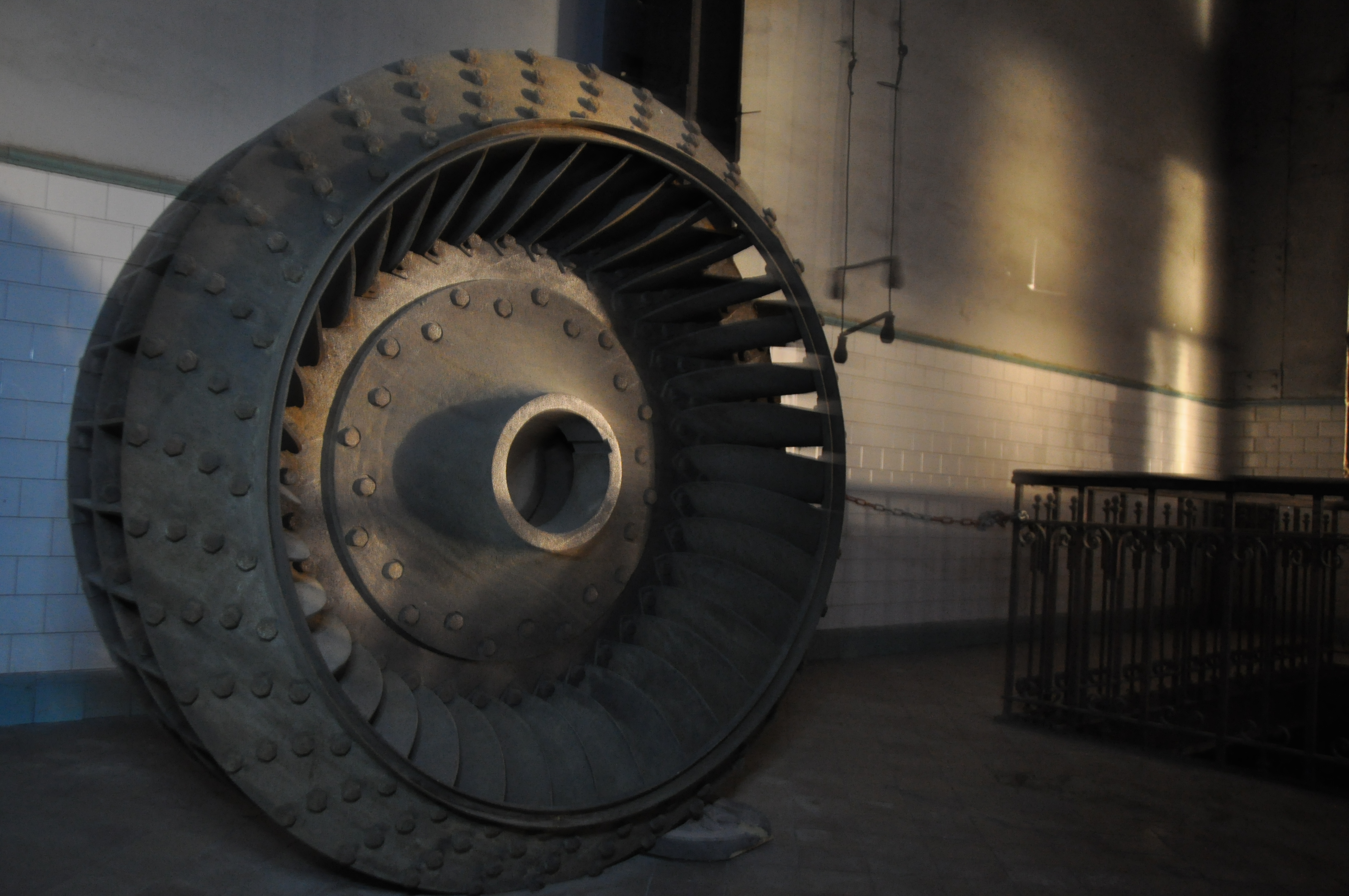
We walked up to Transfo, a power station in Belgium, to find it swarming with people. We waited until dusk. When we thought everybody had gone home, Silent Motion ninja’d his way in to the secure building past the motion sensing lights and infrared alarm system. We got in and snapped some pics for about 10 minutes before some worker ran up and started rattling the doors to the heavy equipment room. Whoops. Turns out they were not all gone, but Silent Motion clearly could give a shit and starting climbing the infrastructure of the building to get a landscape shot.

Roll me

Raw Metal

Pushing it

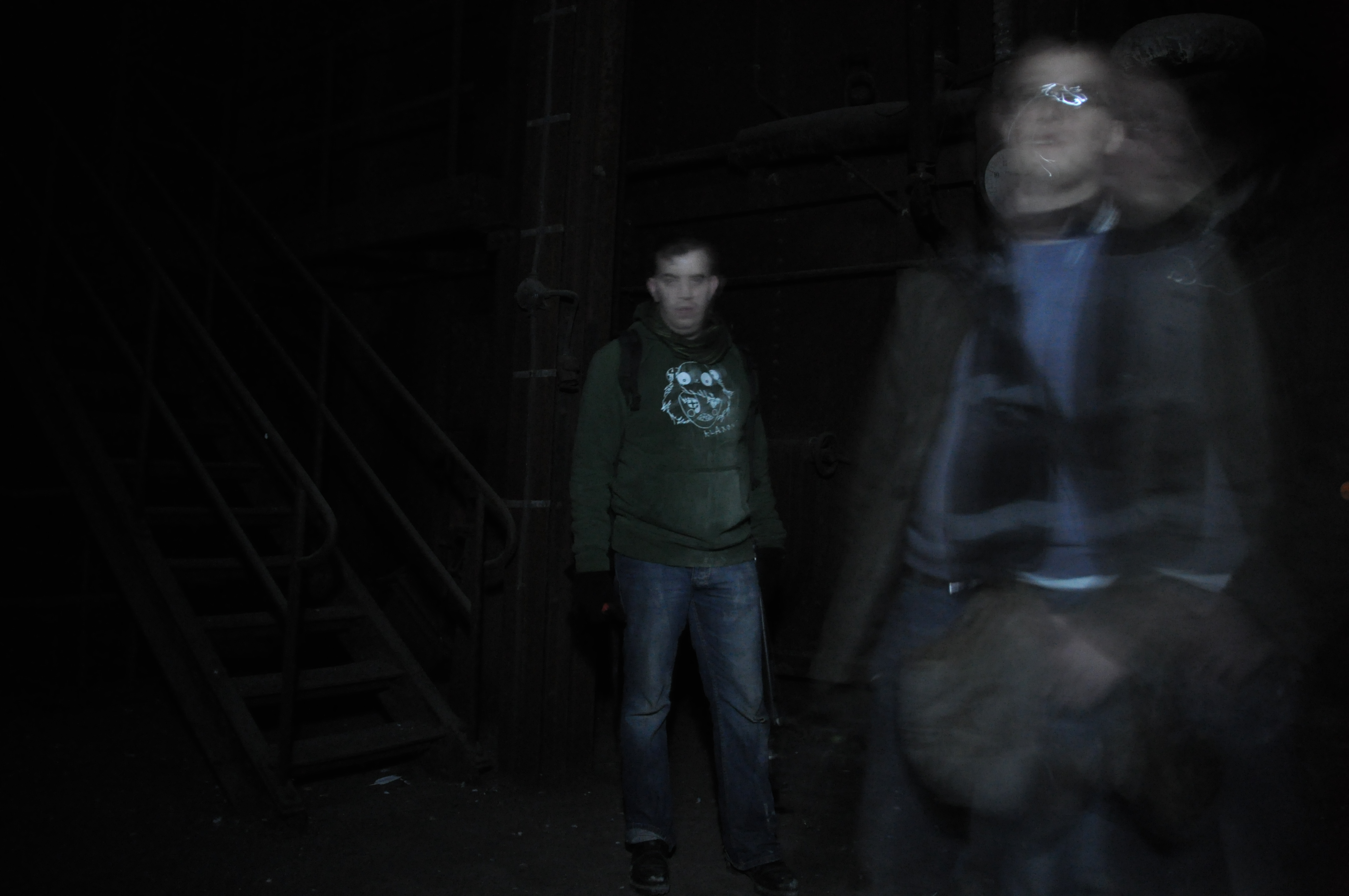
Ghosts of industry

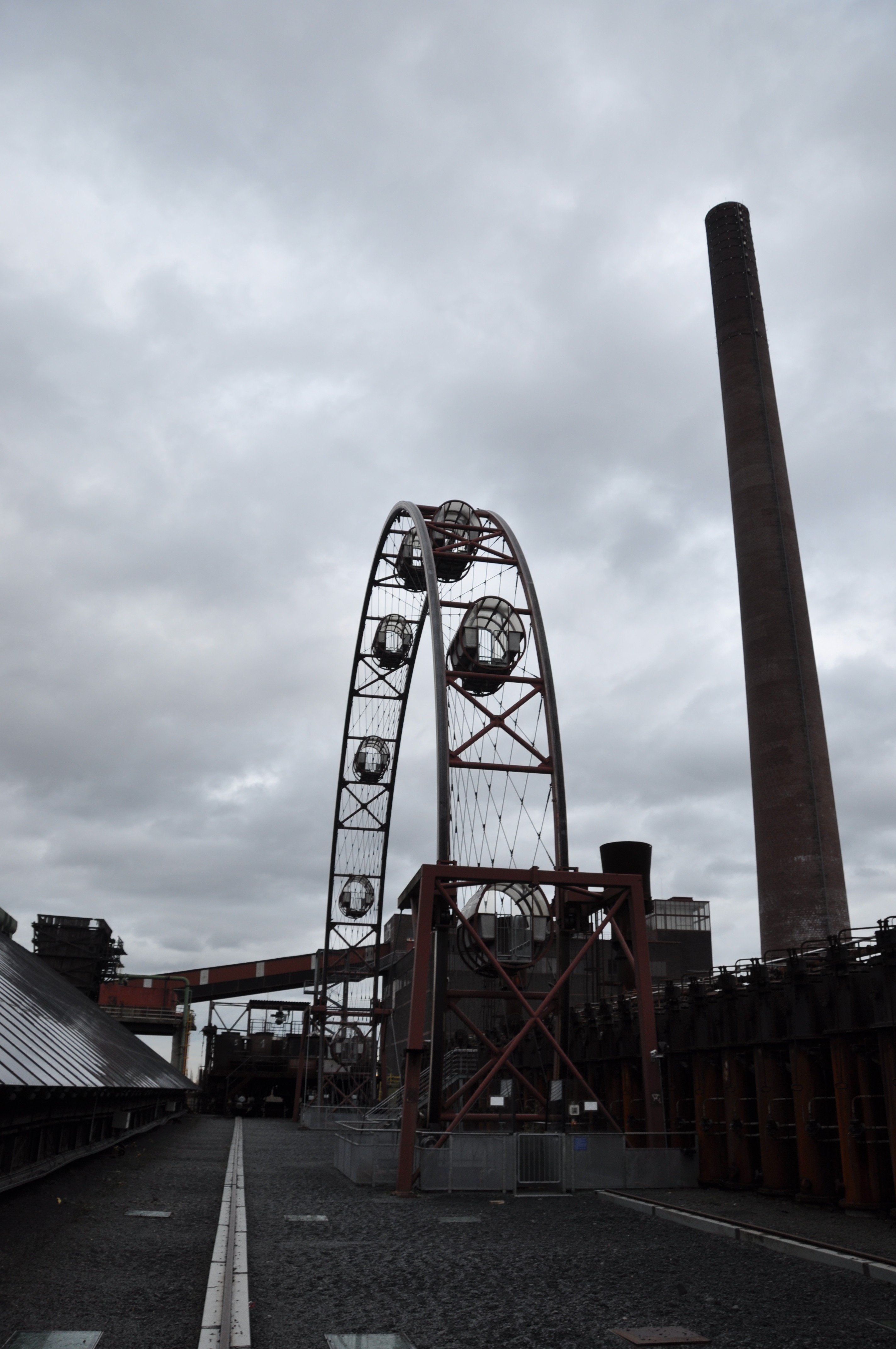
On our way to Germany, we stopped to infiltrate Kokerei Zollverein, again swarming with people including professional photographers and men in suits. I swore that this infiltration would end badly. The only bad outcome, in reality, was my nausea from being meters away from workers as we snook past them and hid in the shadows. All my photos from there are shaky save two:

Up top

Processing

Pause

Pulled

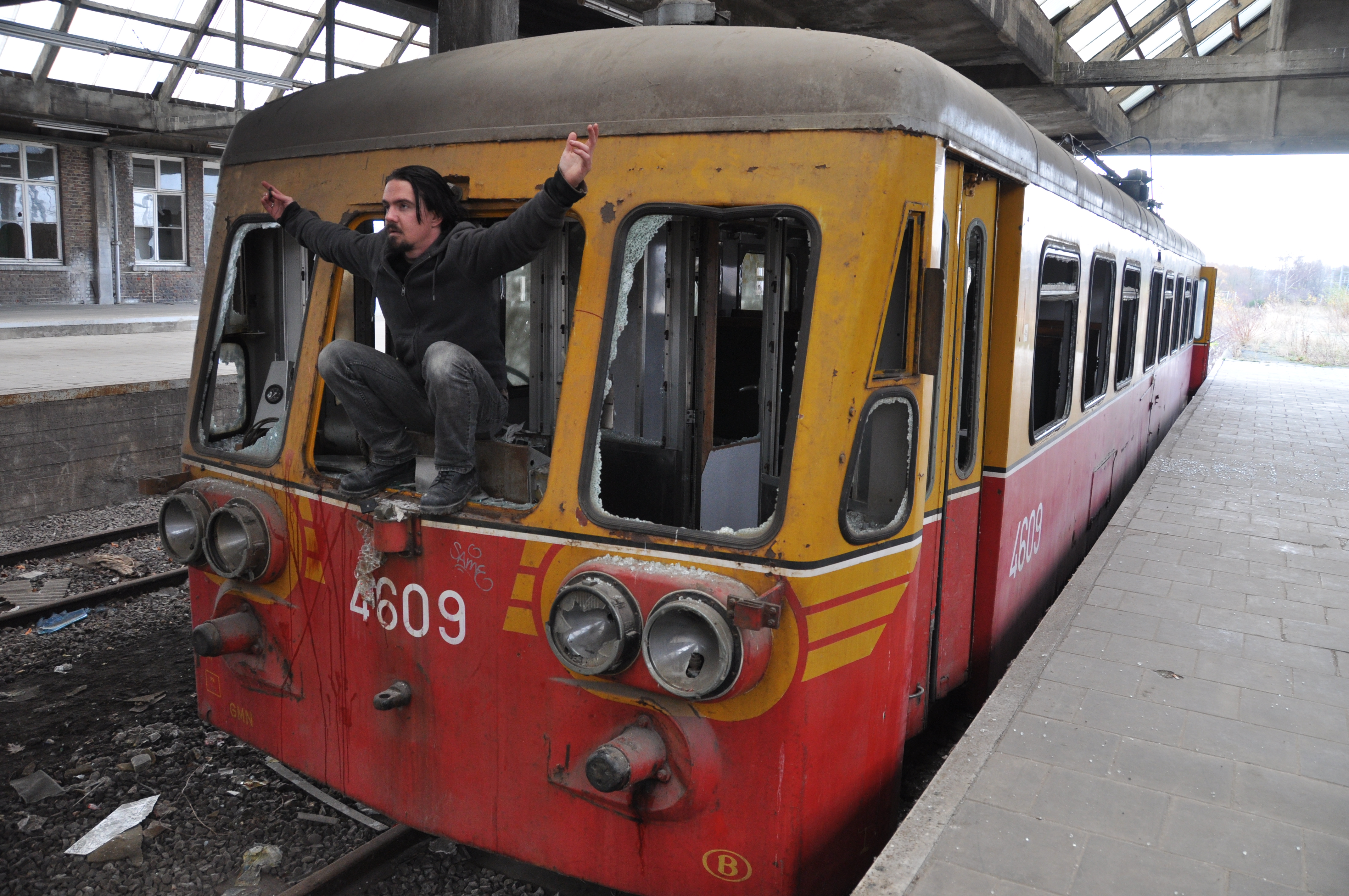
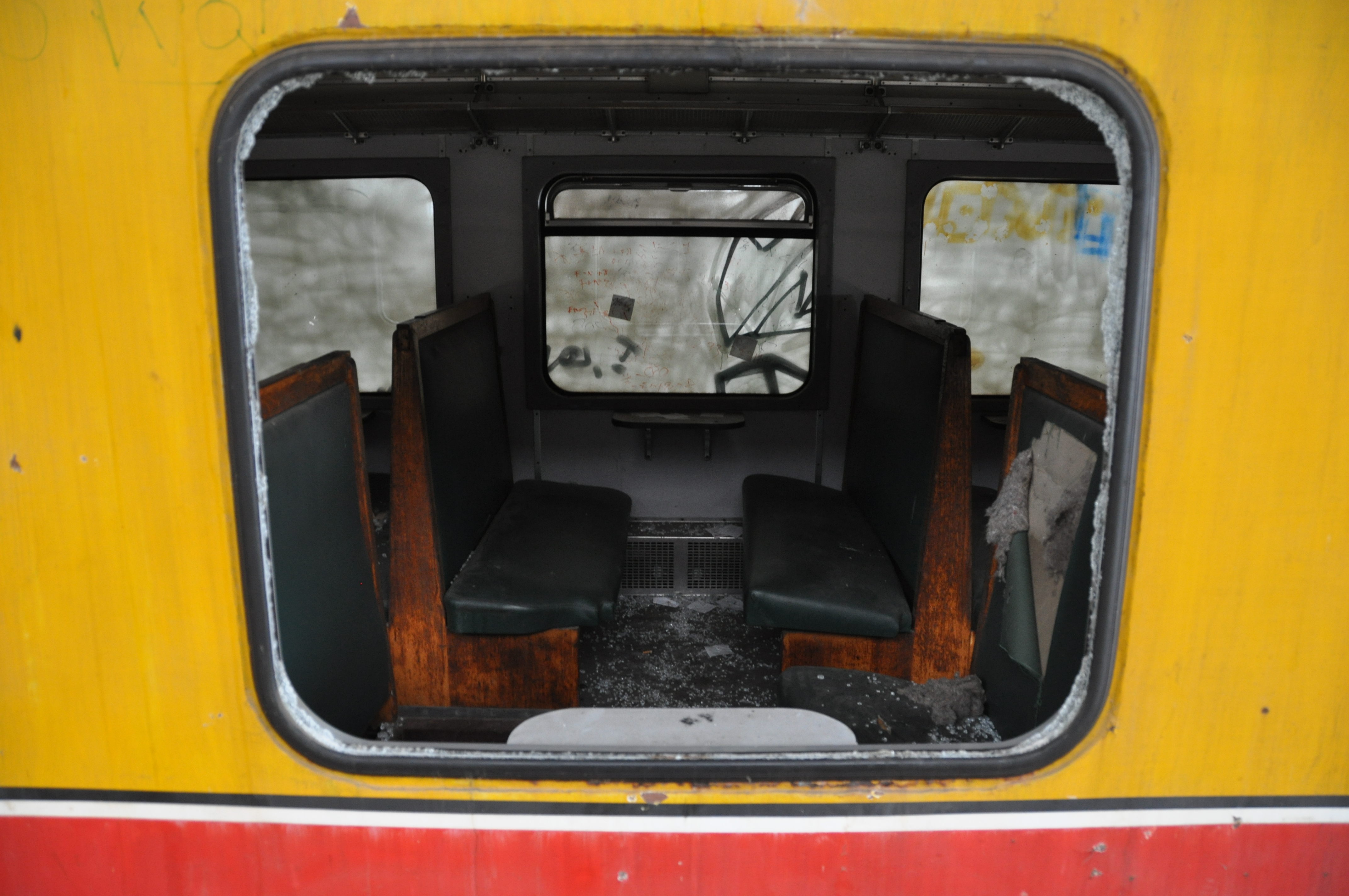
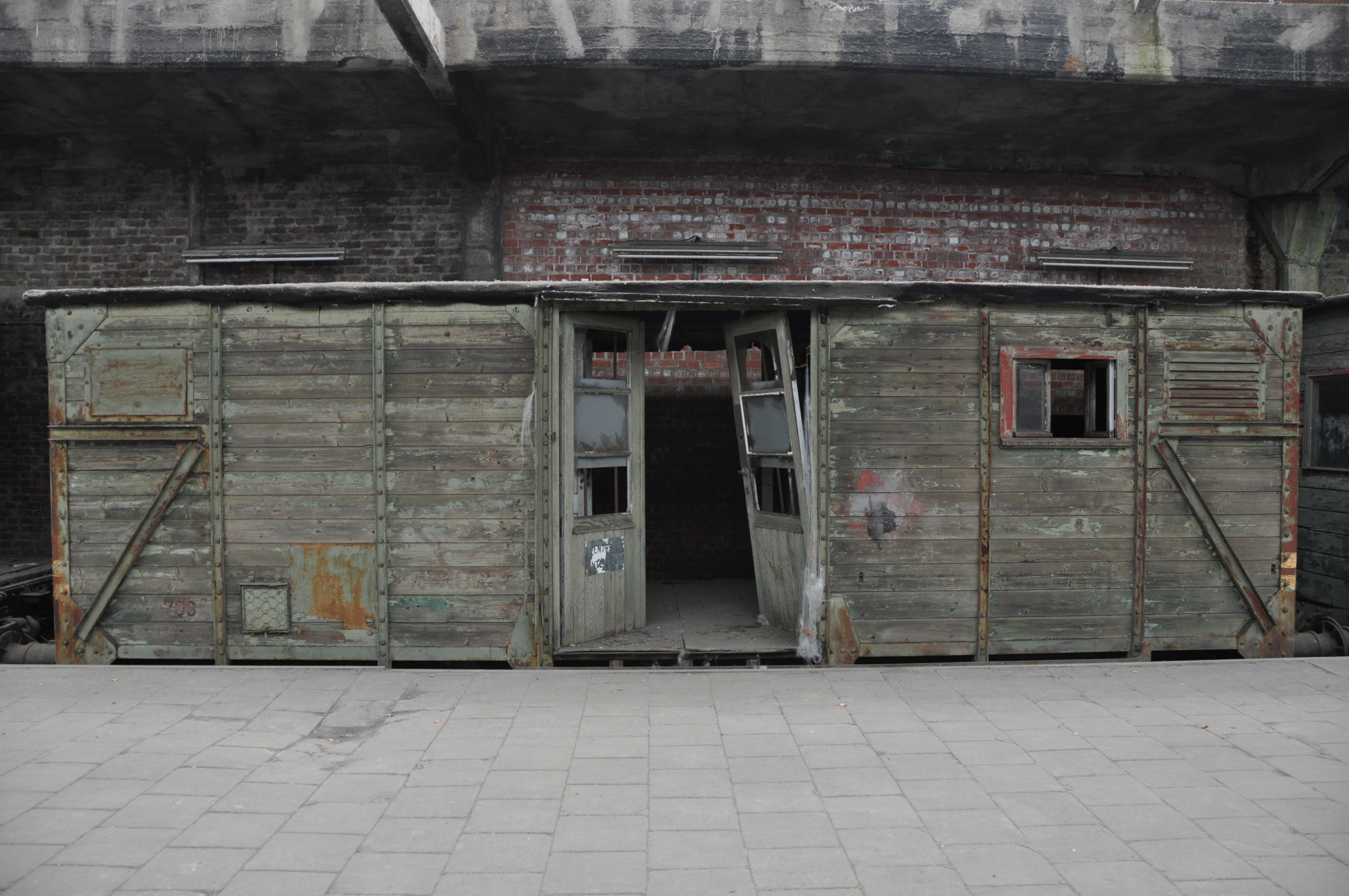
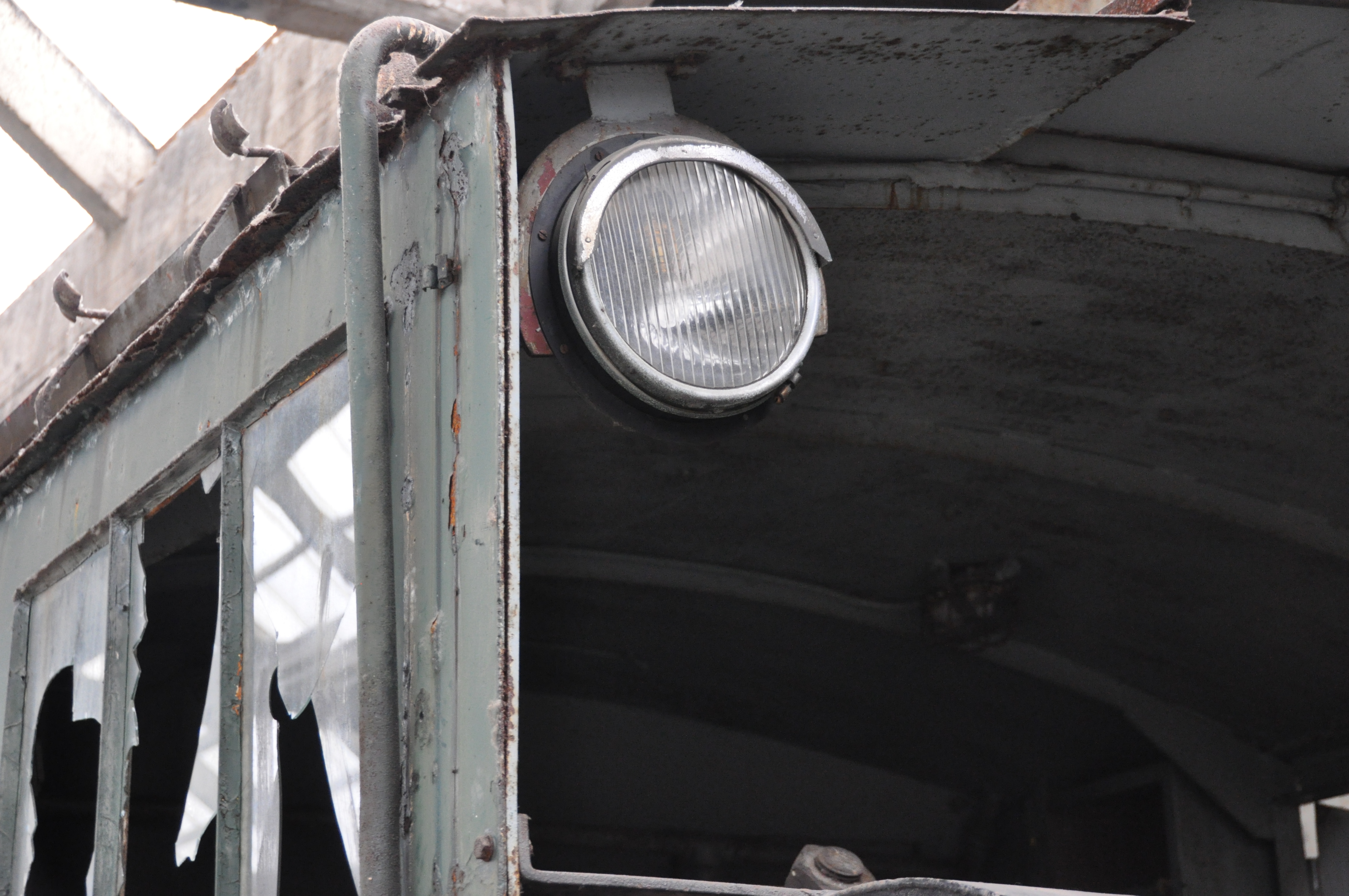
After my moment of existential crisis, we made our way to an abandoned train yard Munster Gare, a glorious moment for me for some odd reason. Something about the intersections of transportation (mobility), dereliction (history, aesthetics) and remote location (opportunity for playfulness) made this my favorite site of the trip.

Titanic

I'm the captain of this ship!

moving?

The passengers

Woody

No more goods

Broken

Unnecessary

After that locomotive jizfest, we drove into Germany. I had not been since I was 19 years old when I pursued the country on a underage American-in-Europe beer run, and was dismayed to find that it was actually a really beautiful place. Mostly because the further East you go, the more derelict structures begin to dominate to landscape. I always thought of dereliction being about the failures of capitalism, but nowhere was abandonment more apparent that in East Germany, markers to the collapse of communism and the retreat of the Soviet Union. The group entered a fervor as we drove through the country side, everything began to look derelict. At one point I remember Silent Motion saying, “Hey there’s a building over there!” and Winch responding “Nice, does it has trees growing out of it?”

We had resigned ourselves to a week of squatting. It was safe to say, at this point, that we had all left our lives behind. I didn’t care about my research anymore, I just wanted to keep getting high on adrenaline. No one ever talked about their jobs, their families. We talked about girls, 4chan, about what country had the best beer (hint: it’s Belgium), about football. Even our Blackberries and iPhones served only to get us aerial photos and to update our facebook status so everyone knew how much more fun we were having than them being homeless, elite and stacked with fat kit. As we crept into East Germany, we were all broken.

I don’t mean that in a bad way. What had been broken was our expectations, our existential dilemmas, our need for unnecessary daily crisis. These things were overwhelmed by the experience of the present, by what was just around the horizon. I felt, for the first time on this project, like I had actually broken the research barrier. I was not studying UrbEx anymore, I was UrbEx. I sat in the back of the car, delirious and drunk, and saw Winch staring at his fingernails. He says “When you look at my fingernails what do you see?” I told him “Maybe the blood and sweat of old inhabitants.” He considered it and replied “I don’t want to clean them…” This was our arrival, the point at which we had committed to dreaming instead of sleeping. And with that, we moved into Berlin, into post-Soviet Territory. But that, my friends, is a story for another day.

Lucid

Never done

Share
Tags : , , , , , , , , , , , , , , , , , , , , , , , , , , , , , , | 4 comments

Is this a game?

Anthropologists have recently been writing about World of Warcraft, Second Life and other Massively Multiplayer Role Playing Games (MMORPGs). Since many of these games have millions of players, with their own economies, cultures etc., it has been suggested that people within virtual worlds have developed their own culture. As an avid World of Warcraft player, I heartily agree. But I also love playing games in real life, and, in a sense, this is what UrbEx is all about.

Yesterday Marc took me to a site which felt very much life a game, a surreal landscape of industrial waste, technological failure and a ninja Ghurka security guard. We explored it, very carefully, and all went well, but when I got home, I re-dreamed the explore, making it the game I knew it was.

I call the result a Real Life Role Playing Game or RLRPG.

In a small forest, in a quiet neighbourhood, there are trails snaking their way through the tress. Different paths straddle the border between the forest and fields, inhabited by Mums with prams on this lazy Sunday, and by pairs of flatmates and friends, jogging, trying to sweat out remnants of last night’s snakebite extravaganza with girls in too-short-skirts. On one of these trails, in a black hooded cloak, walks Marc of the Cata Clan, Lvl 80 Elite Explorer, back again to conquer Pyestock for bonus explorer points before returning to his subterranean home in the Paris Catacombs.

Marc moves to the perimeter of his target, taking note of the Ghurka guard walking along side him, without looking in his direction, noticing that the Ghurka is following his movements. And eyes. He has been spotted. Marc breaks into a run, trees passing by like cars on a busy highway. With a quick glance to the side, he notices the guard is keeping pace. An elite guard. Merde.

Rookinella was right to be scared and stay home today, this guard cannot be defeated with felt or plastic pirate swords. With two glancing kicks off of the leaf cover, Marc is running up a willow tree, rebounding over the 4 meter triple barbed wire fence, his cloak hood flapping in the wind, distracting the Ghurka just long enough to pull the small blade from his leg holster. The Ghurka is cut down before he can get to his weapon, his mouth held from behind to muffle the screams of agony as he bleeds out.

Moving in

Marc shoulders the guard (god he’s heavy for such a little man!) and sneaks stealthily into the entry point, the Stargate chapel, where his next surprise awaits. He stuffs the guard under the mesh catwalk and walks over to a large circular disk on one end of the room. With a deep breath, he grabs the edge of the Stargate and pulls it open to unleash the Goblinmerchant, a daemon; a vendor of all things fantastic and mystical.

But what’s this? The Goblinmerchant smells humans. Turning his comrade, he can see that Marc has heard them long before now. A group of 4, fumbling their way through. No wonder, with security gone now. The perimeter is being breached. If they make their way to the Stargate, all hell could break loose.

They run off, low to the ground, weighted down by field equipment and supplies pulled from the Stargate, supplied for documentation of the Cata Clan invasion. Through the dangling Cat 5 cables, past the air tunnel control room, up the rusty ladder. Four fellow explorers lie in ambush and a battle almost ensues until we realize they also hold a key to the Stargate.

The documentation begins, one room after another, small items and large machines from humanities forgotten industrial past, a legacy of materiality replaced by computer models and office jobs in Slough.

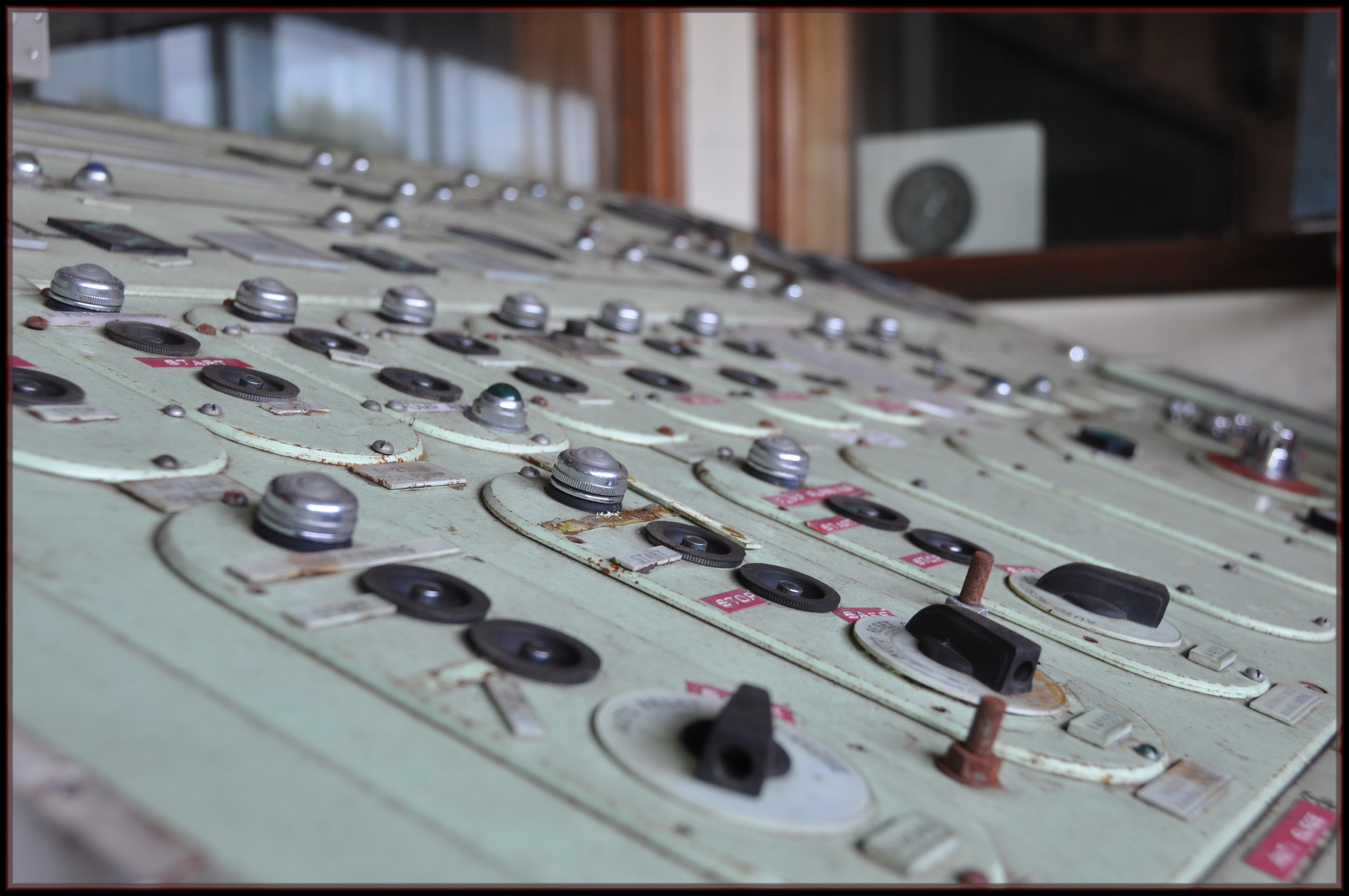
Controlling the minds of workers?

An exploded reactor, lucky we were there to prevent radiation leakage!

Mail delivery system

Heard the seashore in these

Tunnels or cables? Was I in those?

Flying over the site with a temporary upgrade

Don't look down

Dirty row, collected for XP

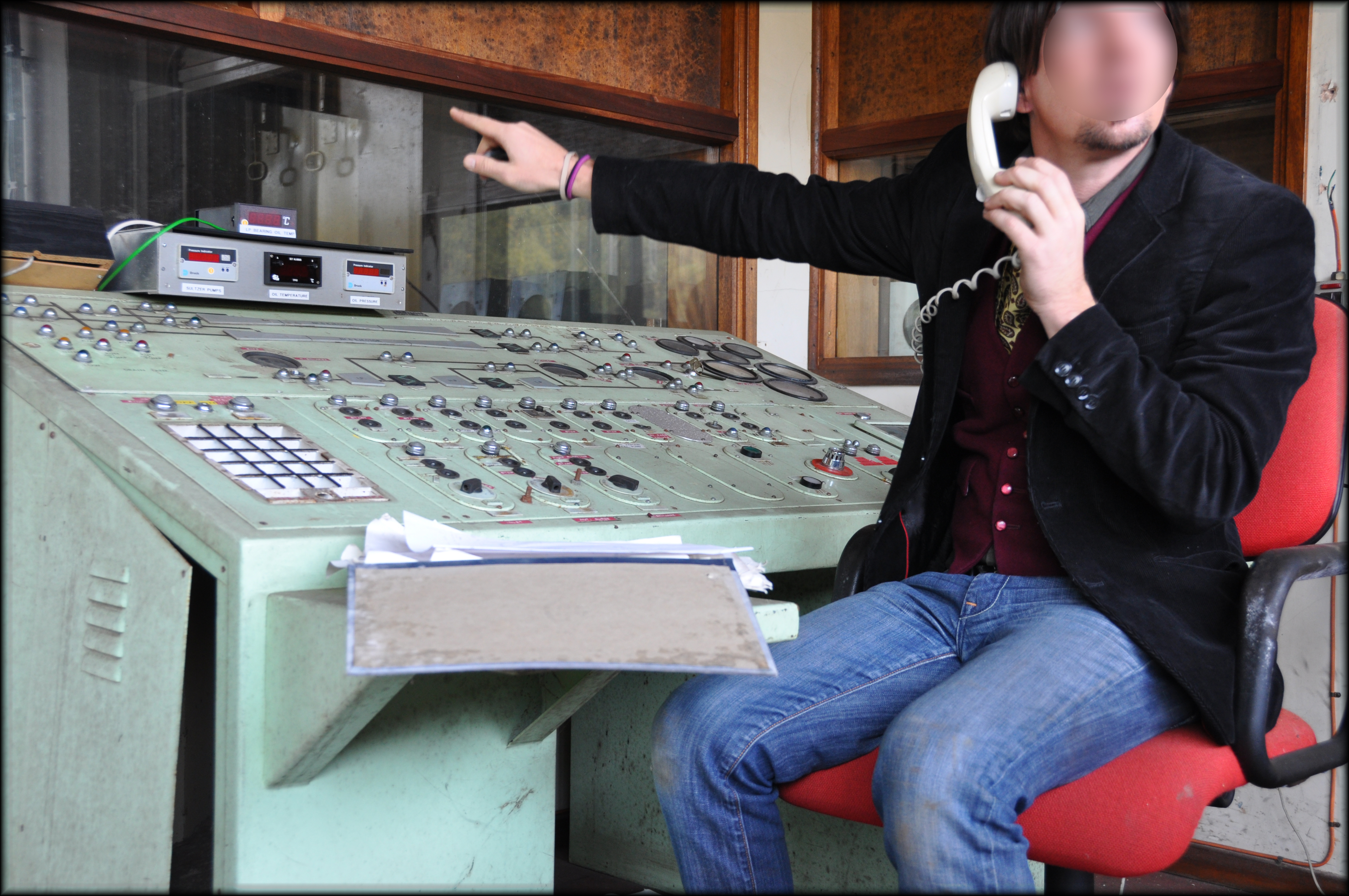
Goblinmerchant calls control to tell them the mission has been accomplished. He is awarded 3 mana potions and 5000XP points.

Phone home

Documentation complete, Marc enters the energy capacitor, a small proton particle subfield generator, and Goblinmerchant flips the switch, firing him back to Subterranean Paris.

Impossible

Share
Tags : , , , , , , , , , , , , , , , , , , , , , , , , , , , | 3 comments

It’s only been two days since I have returned from Belgium and I am already fiending for my next explore. I know it’s just around the corner, I have a few invites to go places this weekend, but in the meantime, I am stuck here behind my computer writing grant applications and trying to catch up on my field notes, taking short breaks to look at pictures like this one:

Somebody's house, nobody's home

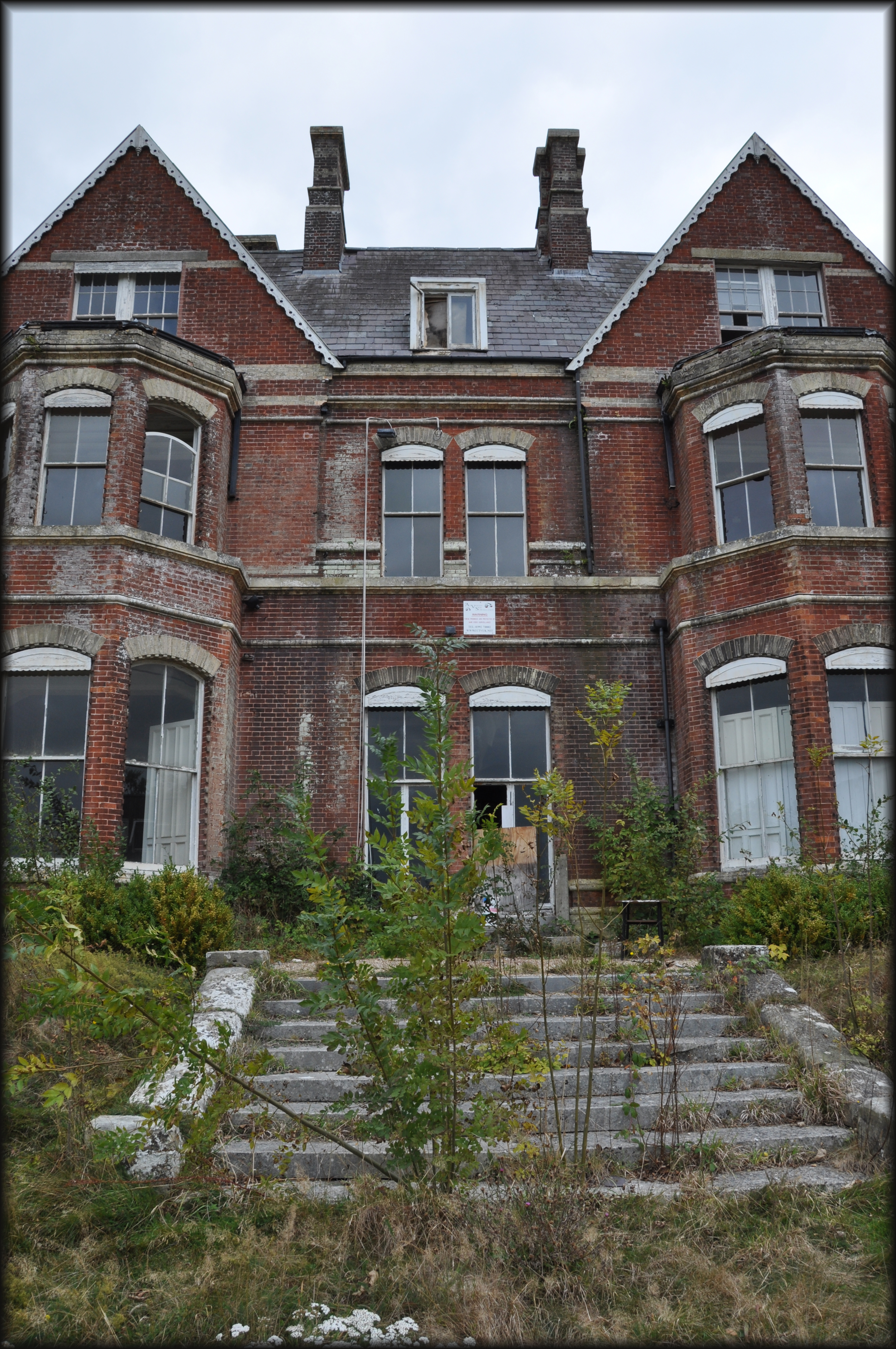
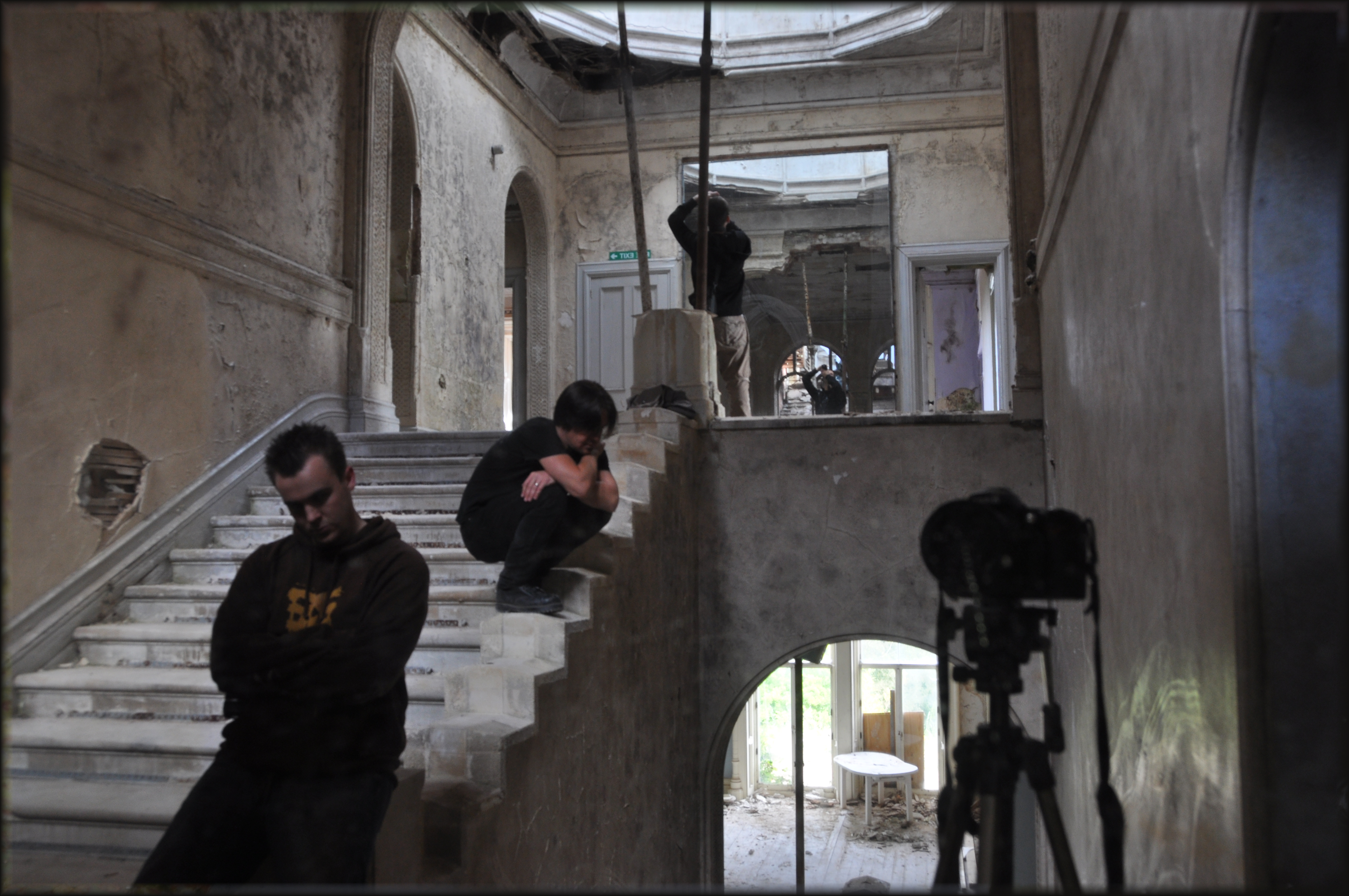
This was a stately home that Vanishing Days took me and Marc to a few weeks ago where we all shared some angsty moments in a beautiful hallway with a spiral staircase, a dome-shaped skylight and some very large mirrors.

Space Invaders

The thing about this house, and the reason, I think, why I keep going back to look at the photo, is that it was clearly not abandoned very long ago (I heard 1998 – so maybe 11 years). Generally, I find that the more recently a place was abandoned, the more interesting it it to explore, because it has some sort of presence. You can feel who was there. At times, you can feel their grief and loss. Sometimes, it seems even more visible, some small piece of crumbling failure, a left behind artefact or scrawled note. Maybe it is the line between UrbEx and Infiltration and my need to get closer to that line is becoming greater as I have to feed that addiction.

Forgotten pet

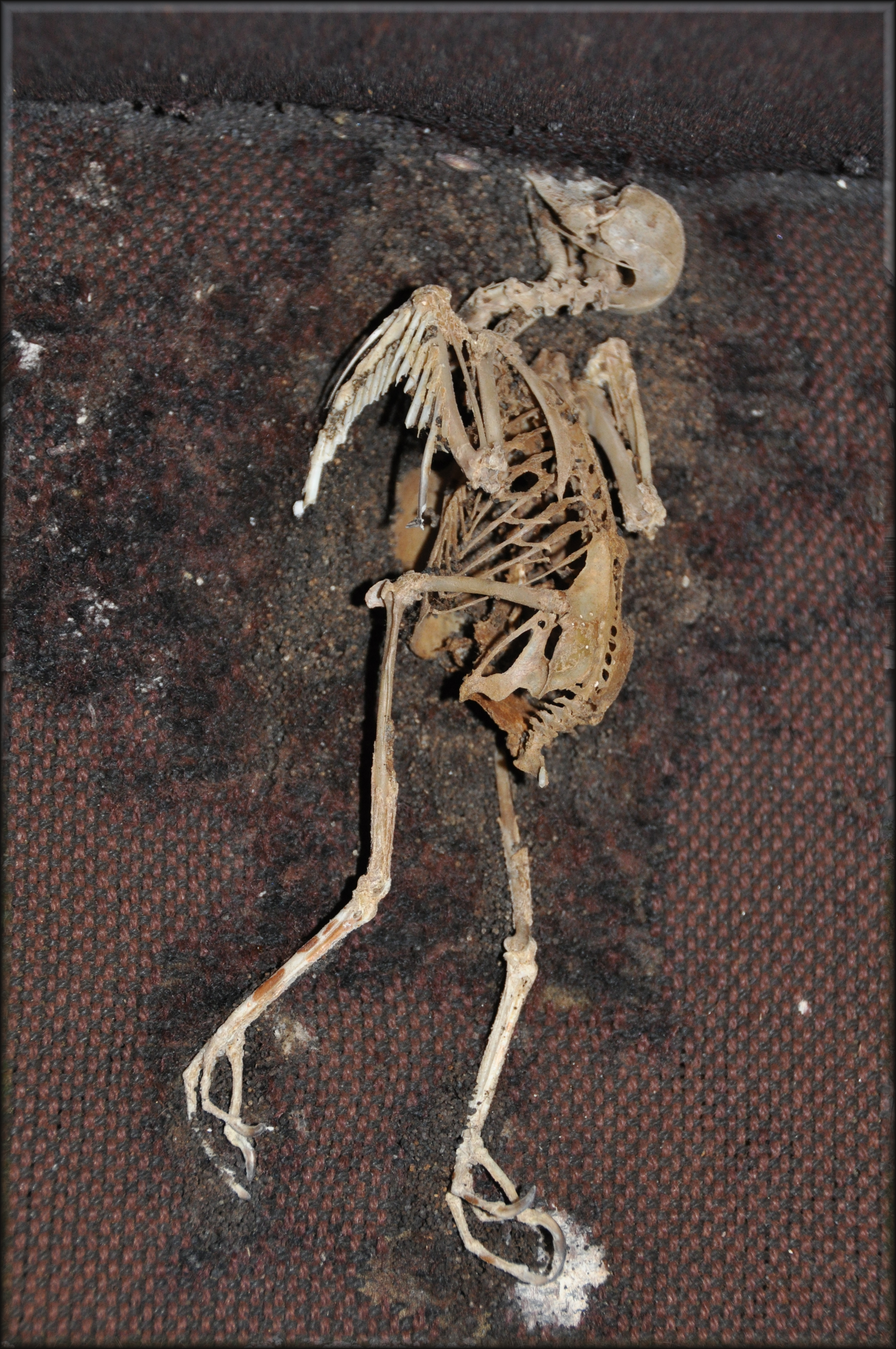
Vanishing Days, Marc and I saw this bird trapped between door frames and shutters, to panicked to get out, not intelligent enough not to get in in the first place. We saved it, but quickly realized that there were piles of dead ones behind the windows. We were forced to accept that this was their fate, just like the house, now no one’s home, which would die a slow death. But for a day, the house was enjoyed, playful desires were realized, new shoots of life were located, and space became place. As I stare at the picture of this beautiful abode, I like to think that it appreciated our visit.

Spun

Silk

Share
Tags : , , , , , , , , , , , , , , , , | 3 comments