Your hearts know in silence the secrets of the days and nights. But your ears thirst for the sound of your heart’s knowledge. You would know in words that which you have always known in thought. You would touch with your fingers the naked body of your dreams.
The Prophet

Urban dreams

Part I

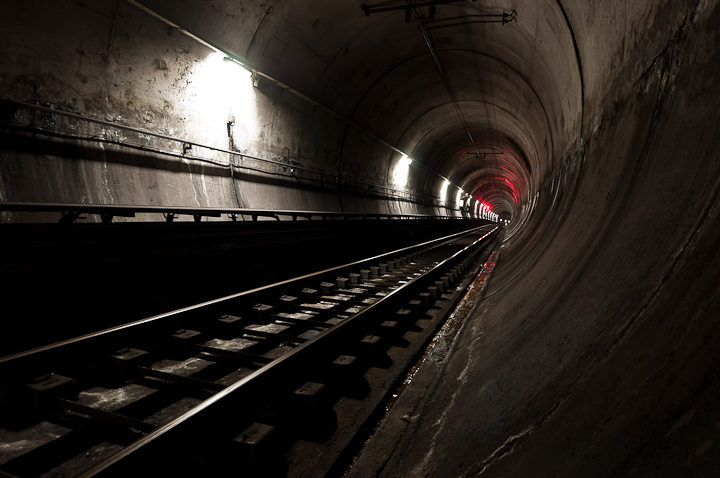
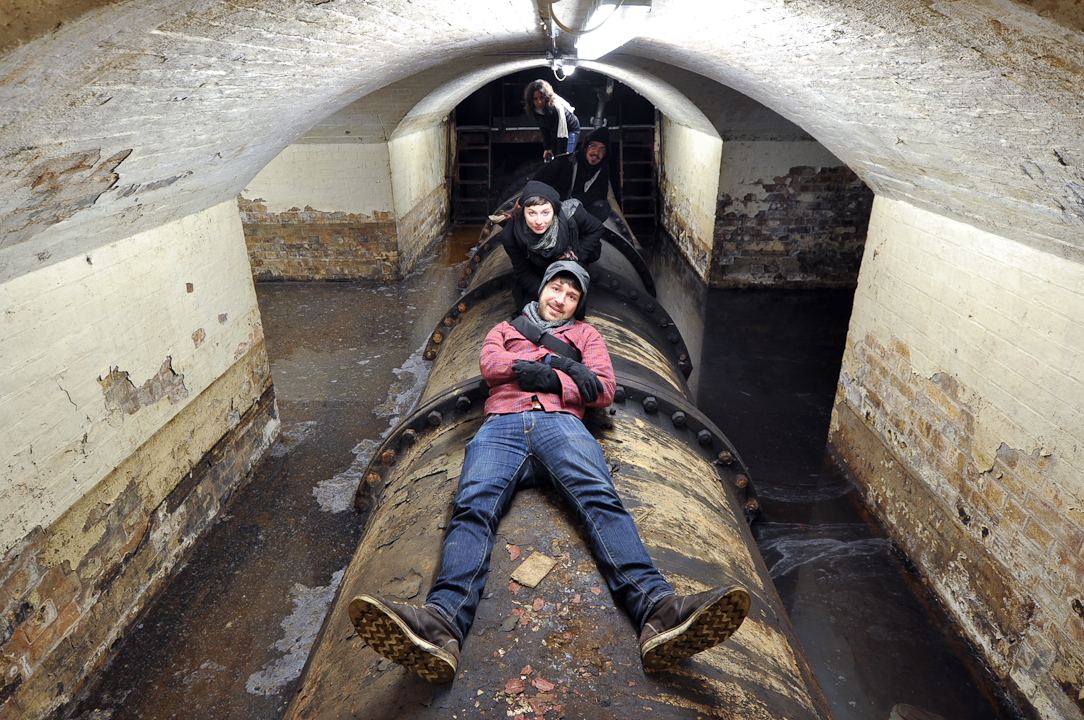
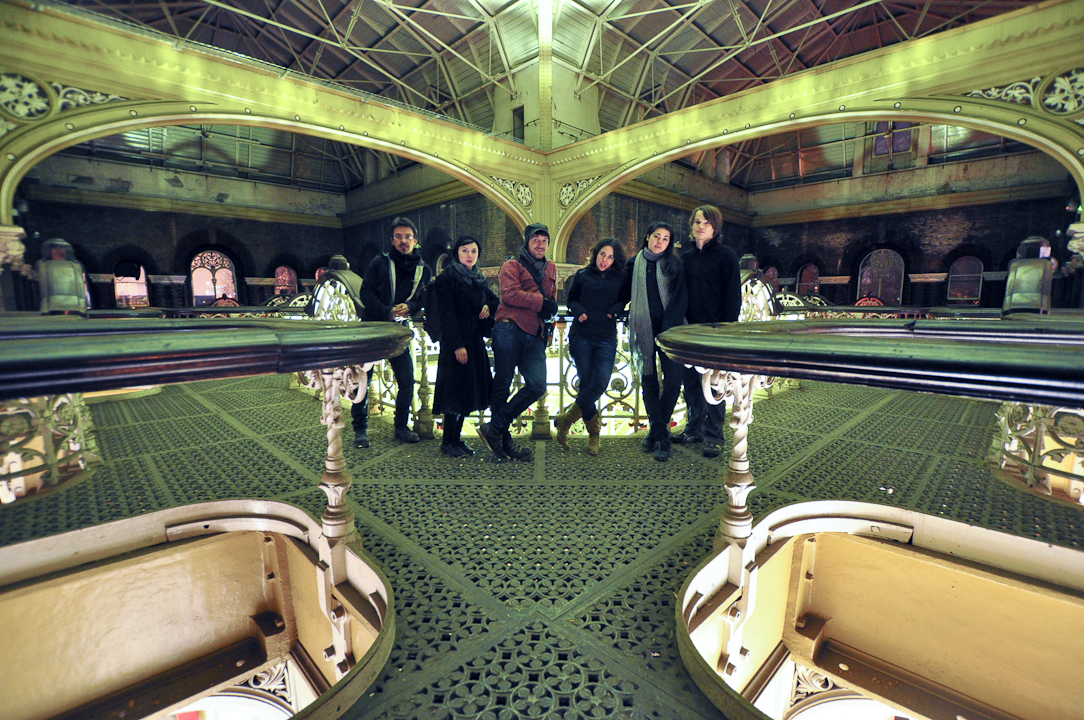
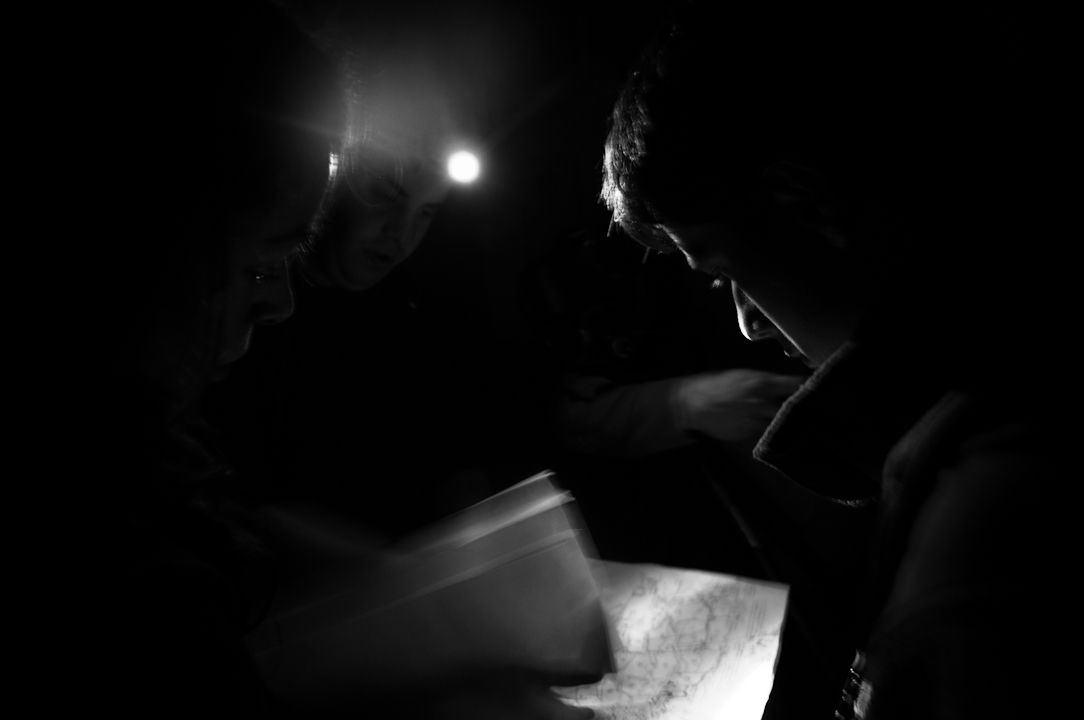
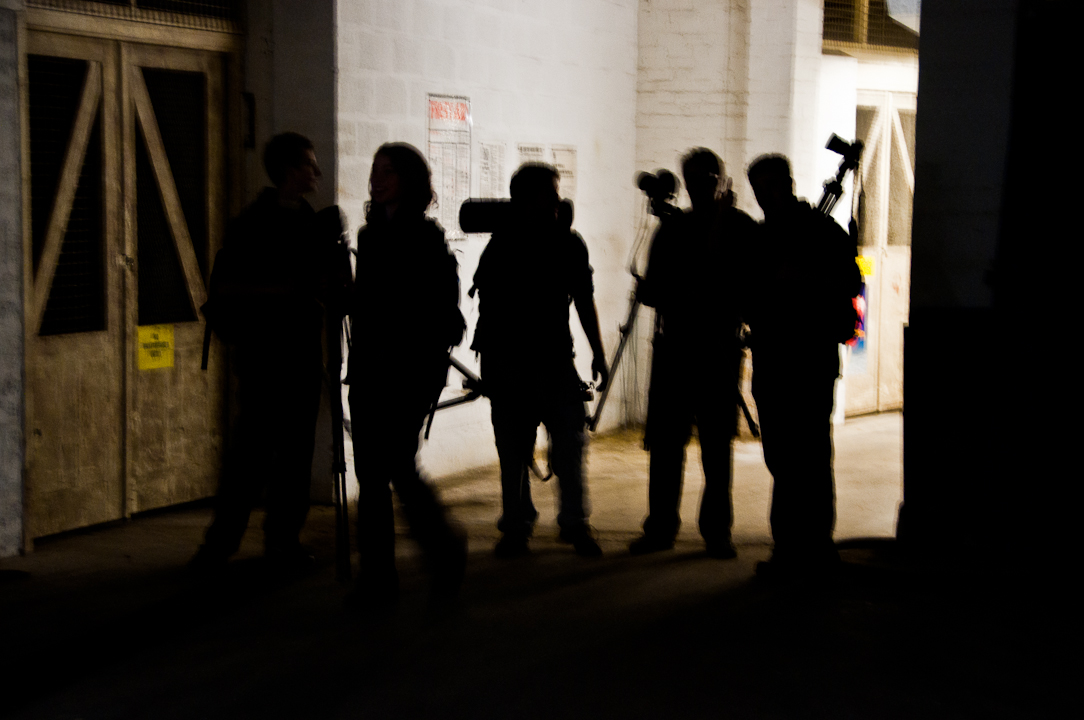
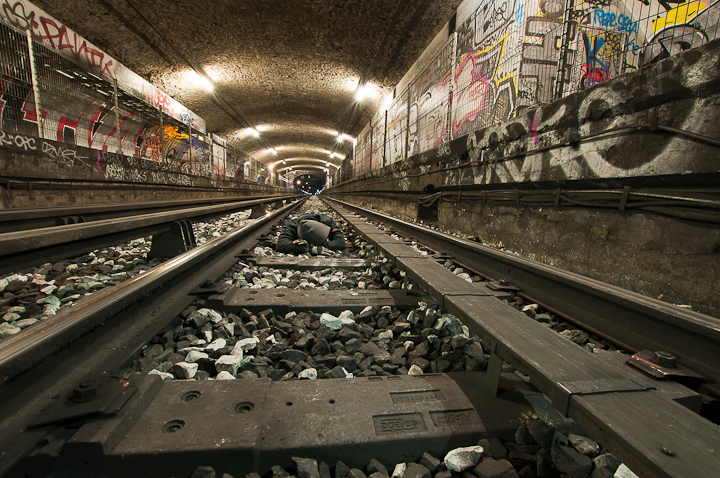
Desire was everywhere when we stepped of the plane at Charles de Gaulle. We nipped and yelped, scurrying into the city wearing rags and muddied bags, dragging tripods down the walls of Métro tunnels like Freddy Krueger. The thirst, after weeks of depraved scholarship, endless perverted workdays and inert meetings over coffee, had concretised into the force of a tsunami. The wave broke at times around tall objects, splitting and climbing for a moment before splashing down again in a liquid slump of ecstasy. At other junctions, it snaked into infrastructural gaps too small for bodies. We followed the water to find the glitches in the system, trying out various keys and tools for which the original intended purpose was never understood, lost artefacts from another time, rediscovered by our nomadic band of forgotten disciples. We bled and drank, crawling into our sleeping bags when we could smell the bread baking, the delicious olfactory beacon warning us the City of Light had switched on for the day.
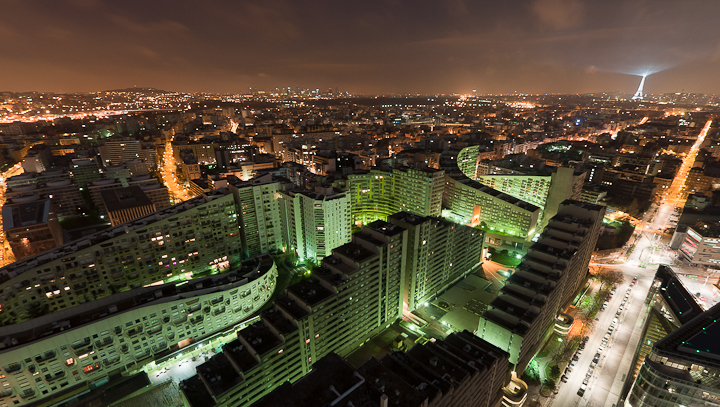
Depraved

Everyday life is a life lived on the level of surging affects, impacts suffered or barely avoided. It takes everything we have. But it also spawns a series of little somethings dreamed up in the course of things. Exploited, those affects, glitches, errors in lines of code, paired to the desires to find them, become the preeminent domain of the urban explorer, the skateboarder, the street artist and all children while they are still conscious, before society rapes them into submission, huddled in the corner of an overcrowded classroom where they are forced to recite the national anthem over and over again.

Desire wasn’t purchased, nor did we try to sell it. At the same time, it was a profitable endeavour, an investment in the communication of the incommunicable, a necessary departure from direct economic production. Urbanity is codified by a set of rules which creates spirals of economic ‘prosperity’, where relentless velocity must be maintained to preserve the perpetual accumulation of wealth, resources and labour. The result is a system which reproduces itself in ceaseless iterations like a demonic fractal art project, even (or even especially) when those accumulations are superfluous or unnecessary, until it pops.

Juxtapositions

The result? An endless stacked stratigraphy of miscommunications, abortions and aberrations, interminable confusion about what could and should have been, sparkling smiles as the successful accumulation is directed into personal coffers, suicide from bridges where it does not. What sprawls all around us everyday, whether we are in London, Milan, Paris or Los Angeles is a capitalist monstrosity that regrows heads as you slice them off. Our only advantage against this unkillable and utterly beautiful beast is its immensity, for it is this very horrific attribute that allows us to run underneath unnoticed while it spews poison in the Siene.
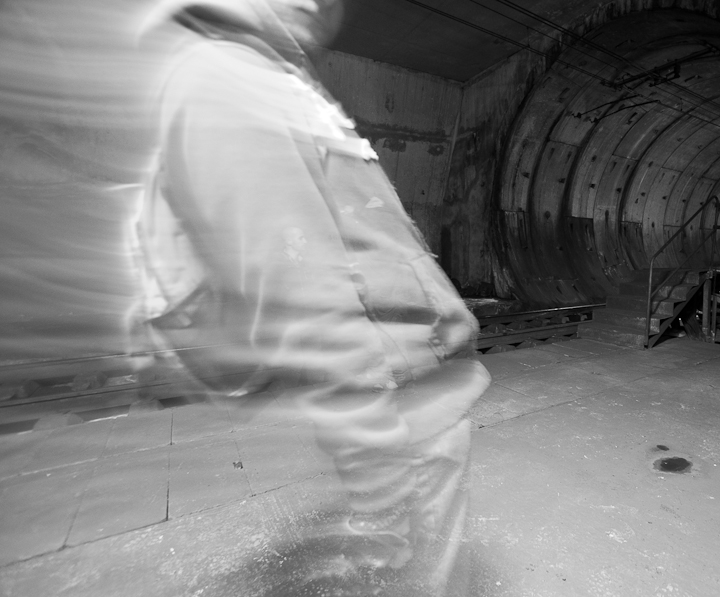
Endlessly fractal

Part II

“Ah! Paris! What a beautiful city, don’t you think?”
“I don’t give a shit, what I wanted to do was ride the Métro.”
Zazie dans le métro

Rails

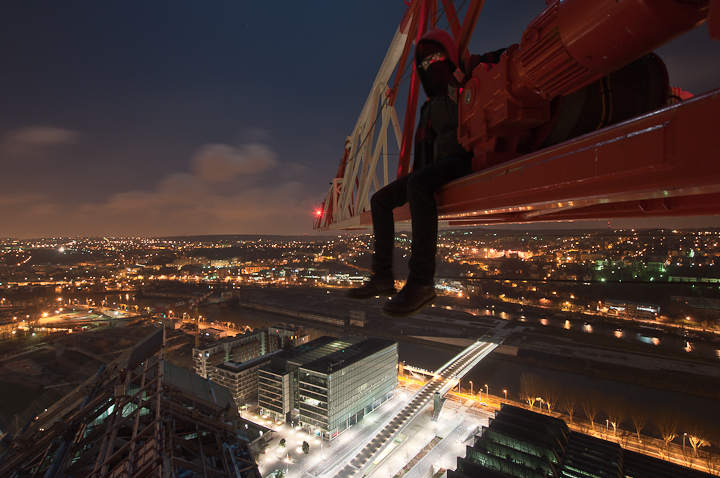
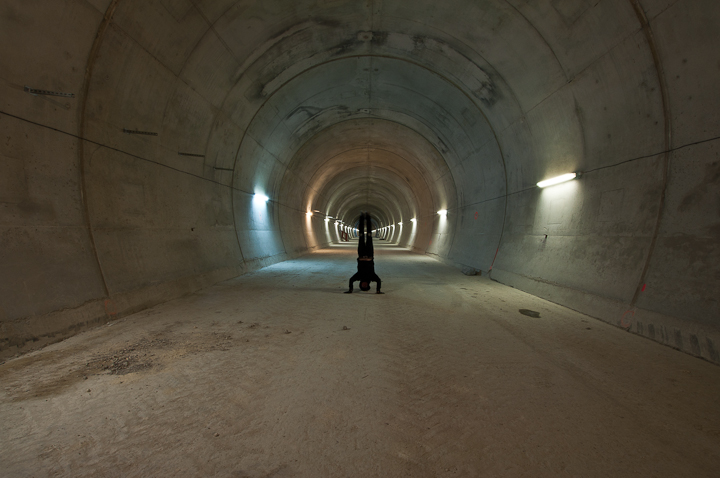
At its best, capitalism encourages a kind of generalised schizophrenia, a shatteringly intense fracturing of subjectivity. On the other hand, to survive it has to contain these effects through oppressive fictions like the nuclear family and psychiatry, which attempt to ‘reterritorialise’ desire: to put it safely back inside the home and to keep it there. Night after night in Paris, on this trip and others, we took the secret desires from home and mind into streets and practice. While the Marxists sit in Starbucks with their coffees crying for the overthrow of the system and the anarchists fight each other in squats, condemning comrades as sexists and fascists, we create desire. We are coercive machines that produce breaks and mobilise flows, nude in sewers, hanging from cranes, in love with the endless accelerations of material layering that keep cracking open underneath the weight of 6,869,652,772 human bodies.

We are the result of inevitable urbanic schizophrenia. While the dragon spews its poison, wagged by its own tail, we urinate on its leg, chuckling as our playfulness conjoins deterritorialised resources and temporarily appropriates the surplus from their reterritorialised conjunctions in nice little packages of pixels to print and mount illegally in the New York Metro. To each moment, we cling with all our heart, knowing it is unique and irreplaceable – and yet we wouldn’t lift a finger to prevent it from being annihilated.
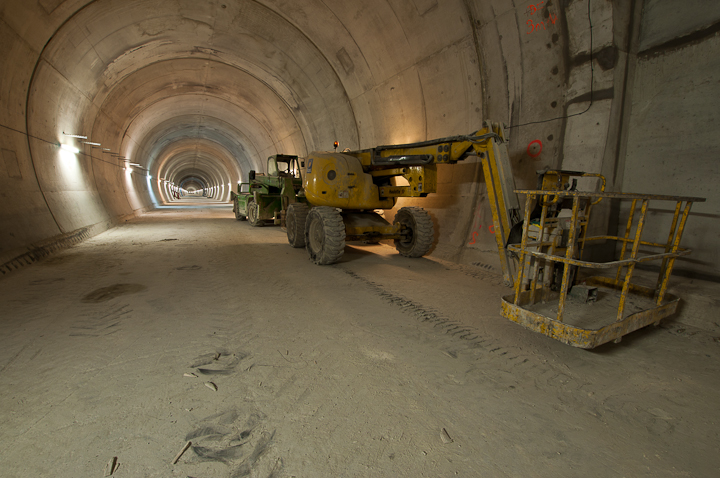
Insert human here

As Dsankt told me while we wobbled toward each other in some subterranean dungeon, until you get over that initial dereliction fetish and prepare to let all things come and go, you haven’t found it yet. So as each sparkling moment expands toward the implosion we all know is coming, we feed the system. And when the engorged stomach lining finally tears, we will climb inside it’s dead body like Luke Skywalker penetrating his gutted Ton-ton and become enlightened.

Glitch

Each epoch not only dreams the next, but also, in dreaming, strives toward the moment of waking. It bears its end in itself and unfolds it with ruse. In the convulsions of the commodity economy we begin to recognize the monuments of the bourgeoisie as ruins even before they have crumbled. Now that it’s all over and I am back here stewing in my own filth writing this PhD thesis in a nostalgic dispassionate embrace, only one thing is certain: the spiral will start churning again; the unstoppable desire to take our love to the streets will build, little seeds of speculation will begin to sprout, phone calls will be made. And we will go again to slide into urbanity’s womb and fertilise unfathomable nightmares born from the passion of those tiny glimpses we are all so apt to ignore. We will play, in this form and others, in imaginative permutations of superhumanity that don’t yet exist, again and again, until we are dead.
When it's over

_______________________________

A thousand blessings to Marc Explo, our tireless host. Thank you also to Winch and Otter for your brotherly companionship all weekend and to Olivier, Kat, Dsankt and Mrs. Dsankt for the wonderful dinner and champagne, delightful conversation and company as we climbed through sewage to get to a bridge.

Share
Tags : , , , , , , , , , , , , , , , , , | 11 comments

Sewers enjoy a special place in the pantheon of urban mythology.

-Matthew Gandy

Photo by Otter at Silent UK

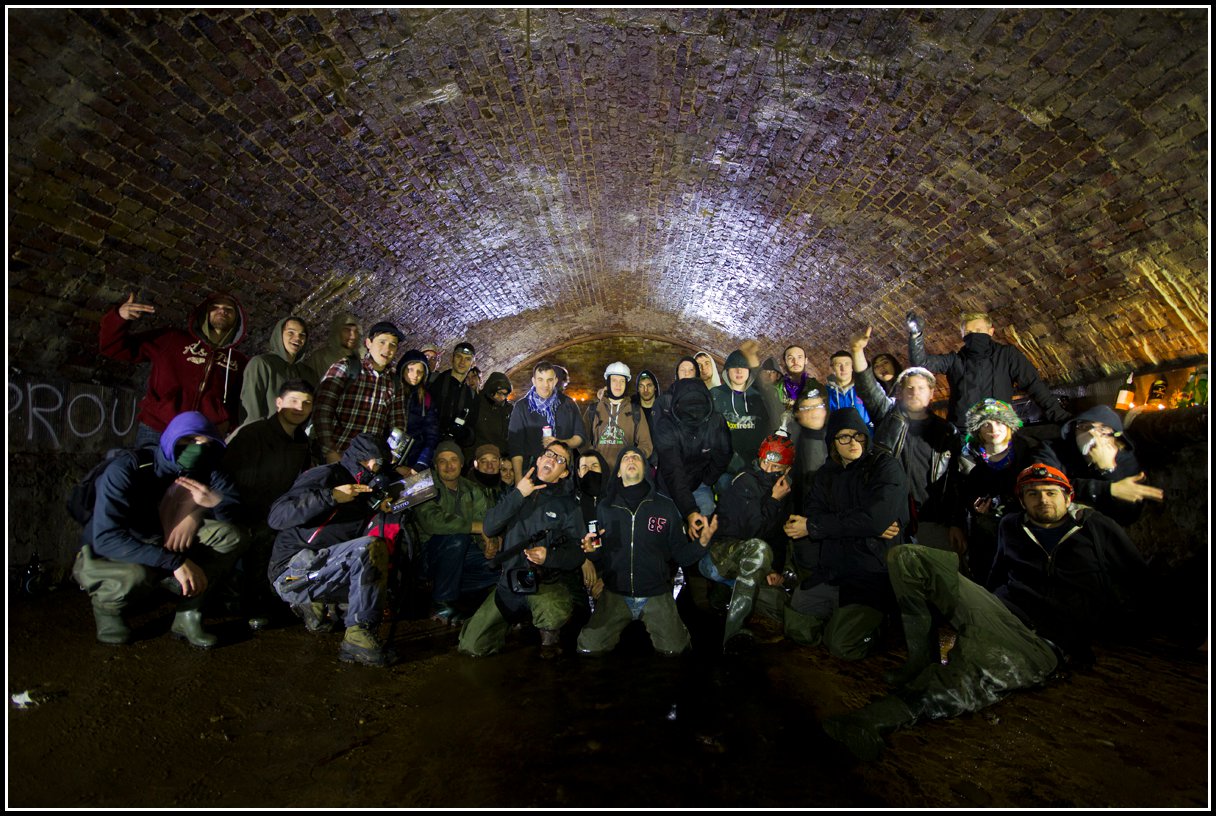
The first big event of 2011 already went down. Literally. This year’s International Drain Meet (IDM) was hosted by London, organized by Otter at Silent UK. It was the largest meeting of the international draining community in London’s history with over 50 people from 6 countries in a large overflow chamber under Knightsbridge. We had drainers from the UK, Sweden, Italy, France, USA and Australia, including the UE Kingz, Brescia Underground and the Cave Clan. We also had a heavy contingent of the massively fun Manchester drainer contingent.

We also seem to have finally melded the two top London crews at this meet through Siologen’s powers of healing oration (see below). By the end of the night, Jon Doe, the King of UK draining, conjured himself out of thin air in the middle of the party to the delight of everyone in attendance. It was, by all accounts, one of the best gatherings in London urban explorer history. A full write up can be found on Winch’s blog.

Otter was kind enough to ask me to film the event since he was busy organizing all night. Here is my contribution – it is best viewed on full screen with the volume turned up loud enough to assault your neighbours.

As always, explore everything.

Share
Tags : , , , , , , , , , , , , , , , , , , , , , , , , , , , , , , , | 9 comments

Man is free at the instant he wants to be.
-Voltaire

Clear light of bliss

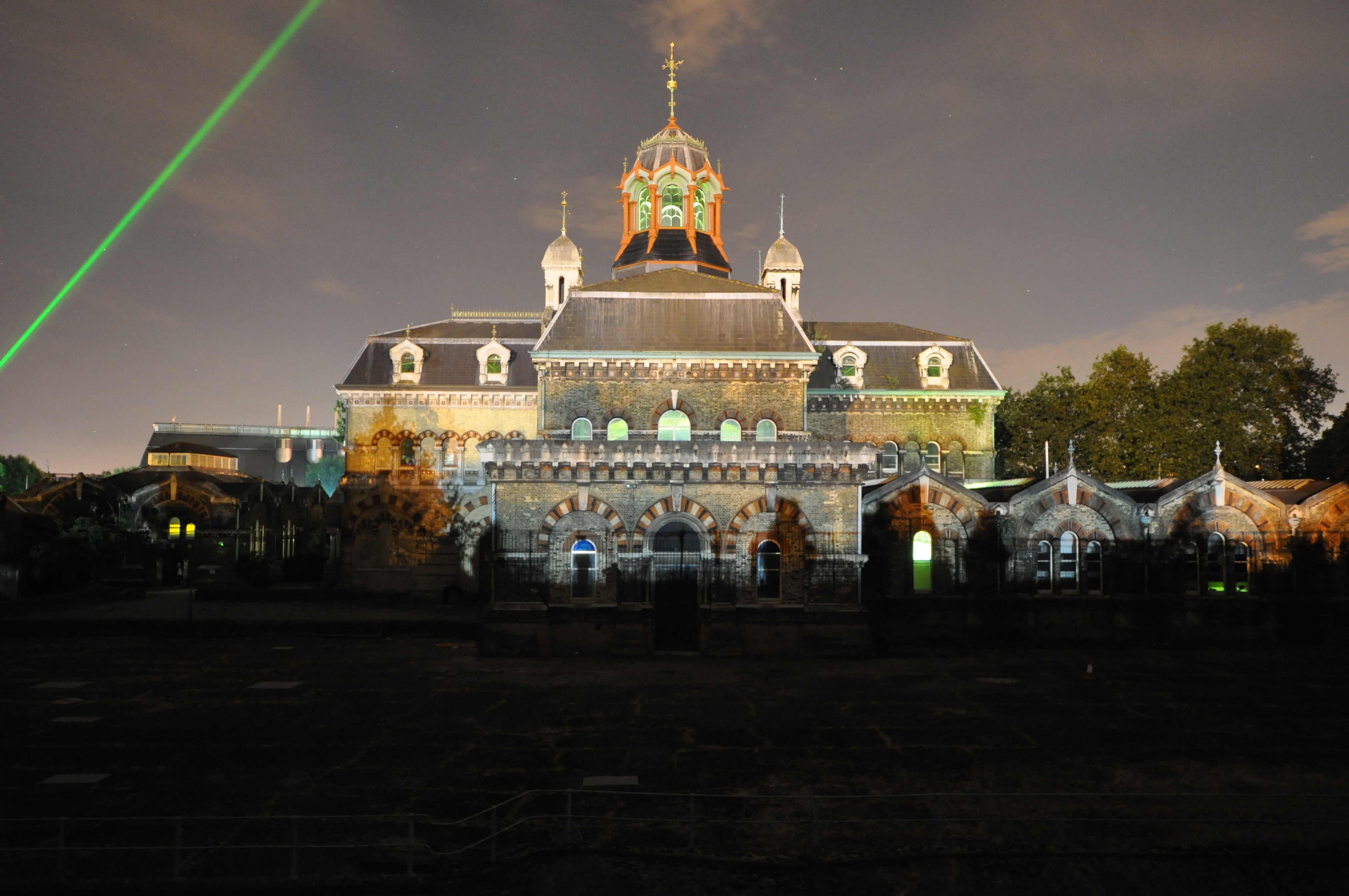
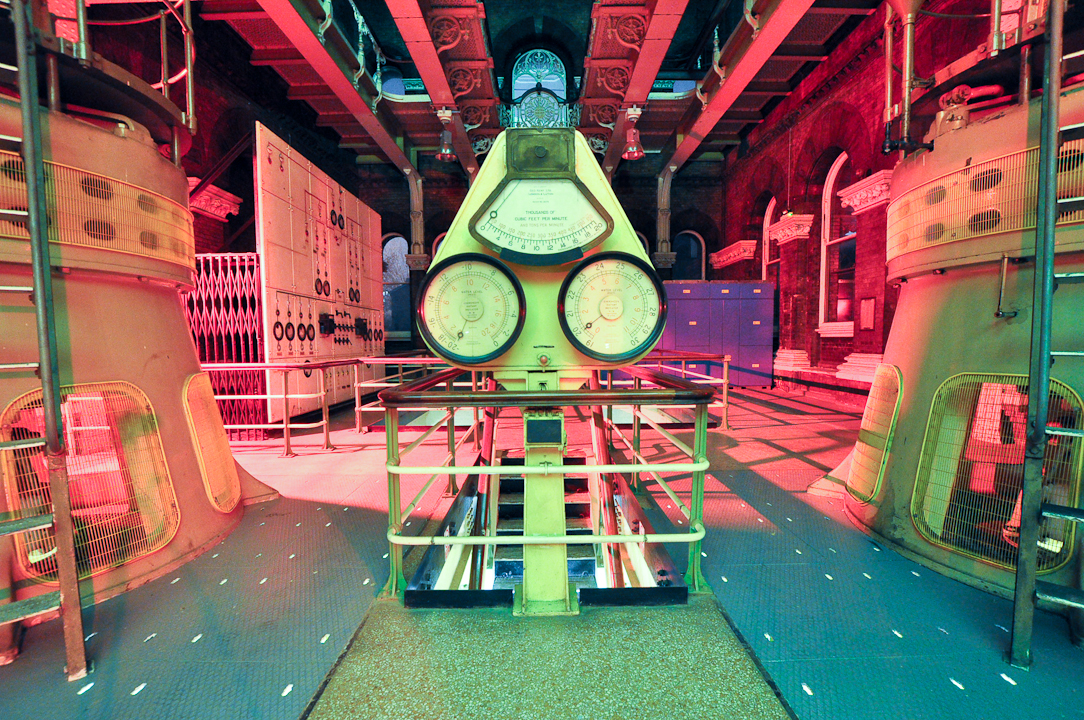
Silent Motion rolled up on the East London Greenway at about midnight. Sarah and Maria were with him and he was headed with a determined stride to an old flame. Architecturally speaking of course. The Abbey Mills Pumping Station, recently written about by our friend Paul Dobraszczyk on rag-picking history is indeed a Cathedral of Sewage.

The first empty Redstripe can spiked onto the security fence followed by another empty precariously placed on a ledge waiting for the next little gust of wind to send it spiralling into the River Lea clearly indicated that the Goblinmerchant and Brosa were already inside. But when Silent Motion and the girls rolled up, they found the dejected pair with the rogue Sophie dancing around a fifth of Famous Grouse playing tag with the demons of the night. The window was jammed.

Two hours of death-defying acrobatics followed. We all knew with Silent Motion there we weren’t walking away. The popping sound of the fire exit opening 40 minutes later was consequently rather satisfying, given how miserably cold we all were lying huddled around our empty Grouse bottle drawing straws to see who would be eaten first while we waited for the early-morning train from the Far East back to more respectable South London Boroughs.

Post-apocalyptic imaginaries were abandoned as we walked through the door.

In the presence

Of Bazalgette

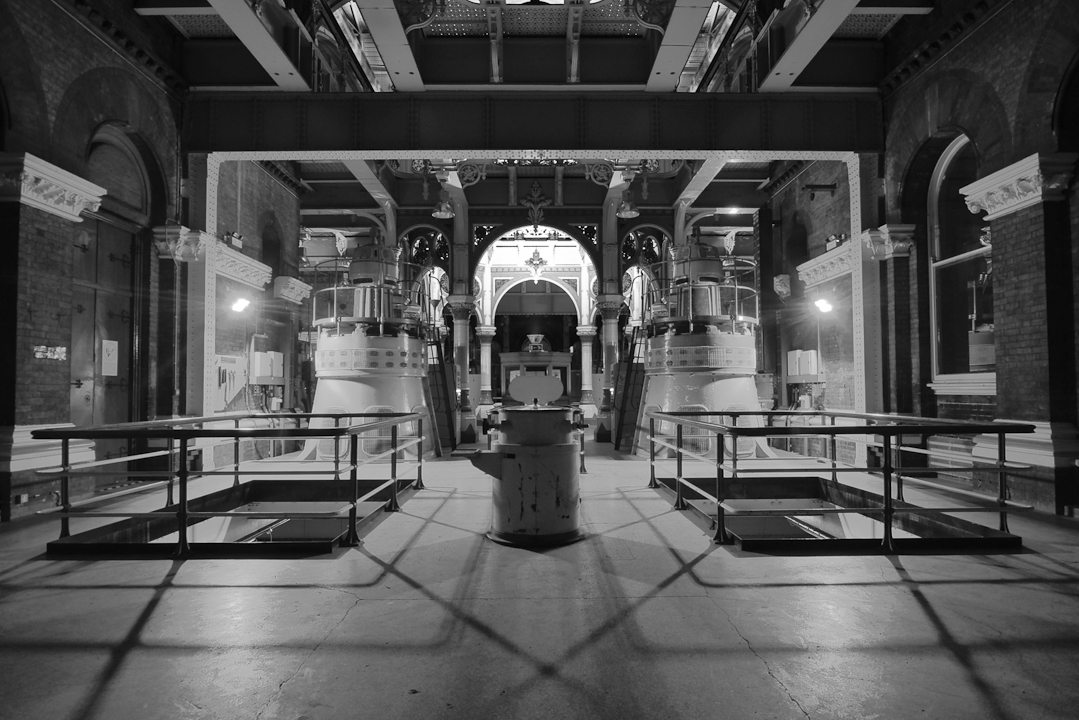
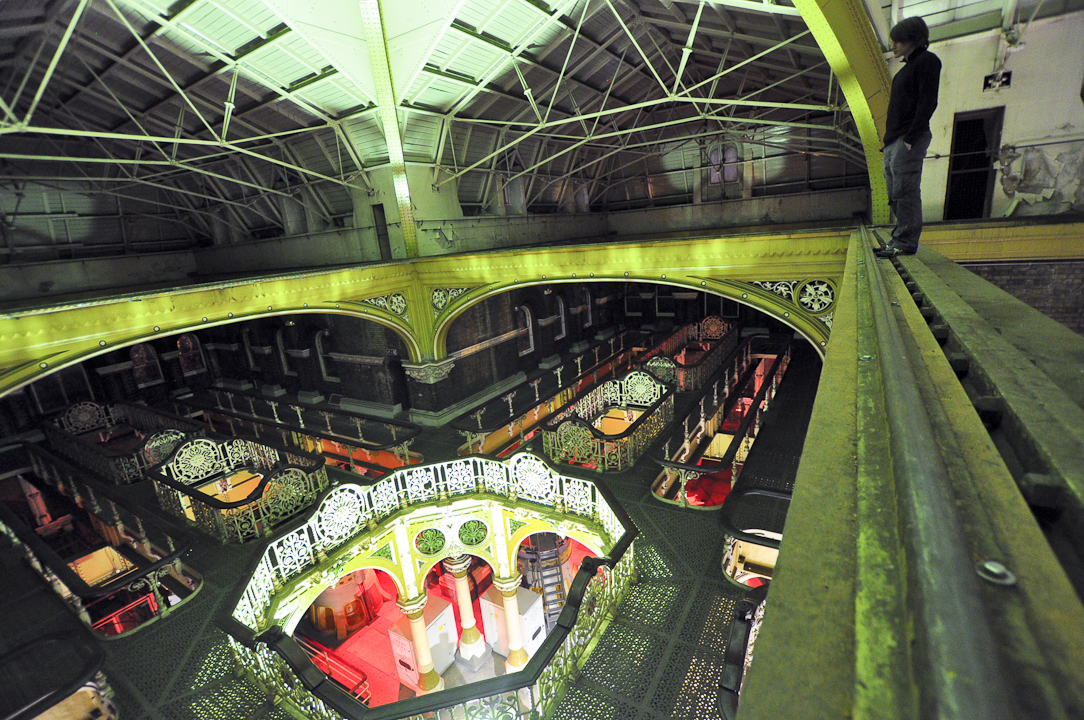
Being in such close presence to Joseph Bazalgette, hero of London sewage, urban exploration and architectural aesthetics, was instantly sobering. Standing in the main hall, it become clear that Bazalgette was mad as a hatter when he built this absurd monstrosity of shit-pumpage. But as Jack Kerouac writes in On The Road,

“The only people for me are the mad ones, the ones who are mad to live, mad to talk, mad to be saved, desirous of everything at the same time, the ones who never yawn or say a commonplace thing, but burn, burn, burn, like fabulous yellow roman candles exploding like spiders across the stars and in the middle you see the blue centerlight pop and everybody goes “Awww!”

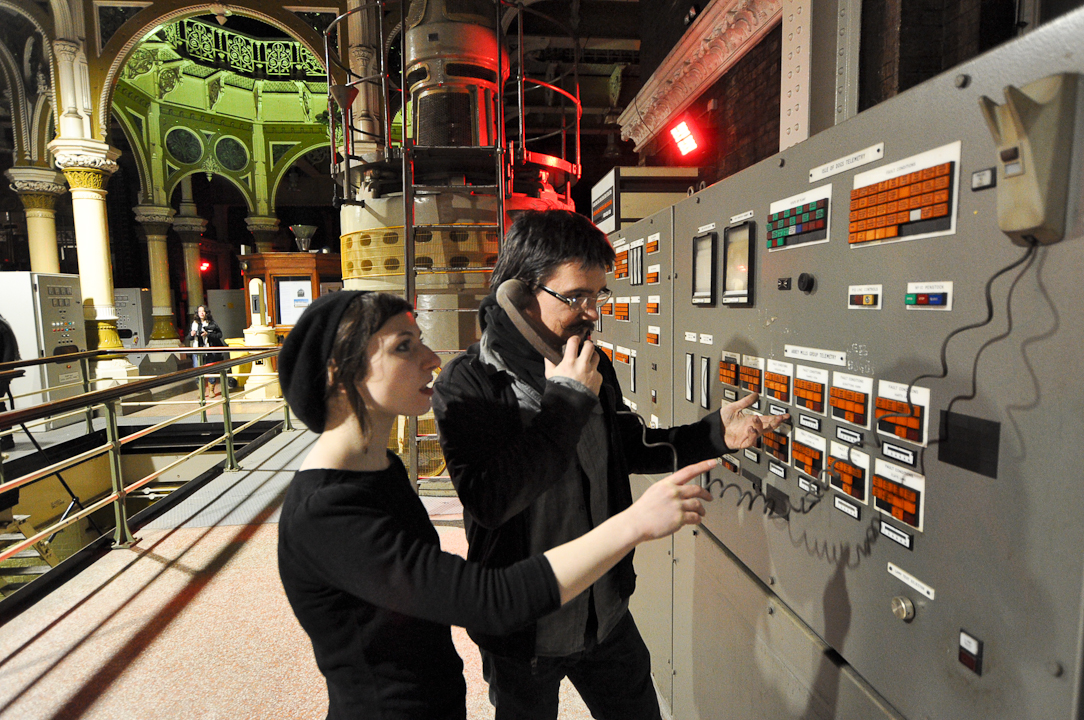
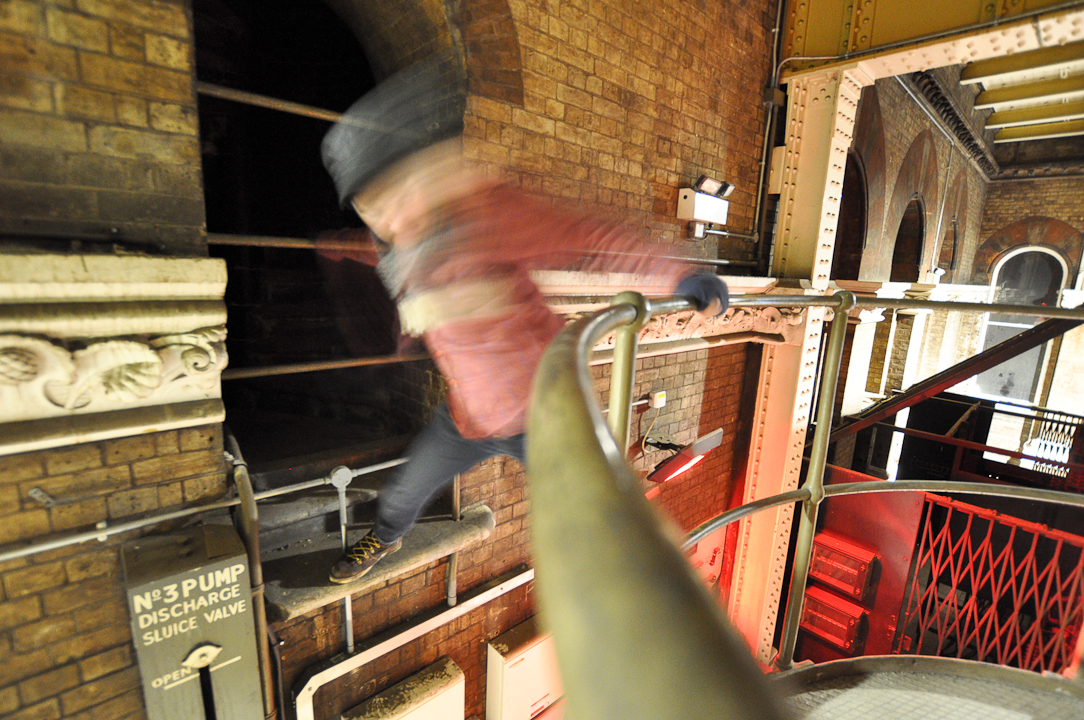
We were all on the same team here. It was clear to everyone in attendance that Bazalgette was there too, raving and craving, clawing and lusting, climbing and laughing. We went into a wild Bacchian frenzy. It was movable feast of affectual affordances as twisted Victorian metal was transmuted into swing and ladders, balance beams and gaps to jump. We played limbo under their security gates, we crawled on all fours across half-submerged pipes and used the derelict phone system to call the security hut and tell them they lost the game.

We don't need

To ask for

Permission

_________________________

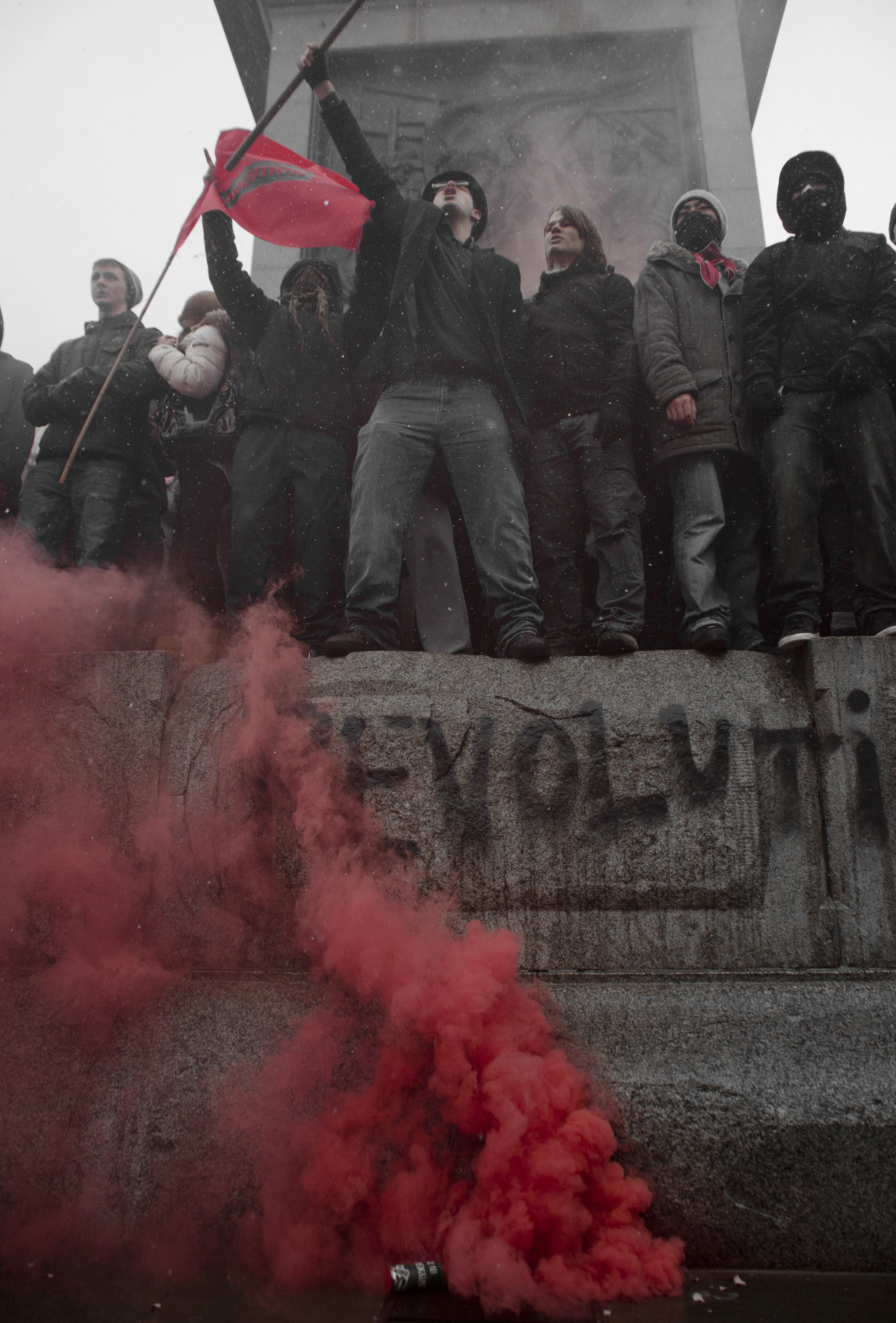
The truth is that Silent Motion and I needed some time to play. We had been fighting police in the streets, sat in sub-zero kettles, setting fire to the city to keep warm for a month straight as part of the student protests. It felt like life had quickly become so serious. Even urban exploration had taken an ominous turn after other explorers started crying about our A-team exploits. One detractor even labelled our crew “the London can openers” which I quite liked.

Spot the can opener

Our participation in particular types of exploration, our participation in the riots that most explorers chose to ignore while they sad at home madly bashing their keyboards in frustration, our participation in whatever the fuck gets us pumped up is a reminder, however sad, that as Winch has said before, there is no UrbEx community, there are just friends who enjoy hanging out with each other. Some are braver than others. Some explore for the glory, some for the fun. Some walk in the track of others. Some blaze new trails. Some try to make things a little more fun. As Statler says, there are no rules to UrbEx, there’s just where your morals fit and as Sartre once wrote about the philosophy teacher Mathieu, “he could do what he liked, no one had the right to advise him, there would be for him no Good or Evil unless he thought them into being.”

We needed this night to remind ourselves that this is what we are capable of. Elegance was reaped by bringing along a visitor to London for the weekend to experience a night out that wouldn’t be soon forgotten. We fed on that initial wonder that comes with realizing that yeah, you can just do this.

Let's

Just do this

Being free doesn’t require consent and we don’t need to ask permission to explore, not from the government, other explorers or your mum. No matter how much frustration we brew, how serious our work gets or how intense our lives may become, we are reminded through urban exploration that all it really takes to feel free again is the initiative to walk away from it all and rewrite the rules for a night. Disclaimer? There is none.

Space, despite all allusions and illusions to the contrary, is free.

Beautiful all around

__________________________

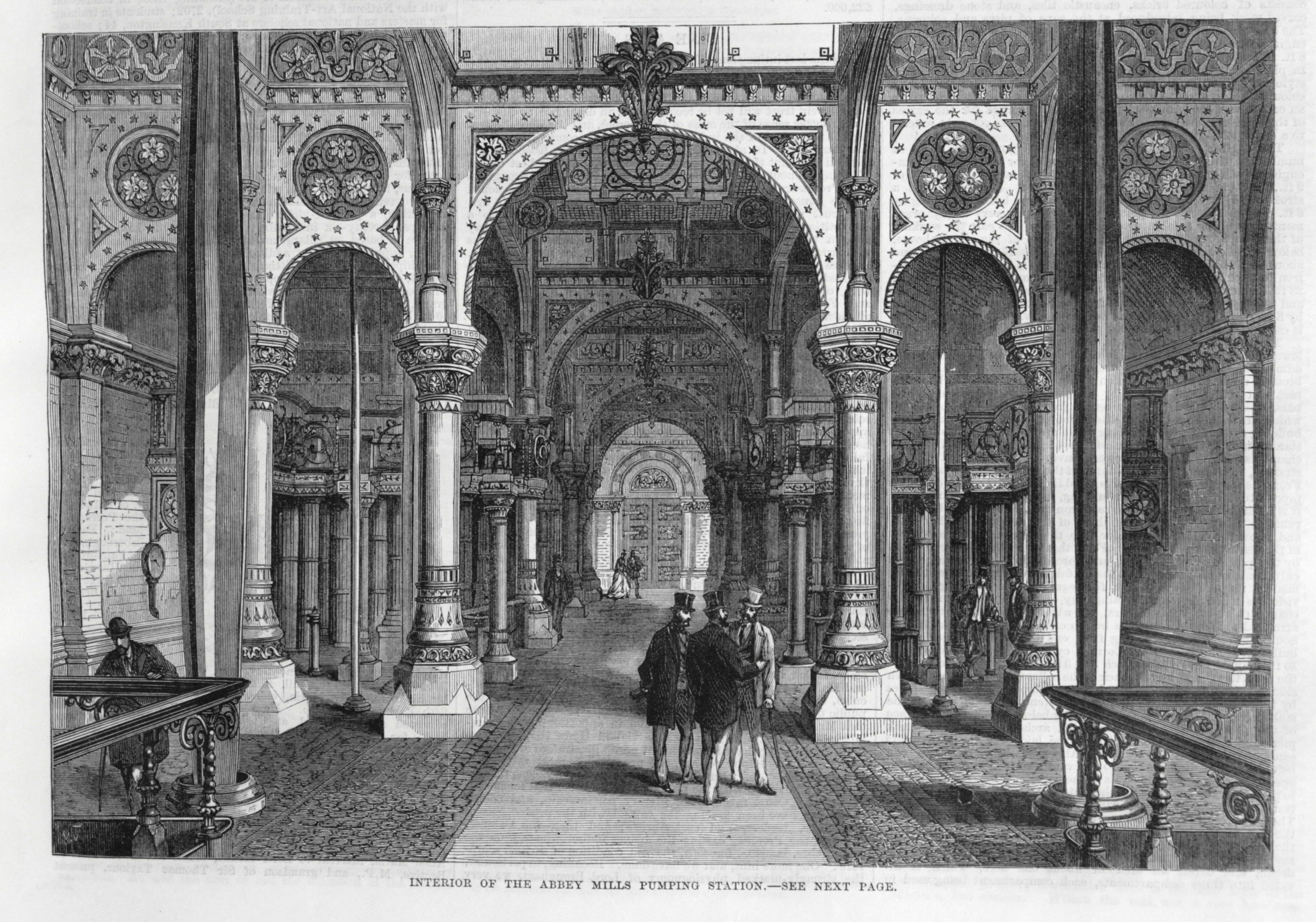
The photo of Abbey Mills in 1868 was jacked from Rag Picking History.

The photo of Silent Motion the can opener was kindly provided by Nicholas Adams at Guerilla Photography.

The Red Stripes and Famous Grouse were provided, on discount, by Emron from Pakistan at my corner shop who still wants me to make a documentary about his quest to abandon the family business to become a pilot.

The word were kindly provided by my brain, via my fingers during some sort of synaptic process that still eludes me.

Share
Tags : , , , , , , , , , , , , , , , , | 2 comments

“We enjoy thumbing our noses at petty bureaucrats and puerile legislators, and their half-baked attempts to stop us going to the places where we go… places they built with our tax money.”
Predator, Sydney Cave Clan

Drop in

Watching the US government scramble to patch up the PR damage being done through Julian Assange‘s leak of 250,000 private cables got me thinking more about the political implications of my notion of place hacking. The hacker ethos is clearly aligned to libertarian socialism, at times straddling the intersection between libertarianism on the right and anarchism on the left. This intersection was evident in the hails of praise for Julian Assange from both Anarchists and from Ron Paul, one of the leaders of the US Conservative Tea Party movement.

So when we recently explored a Ministry of Defense nuclear bunker, I could not help but make the connection between the militant existentialist ideology, shared by other groups such as graffiti writers who assert, as Tim Cresswell writes, that “everywhere is free space” and the Wikileaks ethos of populist-enforced democratic transparency which I assume Jim Hightower, the celebrated American liberal populist, must approve of. Both system hacking and urban exploration are about making the invisible visible and technology helps us to force transparency in both virtual and meat space. I created a podunk media flurry in Riverside California, my home town, last summer by sneaking into March Air Reserve Base with my brother Pip and photographing the remains of millions of dollars of government investment rotting in an abandoned military hospital while they planned to spend $80 million to build a new one one the same base during an economic meltdown. It therefore came as little surprise when we cracked this bunker and found equal waste in the UK. Which we of course, in both cases, we loved for the surreal playgrounds they create.

Planning

For transparency

Dsankt writes on Sleepy City that “whether you’re hacking transit systems or computer systems they’re all fissured, all possessing those little cracks just wide enough to wriggle your dirty little fingers into and force to sneak a peek into what lies beneath the shiny smoothed over façade most take for granted every single day”. I have suggested “place hacking” as a phrase which encapsulates the different types of explorations we undertake (urban exploration, infiltration, draining, buildering, unauthorised spelunking, urban adventuring, underground parties, etc.) as well as the more intangible themes of localization of heritage, political subversion, critical spatial practice and “alternative” community construction and identification. But I wasn’t the first. As early as the 1980s, the term “hacking” was applied first to physical space by the Technology Hackers Association at MIT who learnt to pick locks and infiltrated the steam tunnels underneath the university. Students began climbing rooftops on campus, conducting freshman on what is called The Orange Tour. Only later was the term appropriated by the computing community. As Löwgren writes, “the word ‘hack’ was used to refer to… practical jokes or stunts. Its meaning shifted to the technology needed to perform the prank, and later came to mean a clever technical solution in general”.

The 7th entry under the term “hacker” in the New Hacker’s Dictionary defines a hacker as “one who enjoys the intellectual challenge of creatively overcoming or circumventing limitations”, importantly pointing out the physical foundations of the art.

Place

Hackers

We worked for hours into the night, checking the walls for hidden tunnels to gain access to the bunker and crawled out some hours later covered in mud, tumbling in front of two large security cameras. Figuring we had already been seen and praying that no one was watching them, we pushed forward, all scared witless but determined to know what was contained within. Alan Rapp writes in his MA thesis that the practice of urban exploration “provides a tart reminder that the areas that we have regular access to are not just quotidian, but also normative, if not repressive. The patterning that we can infer from the sanctioned environment is absent from the spaces that urban explorers go; they have been deprogrammed”. In the same way the “the techniques dérive and détournement offer the possibility to explore spaces in new ways, and to rearrange existing aesthetic elements into new forms of expression”, urban exploration fits geographer Alistair Bonnett’s description of offering “a new form of geographical investigation that can enable the revolutionary reappropriation of the landscape”.

But while the organization and politicisation of the practice may be novel, a question remains whether the practice itself actually is. Urban exploration, though it looks similar to the dérive, or surrealist parodies, has learned from the successes and failures of preceding critical spatial practices, leading to the creation of a network that is truly horizontally structured, without leadership and completely decentralized, while adopting an opaque public image of apolitical benignity, at times even presented as a type of heroic preservationism. Urban exploration, as a result of this decentralised power structure and well-groomed public image, is political in action but not in assertion, rooted in freedom of personal choice that comes across as what I see increasingly as libertarian in ideology aligned with the work of Wikileaks and individual anarchists. As Marc Explo recently told me on a trespass into the quarries of Paris, “I don’t need anyone to tell me that I am free. I prove that I am free everyday by going wherever I want. If I want to drink wine on top of Notre Dame, I do that, if I want to throw a party underground, I do that.” The impetus to do so becomes even stronger when we feel excluded from the government decision making process that we are paying for. And so, as Marc Explo asserts, where right are not given, they are simply taken.

Information

Not offered

As Bonnett again points out, we tend “…to assign creative spatial behaviour to performance artists and other specialists in provocation.” He writes that he feels these groups somehow owned “the subversive imagination” but on closer inspection sees that “ordinary urban behaviour fairly sizzles with errant activities…” Indeed, as spectacular as urban exploration and infiltration may seem, it’s simply an act of walking, climbing, inspecting and recording, activities which are far from spectacular and certainly do not hold the same glamour that is assigned to the consumption of the records produced by these activities. Organized transgressions against normative daily behaviour, what Oli Mould and I have termed urban subversions are in fact rarely riotous.

Creative resistance may take the form of refusing to move in places where you are expected to, such as in a flash mob event where large groups of coordinated participants freeze in unison in public spaces designed for movement or in rural areas designated private property where groups such as the Ramblers Association of Britain hold yearly ‘Forbidden Britain’ mass trespasses, a simple act of walking somewhere you are not supposed to. Some spatial incursions into places do not even take place physically, such as Trevor Paglen’s visual trespasses onto United States military property through the telephoto lens of a camera, or his more recent work photographing US spy satellites that supposedly do not exist. Like many other activities, urban exploration, while conceptually provocative, is almost dull in practice, with many participants refusing to even acknowledge deeper implications. “Gary” told after reading some of my writing that, “what you do Brad, it’s just words, this doesn’t have anything to do with anything”.  I can’t fault “Gary” for preferring action over words.

Words

Into action

Clearly, in an existential libertarianism framework where “freedom is what you do with what’s been done to you”, the desire to explore unseen space could be seen as a reaction to a growing existential angst in urban inhabitants. I see place hacking as a proportional response the the closure of the majority of urban space in combination with the blatant and frivolous waste of of tax money constructing structures like secret nuclear fallout bunkers designed to shelter only the corrupt government that created the potential of nuclear attack in the first place. And like Assange, I say hey, keep building that shit, keep wasting our money. In fact, keep trying to patrol and lock it up. We will be right behind you to liberate that space for absurdity and play. Your move.

Just words


This posting is dedicated to the kids who have been protesting to be heard and fighting the police in the streets of London this week. Apathetic generation indeed. Solidarity!

Share
Tags : , , , , , , , , , , , , , , , , , , , , , , , , , , , , , | 30 comments

Jute

Posted by Bradley L. Garrett on Saturday Nov 27, 2010 Under Academia, Archaeology, Cultural Geography, Film, Heritage, Ruins, Spatial Politics, Urban Exploration

I spent a week in Istanbul, Turkey earlier this month, taking some necessary downtime after a heavy few months of publication submissions. The city was beautiful and I left feeling rejuvenated and ready to work on a new project. Which of course I did. My plane touched down back in London November 20th at 9pm and by November 21st at 6am I was on a train to Scotland.

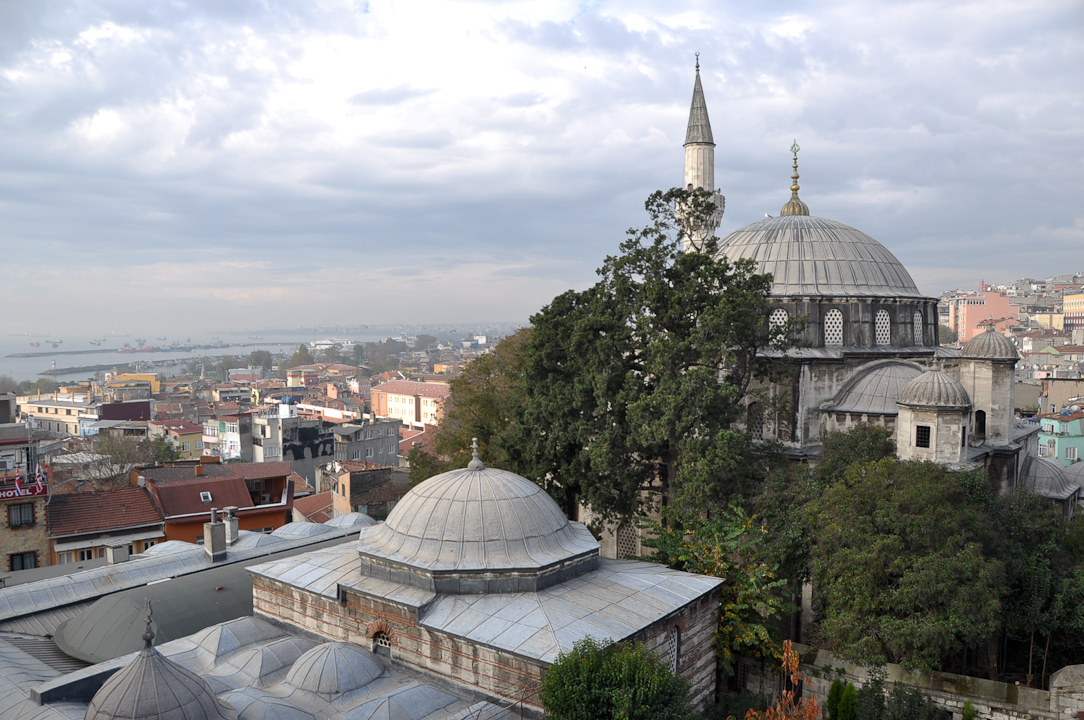
Istanbul

I arrived in Dundee to meet with Michael Gallagher, Jonathan Prior, Brian Rosa, Tom Croll-Knight, Jennifer Rich, Jackie Calderwood, Amanda Repo Taiwo Thompson and Jessica Jacobs to take part in a workshop called working creatively with sound and image organised by Michael and Jonathan from the University of Edinburgh.

At the workshop, we were given a free hand to produce whatever we felt drawn to and I ended up organically gravitating to Brian and Jonathan who I have worked with previously on smaller projects. We decided in the end to attempt to produce a small film in the 3 days we had to work. We envisaged the film being roughy based around the Jute industry which thrived in Dundee at one time but has been long dead, now surviving as urban memory as part of the flagging tourist industry here. We went into the city armed with video cameras and audio recorders to try and locate connections between the historic industrial Jute city, the port that was essential to the transportation of the Jute and the changes that are taking place within the city that both build on and and overwrite that rich maritime heritage. In the end, the film also became as much about process as discovery as we found that the story we sought was buried in the urban palimpsest.

Methodologically, we were interested in making a film that broke from traditional documentary form, a piece led by sound (collected by Jonathan and Michael) rather than visuals (collected by Brian and myself) only taken from our time in “the field”. We were particularly careful to avoid narration or a film score, leaving the viewer with, we hope, a strong sense of a particular place at a particular time.

Given that the film is built around the audio, it is best watched with headphones on. Hope you enjoy it!

Share
Tags : , , , , , , , , , , , , , , , , , , , , , , , | Comments Off on Jute