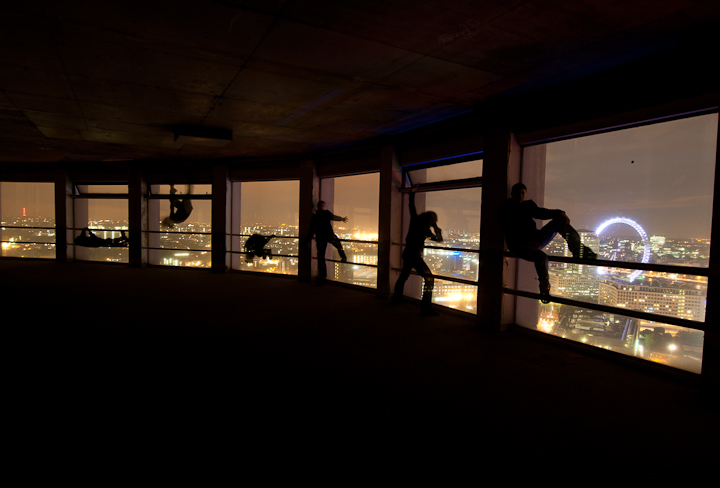
“We enjoy thumbing our noses at petty bureaucrats and puerile legislators, and their half-baked attempts to stop us going to the places where we go… places they built with our tax money.”
Predator, Sydney Cave Clan

Drop in

Watching the US government scramble to patch up the PR damage being done through Julian Assange‘s leak of 250,000 private cables got me thinking more about the political implications of my notion of place hacking. The hacker ethos is clearly aligned to libertarian socialism, at times straddling the intersection between libertarianism on the right and anarchism on the left. This intersection was evident in the hails of praise for Julian Assange from both Anarchists and from Ron Paul, one of the leaders of the US Conservative Tea Party movement.

So when we recently explored a Ministry of Defense nuclear bunker, I could not help but make the connection between the militant existentialist ideology, shared by other groups such as graffiti writers who assert, as Tim Cresswell writes, that “everywhere is free space” and the Wikileaks ethos of populist-enforced democratic transparency which I assume Jim Hightower, the celebrated American liberal populist, must approve of. Both system hacking and urban exploration are about making the invisible visible and technology helps us to force transparency in both virtual and meat space. I created a podunk media flurry in Riverside California, my home town, last summer by sneaking into March Air Reserve Base with my brother Pip and photographing the remains of millions of dollars of government investment rotting in an abandoned military hospital while they planned to spend $80 million to build a new one one the same base during an economic meltdown. It therefore came as little surprise when we cracked this bunker and found equal waste in the UK. Which we of course, in both cases, we loved for the surreal playgrounds they create.
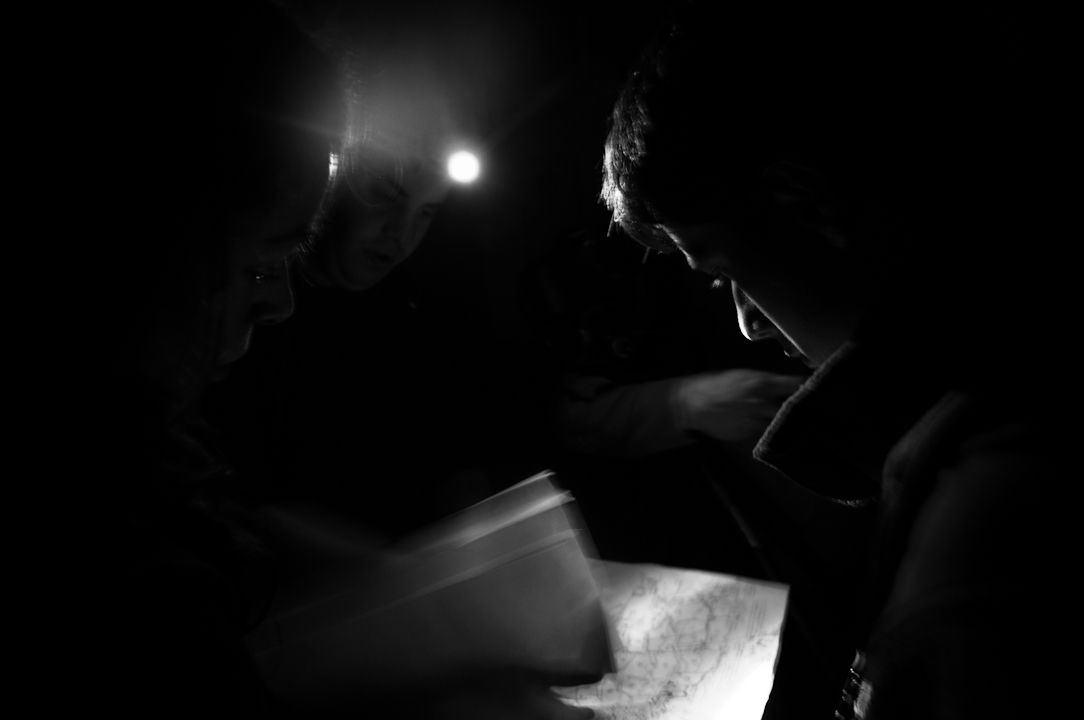
Planning
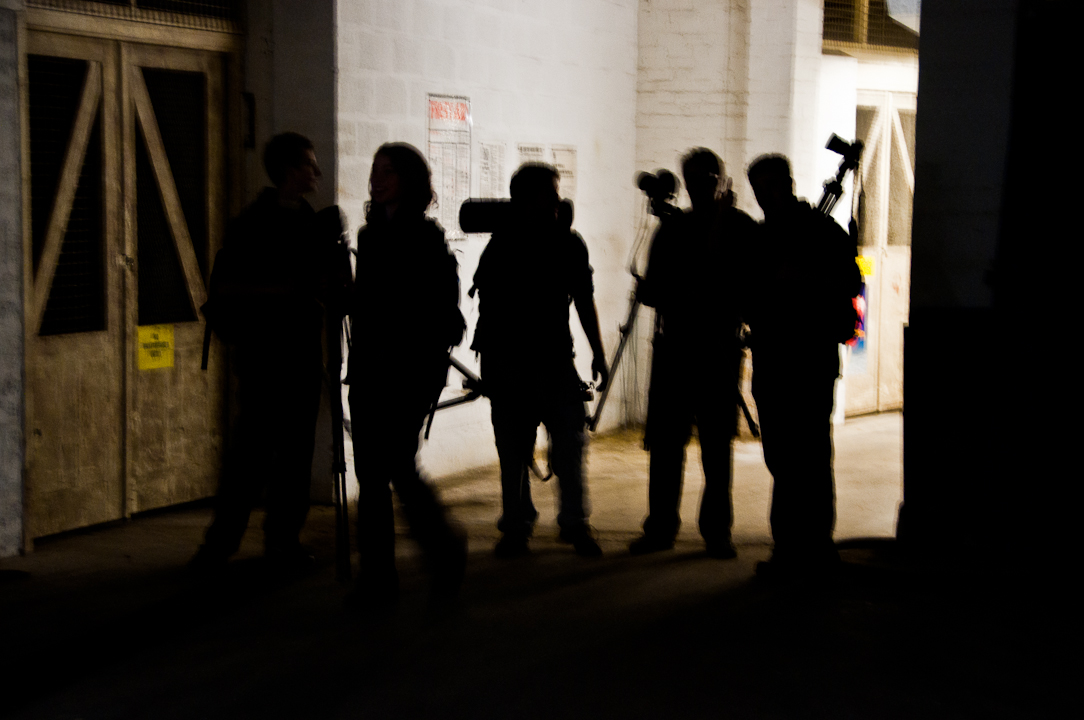
For transparency

Dsankt writes on Sleepy City that “whether you’re hacking transit systems or computer systems they’re all fissured, all possessing those little cracks just wide enough to wriggle your dirty little fingers into and force to sneak a peek into what lies beneath the shiny smoothed over façade most take for granted every single day”. I have suggested “place hacking” as a phrase which encapsulates the different types of explorations we undertake (urban exploration, infiltration, draining, buildering, unauthorised spelunking, urban adventuring, underground parties, etc.) as well as the more intangible themes of localization of heritage, political subversion, critical spatial practice and “alternative” community construction and identification. But I wasn’t the first. As early as the 1980s, the term “hacking” was applied first to physical space by the Technology Hackers Association at MIT who learnt to pick locks and infiltrated the steam tunnels underneath the university. Students began climbing rooftops on campus, conducting freshman on what is called The Orange Tour. Only later was the term appropriated by the computing community. As Löwgren writes, “the word ‘hack’ was used to refer to… practical jokes or stunts. Its meaning shifted to the technology needed to perform the prank, and later came to mean a clever technical solution in general”.

The 7th entry under the term “hacker” in the New Hacker’s Dictionary defines a hacker as “one who enjoys the intellectual challenge of creatively overcoming or circumventing limitations”, importantly pointing out the physical foundations of the art.

Place

Hackers

We worked for hours into the night, checking the walls for hidden tunnels to gain access to the bunker and crawled out some hours later covered in mud, tumbling in front of two large security cameras. Figuring we had already been seen and praying that no one was watching them, we pushed forward, all scared witless but determined to know what was contained within. Alan Rapp writes in his MA thesis that the practice of urban exploration “provides a tart reminder that the areas that we have regular access to are not just quotidian, but also normative, if not repressive. The patterning that we can infer from the sanctioned environment is absent from the spaces that urban explorers go; they have been deprogrammed”. In the same way the “the techniques dérive and détournement offer the possibility to explore spaces in new ways, and to rearrange existing aesthetic elements into new forms of expression”, urban exploration fits geographer Alistair Bonnett’s description of offering “a new form of geographical investigation that can enable the revolutionary reappropriation of the landscape”.

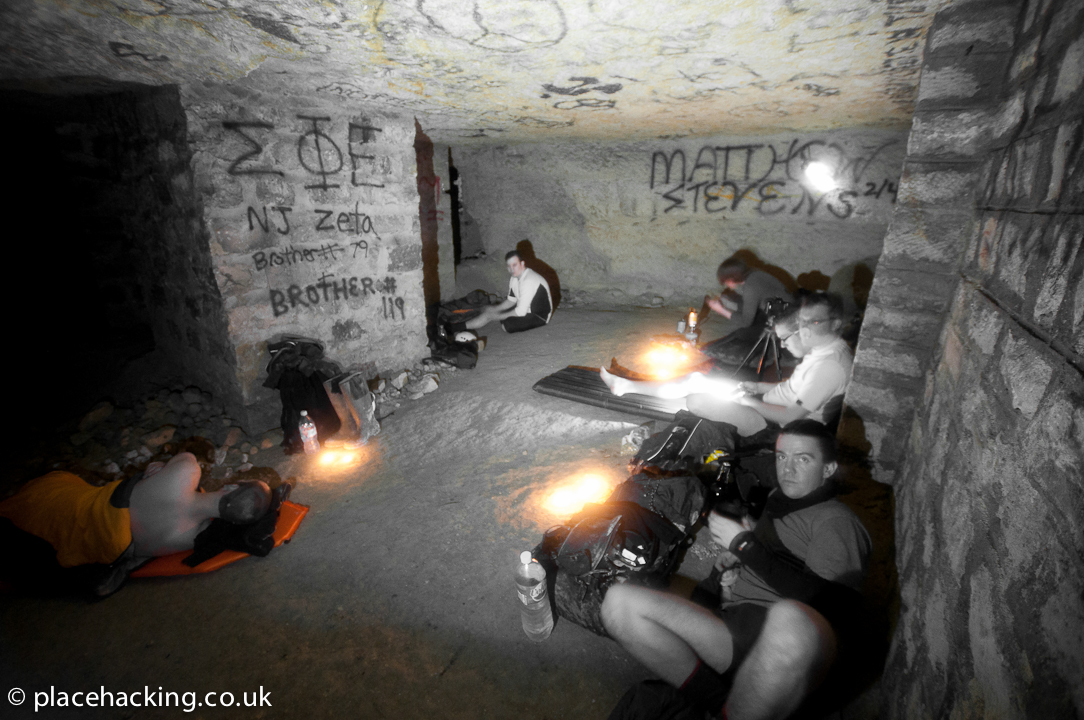
But while the organization and politicisation of the practice may be novel, a question remains whether the practice itself actually is. Urban exploration, though it looks similar to the dérive, or surrealist parodies, has learned from the successes and failures of preceding critical spatial practices, leading to the creation of a network that is truly horizontally structured, without leadership and completely decentralized, while adopting an opaque public image of apolitical benignity, at times even presented as a type of heroic preservationism. Urban exploration, as a result of this decentralised power structure and well-groomed public image, is political in action but not in assertion, rooted in freedom of personal choice that comes across as what I see increasingly as libertarian in ideology aligned with the work of Wikileaks and individual anarchists. As Marc Explo recently told me on a trespass into the quarries of Paris, “I don’t need anyone to tell me that I am free. I prove that I am free everyday by going wherever I want. If I want to drink wine on top of Notre Dame, I do that, if I want to throw a party underground, I do that.” The impetus to do so becomes even stronger when we feel excluded from the government decision making process that we are paying for. And so, as Marc Explo asserts, where right are not given, they are simply taken.

Information

Not offered

As Bonnett again points out, we tend “…to assign creative spatial behaviour to performance artists and other specialists in provocation.” He writes that he feels these groups somehow owned “the subversive imagination” but on closer inspection sees that “ordinary urban behaviour fairly sizzles with errant activities…” Indeed, as spectacular as urban exploration and infiltration may seem, it’s simply an act of walking, climbing, inspecting and recording, activities which are far from spectacular and certainly do not hold the same glamour that is assigned to the consumption of the records produced by these activities. Organized transgressions against normative daily behaviour, what Oli Mould and I have termed urban subversions are in fact rarely riotous.

Creative resistance may take the form of refusing to move in places where you are expected to, such as in a flash mob event where large groups of coordinated participants freeze in unison in public spaces designed for movement or in rural areas designated private property where groups such as the Ramblers Association of Britain hold yearly ‘Forbidden Britain’ mass trespasses, a simple act of walking somewhere you are not supposed to. Some spatial incursions into places do not even take place physically, such as Trevor Paglen’s visual trespasses onto United States military property through the telephoto lens of a camera, or his more recent work photographing US spy satellites that supposedly do not exist. Like many other activities, urban exploration, while conceptually provocative, is almost dull in practice, with many participants refusing to even acknowledge deeper implications. “Gary” told after reading some of my writing that, “what you do Brad, it’s just words, this doesn’t have anything to do with anything”.  I can’t fault “Gary” for preferring action over words.

Words

Into action

Clearly, in an existential libertarianism framework where “freedom is what you do with what’s been done to you”, the desire to explore unseen space could be seen as a reaction to a growing existential angst in urban inhabitants. I see place hacking as a proportional response the the closure of the majority of urban space in combination with the blatant and frivolous waste of of tax money constructing structures like secret nuclear fallout bunkers designed to shelter only the corrupt government that created the potential of nuclear attack in the first place. And like Assange, I say hey, keep building that shit, keep wasting our money. In fact, keep trying to patrol and lock it up. We will be right behind you to liberate that space for absurdity and play. Your move.

Just words


This posting is dedicated to the kids who have been protesting to be heard and fighting the police in the streets of London this week. Apathetic generation indeed. Solidarity!

Share
Tags : , , , , , , , , , , , , , , , , , , , , , , , , , , , , , | 30 comments

Without contraries, there is no progression.
– William Blake

Everyone agrees. It’s about to explode.
The Coming Insurrection

Implosion

A lot of ink is spilled over urban exploration’s relationship to the past and I have previously written about how the anticipated transience of places, the act of bearing witness to their inevitable death, adds to our experience of exploring them in the present. These geographic imaginations of unrealized temporal iterations positively reinforce our notions of place in the world, giving us a sense of agency as we realise that in the midst of all of the endless death and decay, we live, even as we are reminded our time here is limited. This notion has guided historical attractions to ruination for centuries, stretching back to ancient Rome when Livy explored the Cloaca Maxima sewer. The nostalgic lust for derelict and crumbling spaces has never left us for as Alan Rapp writes ‘the metaphorical power of ruination is as relevant today as it was in an ostensibly more Romantic era’. Our love for things of the past, the nostalgia that Nietzsche found so crippling, is described by G.M. Trevelian who writes:

The poetry of history lies in the quasi-miraculous fact that once, on this earth, once, on this familiar spot of ground, walked other men and women, as actual as we are today, thinking their own thoughts, swayed by their own passions, but now all gone, one generation vanishing into another, gone as utterly as we ourselves shall shortly be gone…

The nature of Post

Ruins, like dreams, pull us, in one direction, toward our innermost yearnings and, in another, towards a life beyond the constraints of the real; the romantic accounts of ruin exploration in the last 2000 years abound. But clearly part of our attraction to derelict space also has a darker component of an imagined ruined future that has not been written about nearly as much, a Ballardian formulation of urban apocalypse.

Crumble

Recently, Paul Dobraszczyk wrote a wonderful paper in the journal City where he describes his trip the to exploded nuclear reactor at Chernobyl which ‘incorporated elements of both dark tourism and urban exploration’ as he searched for what Susan Sontag referred to confrontations with ‘inconceivable terror’. Just a few years previous, Tom Vanderbilt penned the book Survival City in which he explores the ruins of atomic America and in the new book Ruins of Modernity (my review in Environment and Planning D: Society and Space forthcoming), Jonathan Veitch tours the Nevada Atomic Test Site where he finds not the expected response of melancholy or nostalgia upon entering the ruins but Baudelaire’s Satanic laughter, a terror that is so visceral the only possible response humour, as if the emotions have been short-wired by the horror.

People as numbers

And so we come to the thesis. Part of the reason we enjoy exploring decaying architecture is rooted in an imagination of a post-apocalyptic future. These places are viscerally enticing in their wretchedness, in part, because imagining ourselves in a future where we populate them during imagined use-lives filled with heroism and adventure is so improbable that it forces one to meditate on the surreal nature of the past that had led us to this most improbable junction in time. Writing of Pripyat, one contributor to the new book Beauty in Decay which represents these sites with burning gothic intensity notes the Pripyat “continues to whisper of a ‘post-human’ earth which, in the end, may be the strongest fascination of them all.”

More than human?

In our explorations of the ruins of Eastern Europe this past summer, we all took guilty pleasure in witnessing the remains of the failed Soviet Union and Nazi Germany, reacting, at times, absurdly to it. The experience left us in a distinctly different state than ruin exploration in the United Kingdom, the reverence for actual state failure (rather than imagined post-capitalist or “site-specific” failure) making our explorations both more poignant and more guilt-ridden.

Our former 'enemies'

Invoked

By a history

Never witnessed

But felt

If, as Dylan Trigg writes in The Aesthetics of Decay, a derelict factory testifies to a failed past but also reminds us that the future may end in ruin, what does the ruin of a failed state say to us?

Get on, I guess

Henry James writes in Italian Hours that “to delight in the aspect of the sentient ruin might appear a heartless pastime, and the pleasure, I confess, shows a note of perversity”. This perversity takes on a different form as you leave “home”, the nostalgia wears a dark mask of exotic fetishism that beckons the days of Empire even as we participate in the beginnings of the failure of capitalism and the nation state at home. Of course, these expeditions are markedly less decadent than those of ages past but even speaking English marks us as a potentially dark and exploitative party even as we seek to avoid being “tourists” by following Steve Pile’s advice that in order to get at some of the real (really operative) processes in city life, attention should be paid to those things that appear marginal, or discarded, or lost, or that have disappeared or are in the process of disappearance.

A rapidly depleting resource

A year ago, we took a trip out to the Mojave Desert in California for a friend’s bachelor party. Our intention was to explore the Calico Mines under the ghost town. Which we did, finding all sort of mysterious chambers, boxes of dynamite, uninvited spectres and endless subterranean playgrounds. But always in the back of our minds, there was a fantasy playing out of someday taking refuge here. Whether that was from drought, famine, nuclear attack or a zombie infestation was never articulated but we all knew it was implied. We were collecting derelict site locations as a post-apocalypse insurance policy. As Susan Buck-Morss wrote in The Dialectics of Seeing, throughout Benjamin’s Arcades Project, the image of the “ruin”, is emblematic not only of the transitoriness and fragility of capitalist culture, but also its destructiveness. Our imaginations were all bolstered by the thought we were seeing ghosts from a future yet to come.

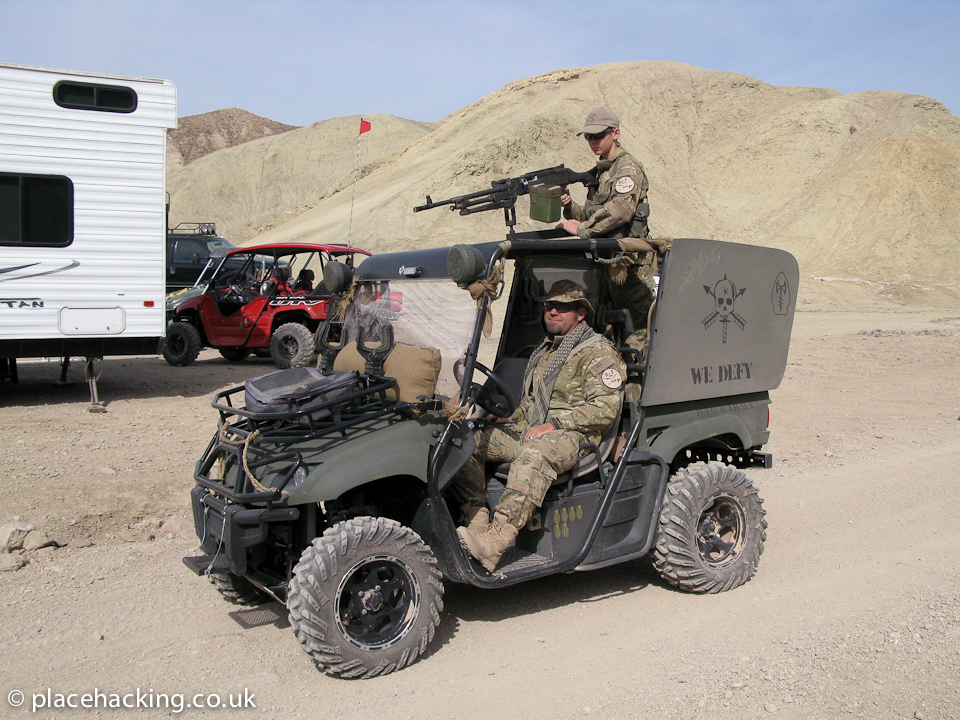
Indeed, as Hell and Schönle write in Ruins of Modernity, ruin exploration can involve “reflections about history: about the nature of the event, the meaning of the past for the present, that nature of history itself as eternal cycle, progress, apocalypse, or murderous dialectic process.” These inevitable intersections took grip firmly as we were leaving the mines. On the way out, we were confronted by survivalists from a militia who had dug into the caves to create desert shelters and were patrolling their territory in a weaponised 4×4 buggy. The father was clearly ex-military, barking orders at his kid to “get on the gun, son” for a photo op. As they sped away, they yelled back at us that the government was collapsing and we would do best to prepare to defend some territory, a new tribalism, they insisted, was on its way.

Apocalypse

These post-apocalyptic imaginaries are evident all over popular culture, from films like Mad Max28 Days Later12 Monkeys or Blade Runner, in books like After London, The World Made by HandThe RoadThe Stand, or The Plague and even in video games like Bioshock and Silent Hill. In all of these depictions, though the future may be bleak and dytopic, there is some underlying euphoria behind the freedom that comes with being released from the state, social life and cultural expectation that has an obvious relationship to the off-the-grid spaces that urban explorers go into. I have to wonder though, as we run into more and more people living this way now (primarily squatters and unsanctioned parties) rather than imagining to live this way in some distant future, what it takes to drive one off the grid like the Dad and son I met in the desert.

Hiding place

For thousands

Of disaffected

It seems to me that the imaginations of these distopic futures become increasingly realistic as our faith in the state to take care of us is eroded; as we see the world collapsing around us politically, environmentally and socially. Now that may be obvious. What isn’t obvious, what no one wants to say, is that we like the idea to some extent. In some part of all of us, we want the society of the spectacle to implode, to see how we would fare in a world not regulated by health and safety, to see what we might achieve when confronted with the most basic challenges of finding food, water and shelter.

Contamination

I argue that the interest in post-apocalyptic futures in nothing less than an interest in trying to get back to what we have lost in late capitalism, a sense of place, a sense of community, a sense of self. And although urban exploration passes through places rather than staking them out in any permanent way, urban exploration as a movement is a vital bridge, a gateway, because it finally makes to move from the imagined to the physical. When we explore, we take a step off the grid. It is only one more step to stay off it.

Always almost on the brink

Share
Tags : , , , , , , , , , , , , , , , , , , , , , , , , , , , , , , , , , , , , , , , , , , , , , , , | 9 comments

I like to just gobble the stuff right out in the street and see what happens, take my chances, just stomp on my own accelerator. It’s like getting on a racing bike and all of a sudden you’re doing 120 miles per hour into a curve that has sand all over it and you think “Holy Jesus, here we go,” and you lay it over till the pegs hit the street and metal starts to spark. If you’re good enough, you can pull it out, but sometimes you end up in the emergency room with some bastard in a white suit sewing your scalp back on.

–Hunter S. Thompson, Playboy Magazine, 1974, discussing drug use as edgework

Keep looking

Edgework was a term first used by gonzo journalist Hunter S. Thompson in his book Fear and Loathing in Las Vegas to describe the necessity some people find in pushing boundaries to find fulfillment. The idea is to work as close to the “edge” as one can without getting cut (or at least not too deeply). For Thompson, this meant putting himself in perilous situations such as doing ethnographic research with the notorious Hell’s Angels Biker Gang, ingesting various intoxicants to the point of near overdose or taking drugs of unknown origin in unexpected combinations.

The term edgework was appropriated by the socialist Stephen Lyng as a blanket term for anyone who “actively seeks experiences that involve a high potential for personal injury or death.” In his 1996 article Edgework: A Social Psychological Analysis of Voluntary Risk Taking (expanded in 2004 as an edited book), Lyng goes on to explain edgework as a negotiation between “life and death, consciousness and unconsciousness, and sanity and insanity”.

Relatively conscious (photo by Otter, Yaz and Goblinmerchant)

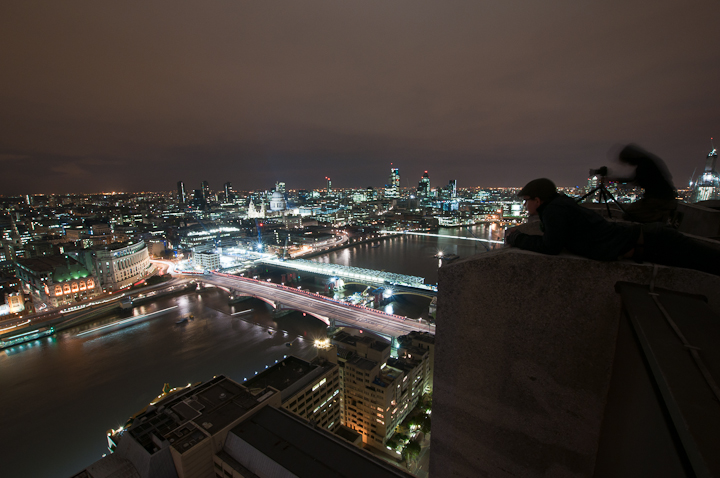
It seems to me that most urban explorers not only feel the need to test those limits, but to push them. We find those opportunities in drain systems, where the obvious risk comes from flooding and drowning to abandoned buildings which have both short term (collapse) and long term (respiratory problems, cancer etc.) negative impacts on our bodies. Many urban explorers also frequent high places where falling is always a possibility. In these locations we are free to do our edgework, pushing these boundaries by hanging from cranes, balancing on edges of long drops, precariously tiptoeing over weak floors and scrambling under collapsing roofs.

Edging (image courtesy of nocturn.es)

In wider society, inevitably connected to the concept of “liability”, is the notion that these activities are trangressive. UrbEx, like street art, skateboarding and parkour, is a practice which reappropriates urban space for an unintended or unexpected use that may result in bodily harm and one of the common reactions to people choosing to take unnecessary risks is, of course, suspicion that these people are “out of place”. But as Christopher Stanley has written, “these subcultural events [could] assume the status of resistant practices not in terms of ideology but rather in terms of alternative narratives of dissensus representing possible moments of community.”

Sinking feeling

As Lyng rightly points out later in his article, “risk taking is necessary for the well-being of some people” as individuals work to “develop capacities for competent control over environmental objects” (see Klausner 1968) inspiring edgeworkers to sometimes speak of a feeling of “oneness” with the object or environment while undertaking these risks.

I know that the places where I feel most embedded in the “fabric” are places where I have taken risks. In those places, I have bonded not only with Lyng’s “object and environment” but also with my friends who shared in those risks.

Alternative cathedral use, Paris (image courtesy of Marc Explo)

The desires to explore for the sake of exploring, to take risks for the sake of the experience, with little thought to the “outcome”, is something that runs deep in us when we are children. Urban explorers are, in one sense, rediscovering and forging these feelings of unbridled play, of useless wandering, of trivial conversation and of spontaneous encounter, all of which lead to the creation of very thick bonds between fellow explorers who use play as a way “to de-emphasize the importance of work and consumption and their pervasive monetary components.”

These explorations bond people in an emotive embrace, tendrils of affect conjured by shared fear and excitement, experiences that have become increasingly hard to find in many modern city spaces which Guy Debord argues “eliminate geographical distance only to produce internal separation.”

Perched

Despite the ways edgework may be seen as trangressive, the empowering and inspiring process of undertaking edgework is exactly what is lacking from many people’s lives in global cities. Edgework may in this sense be seen  healing rather than severing, a hot blade that melts. Physical human connections through shared experiences of peaked emotions build stronger bonds of community, and I am proud to belong to this tribe of urban bodhisattvas.

Tribe

Share
Tags : , , , , , , , , , , , , , , , , , , , , , , , , , , , , , , , , , , , , , , , , | 8 comments

Tragedy is when I cut my finger. Comedy is when you walk into an open sewer and die.
-Mel Brooks

Peel

At the wheel

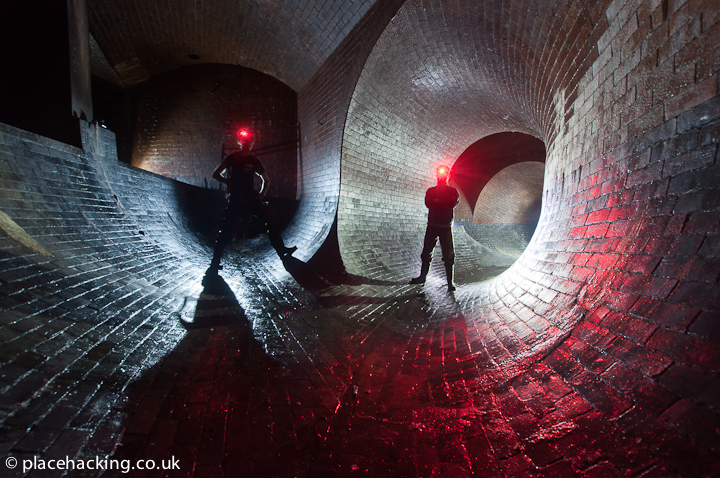
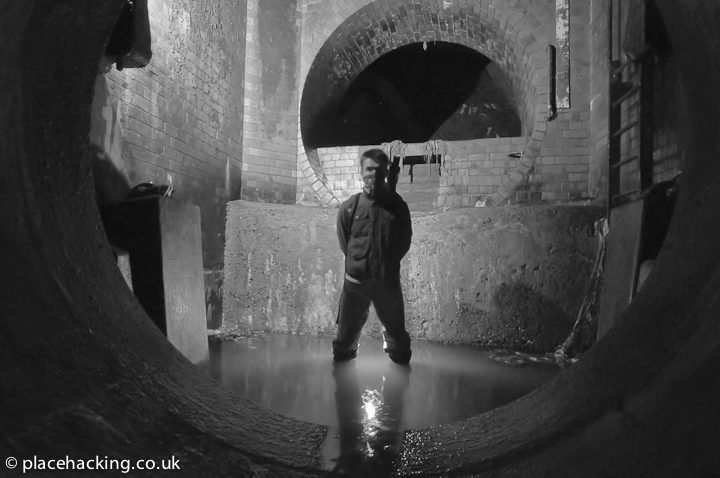
Recently, our buddy Paul Dobraszczyk, author of the book Into the Belly of the Beast: Exploring London’s Victorian Sewers was interviewed by Resonance FM for their series Tunnel Vision where the producers took people on an legally-questionable journey into a London sewer for an interview. I met Paul soon after at the subterranean London Illumini exhibit in Shoreditch. Just about the same time, Silent Motion was making a fuss about how we neglect South London on our explorations.

When Paul told me about his experience in the Effra River, given it runs only a mile from my house, we thought we may as well have a look. So last night, Silent Motion, Statler and I went down with a backpack sound system, a video camera and an abundance of energy to explore my own backyard. What we found amazed and surprised us.

It’s good to know this little wonder is just a short walk from my house. It was a night well spent exploring another of London’s hidden rivers.

Zarathustra

Share
Tags : , , , , , , , , , , , , , , , | 2 comments

I am a law only for my kind, I am no law for all.
-Nietzsche

Urban explorers are notorious for taking themselves too seriously, with our posed people shots and braggadocio over daring feats. I am probably more guilty of this than most. To be fair, that mentality is usually a reaction to “authorities” and the media treating the practice with little levity. When we do encounter authorities, we all know that getting them involved by showing them photos and talking about why what we are doing is harmless, and, in a best case scenario, getting them to laugh about it, is our best defence. Despite our appearance of machismo, most explorers are always game for a good laugh.

That is why I love the UE Kingz. You can’t watch this video and not crack a smile, despite the fact that they talk about taking bolt cutters to locks and tag up a drain in the video, blatantly breaching the UE “code of ethics”. And despite the antics depicted, the primary message of the video – the power of choice is, I think, an important one. While social and cultural constraints do exist, it is largely up to us to make life what we want it to be and the UE Kingz encourage us to take responsibility for that decison.  See, I told you I take this to seriously!

Cheers to the UE Kingz for bringing UrbEx a bit of festivity – we can all learn from them. Now get out there and go mad with a bolt cutter!

Share
Tags : , , , , , , , , , , , , , , , | Comments Off on UE Kingz