You give a man his daily bread so that he can be creative and he just goes to sleep; victorious a conqueror grows soft, a magnanimous man turns miser as he gains in wealth.    -Antoine de Saint-Exupéry

Are we at the top of the ladder or at the bottom of a new ladder?    -Silent Motion

Saddle up for

On our recent ProHobo trip into Europe, lovingly (if in the end somewhat flippantly) referred to as 3.0: ProhoBohemia, we pulled back from the infrastructural infiltrations that have become our daily grind here in London and went looking for ruins again. Coming back to ruins was like returning to a pleasant dream.

Magical realism

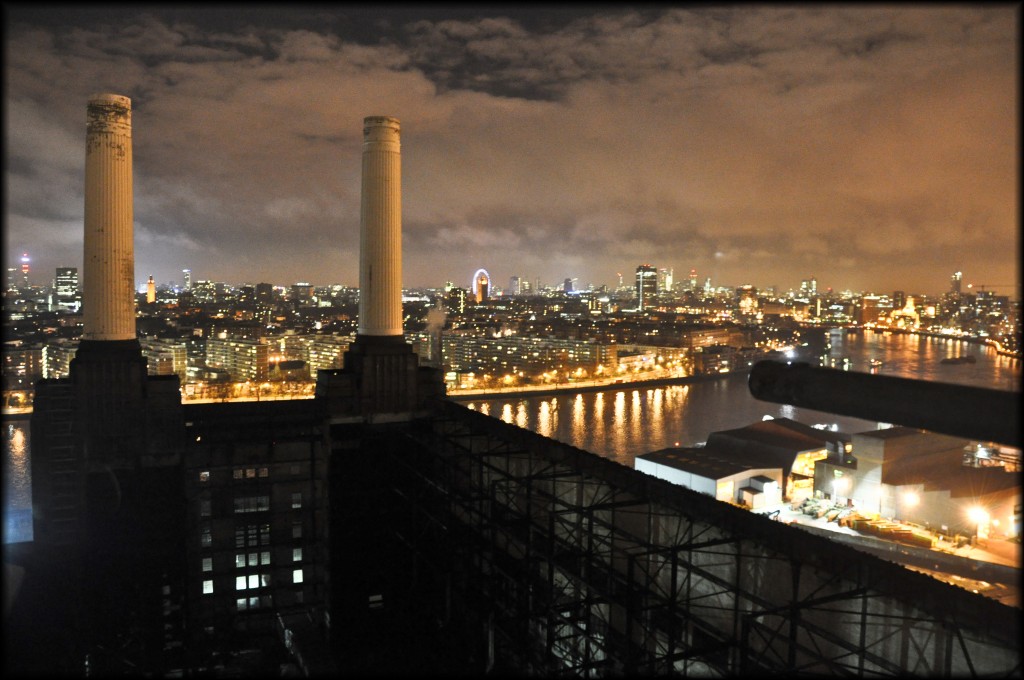
In our hired car, which we intended to push 3300 miles into Poland, our most ambitious trip to date, we cut through the corner of France as we have twice before and headed into Belgium. After a brief climb up a notable public building in a major capital city, we crept into an old train yard to spend the night. As you do.

Industrial nights

We woke up early full of enthusiasm and over the next week, we moved through Europe like a storm with an efficiency built over the course of three trips to the continent over the past year. We knew the sites we wanted to hit, we knew how to avoid security where necessary, we knew what to pack and, more importantly, what not to. We had, in fact, taken being temporary nomadic vagabonds to a whole new level. During the trip, we read passages from Tim Cresswell’s book The Tramp in America where he discusses the work of homeless-turned-Chicago-School-sociologist Ben Anderson. As we came to the realization that we could all likely keep this nomadic lifestyle going for a very long time (if not forever) I couldn’t help but think that we were working the other way around – there was a real possibility, is a real possibility that we could in fact drop it all and live like this indefinitely.

Probo

Looking for

Pure living

But the further East we went, the heavier our bourgeois baggage became. As we crossed the border into Poland, the car was filled with excited cheers quickly followed by confused murmurs. While the landscape here offered what we have come to expect from Europe – endless ruins – we found ourselves confronted with a place in which the relationship to derelict space was entirely different.

Secular

Imaginaries

Remembered

Here ruins were spaces not of bounded exclusion but of potential utilization. After driving for hours through a forest hunting for a soviet base called Keszwca Lesla, we arrived at 10pm to find rows of buildings, clearly Soviet-built, surrounding an undecipherable war memorial that looked like our standard fare with the addition of satellite dishes hanging off the sides of buildings. It seemed the local population here had turned this place into a summer holiday encampment after the collapse of the USSR and the abandonment of the base. Gangs of teenagers roamed the streets late at night in track suits and mullets, running in and out of the derelict buildings and bunkers. Inhabited buildings looked derelict, folding them right into the fabric of a lived landscape. There were no fences or security to be found, no rules, boundaries or exclusionary practices in evidence. It should have been paradise for us. Except that things felt different here.

Clearly

Something else

To be found

As we moved on from this site, we became more brazen, braving the sullen stares of thick-necked Polish men who could clearly throw us across a room to run in Soviet concrete blocks, shutters snapping. But what we captured in these places looked less like the western notions of the aesthetic sublime than we were accustomed to encountering and more like the war-ravaged Chechnyan ruins depicted in The 3 Rooms of Melancholia.

USSR

Afloat

No more

Site after site, I kept feeling that something was different here, something was missing here, but I couldn’t pinpoint it. It was something missing beyond a buoyant economy and door frames.

And then it hit me. It was nostalgia. As David Lowenthal writes, ‘nostalgia is memory with the pain removed.’ There wasn’t a hint of nostalgia to be found here. No one cared about stripping soviet blocks of all they were worth because they were still in pain here. It was probably, rather, a delicious catharsis to smash out those windows and excavate the rusting hunks of artillery from the ground.In the same way that we, in London, feel a need to write our own stories of places and to define our own boundaries for space, the Polish people who lived under communist control probably felt a need to assert their rights to newly reclaimed space by destroying the remnants of control that the Soviet Union has exerted over them for so many years. Like Scipio Africanis at the end of the 3rd Punic war, the only thing that would satisfy the pain of generations of struggle is to do everything possible to erase the memory of that pain, razing the buildings and sewing the Earth with salt.

The heritage manager in me is terrified by these ideas but the anthropologist and geographer in me tells me I have no right to dictate how others should interpret and interact with their places. We can’t know their memories; we can’t know their pain.

Pain

Lived

There a was a particular guilt that came with exploring Poland.  I think that guilt came from the clashing of different value systems in regards to derelict space. Perhaps it is an indication of a larger clash between capitalism and communism. Where east meets west, desire meets utility, nostalgia meets future promise and mobility meets placemaking. We all knew we brought the West with us and we all knew, deep down, that the social conditioning that resides in those templates can never be erased.

While we didn’t necessary find the ruins we were looking for in Poland, we did find a meeting point on that shifting frontier of Western values that is pushing its way inexorably East, met not with open arms but with suspicious stares. After what Poland has been through over the last 100 years, who can blame them?

Easterly

Share
Tags : , , , , , , , , , , , , , , , , , , , , , , , , , , , , , , , , , | 1 comment

The Marriage

Posted by Bradley L. Garrett on Wednesday Jun 23, 2010 Under Cultural Geography, Uncategorized

by Charles Simic

Dark Princess

If I had an ounce of good sense
I’d stay put in the country
Rising early to hear the birds
And see the sun come up,
Taking long walks after lunch,
Stopping only to talk to a crow,
Or a dog who happens by.

The trouble is, I like to raise hell
As much as I like sitting quietly
Like a monk in his cell.
A car careening with a screech,
Carrying a party of revellers
To another late-night dive in the city,
Sends me into ecstasies.

To marry wisdom to foolishness
Has been my lifelong desire
Since I take pleasure in both their company
And attend their council.
A blessing from my parents
Who alternated bickering
And swearing love for each other.

These thoughts and others came to me
While I slept in my bed,
And, for all I know, may have been whispered
Into my ear by the black cat
Who keeps a nightly vigil by my side,
So mice don’t nibble my toes
Or take shortcuts over my pillow.

___________

Share
Tags : , , , , , | 2 comments

Cavendish Crematorium

Posted by Bradley L. Garrett on Wednesday Jun 16, 2010 Under Anthropology, Archaeology, Cultural Geography, Psychogeography, Urban Exploration

The Silken Hotel wasn’t open yet. We were standing there at the hoarding, Silent Motion and I, with that jelly of a man in his yellow vest pointing his finger accusingly, shaking with rage in a kind of mild convulsion, the orbed camera behind him spinning around and zooming in on our faces, like an eyeball rolling back in a head, making the convulsion a complete yet disembodied visceral experience for this lamentably flabby being.

The sergeant arrived, blue lights painting the walls, tires screeching. He almost rolled out of his car “UrbEx huh? Yeah, we get your kind around here sometimes. Tell you what, see that boarded up building across the street there? Let’s see if you can get into that one!” We meekly accepted the challenge as they frantically tried to fix the zip ties on the Heras fencing we had snapped off in our aborted miniature vertical scramble.

Challenge Issued

Across the street, we found that this building, Cavendish House it was called, was boarded up exceptionally well, stone gargoyles on patrol in moody up-lighting, three stone Furies screaming insults at us as we hung from ledges over the road, tugging on widows.

Stoney stares

Furies

With a pop, a seal on one gave and Silent Motion swung it parallel to the floor. We dove through headfirst and when the window closed with a sharp bang, we were surrounded by silence. I crawled to the dirty pane on the other side of the room and peeked across the road. The sergeant was there, his belly still threatening to rip his utility vest in two. He was smiling, staring at the building and smiling. Creepy fuck.

Popped

Marauder

The exploration proceeded as we opened doors and windows for the next team of rogue adventurers, torches moving around like little bugs on walls looking for a hole to hide in. Silent motion found a generator running and hooked up to a small TV. He powered it up and we spent an hour watching an old Bollywood classic, a brief respite from the endless stairs. Room after room of blue and orange light comforted us behind the boarded up first floor. Unlikely to see, impossible to catch, invincibility ensued. Down or up? Up.

Dance music invoked

Creepy

The top of the first building (indeed we now realized there were three of these concrete monoliths, these plywooded Thatcherite government lumps of cement) had a roof that sat level with some office blocks. I peeked in the clean windows across, imaging the illicit affairs in office chairs that took place during our work hours, suits humping secretaries and capitalism. A blue church to our left looked like a plastic Disneyland air-filled jump house, replete with nostalgia for the abbey it was until Henry VIII seized it and ravaged it like a conquered Irish queen in the 16th Century.

Little things

Pink

The millennium eye approached us on the other side, that little monument we all love and love to say we hate. “Ride on that thing? Never!” Its millennium glow bounced off of the Thames, offering no apologies for its slow creep our direction. We did handstands, climbed radio antennae, pulled ourselves around in monkeyed feats of post-adolescent strength. We lost track of time. We didn’t care. Damn the horror of the night buses, we’ll ride ‘em!

The Furies descent

Eye

The lustful runs across the roof deteriorated eventually into a pink sky, and we knew that the time for morning coffee and a long walk to Elephant and Castle would soon be upon us. Time to go down. And down. And down. The building suddenly became distinctly subterranean.

Nuances of texture

It was wet here. It stunk like old dog, soaked in a summer-time sprinkler and shaking all over the children who uniquely appreciated the horrible musky shower, full of love. The empty corridors offered room for thought and made my stomach tense up, knot and twist, crying foul at the late (early?) hour. One turn revealed a large room with a safe, a thick door with twisty dials and an unsettling echo. We spun the lock, robbing the history from the place.

Sort of safe

The watery passage continued until we could stand it no longer, blistering feet soaking in the liquid filth. We went for the ProEx shot to cap off the night, twisted and intoxicated, drunk on our own success at pissing on every wall in this building. Lighting was essential, we decided, draining camera batteries and making film strips roll back on themselves in our multiple attempts to get it right.

Pr0 Shadows

Suddenly, the sharp slap of metal on tarmac stopped us cold. Voices. A quick retreat. How could it be, this UrbEx fortress infiltrated? The retreat continued into a side room where we sat, a gentle humming behind us. Suddenly, Silent Motion sprung up, hitting the hum with his torch and there is was – a meat grinder, working with no electricity to speak of, begging for fodder. I screamed a little, quickly covering my mouth to stifle the alarm, pride on the floor. The voices were closer now, finally clear enough to make out the distinct sound of someone saying “they’re over here.” I knew that voice.

Ground

We fled down the hallway once more, trying to keep the drips and splashes from reverberating, a considering how long the water ripples that announced our direction of departure would continue their hideous radial momentum. The smells of the place began to change as we moved. It smelled… like burning. When we found out why, it was already too late. The swollen bellied sergeant and the jelly-man sidekick were on either side of us, laughing as we both stared in horror at the door to what looked to be a huge furnace.

Burned

“Welcome to Cavendish Crematorium!” The sergeant yelled, spit streaming from his plump pink lips. “The last stop for nosy UrbExers!” Next to me, Silent Motion sighed, staring into the murky water.

Share
Tags : , , , , , , , , , , , , , , , , , , | 2 comments

Lurking in the Shadows

Posted by Bradley L. Garrett on Sunday Jun 13, 2010 Under Academia, Cultural Geography, Film, Urban Exploration

My friend and colleague Alan Rapp who runs the excellent blog Critical Terrain has just finished his MFA in Design Criticism at School of Visual Arts in New York City. Alan wrote a wonderful thesis about urban exploration called The Esoteric City which I really hope he publishes soon. In the meantime, he recently gave a short presentation on his work (in which I make a few cameos!) that is really worth watching.

I am always amazed by how much overlap there is between Alan’s work and my own. Sometimes I feel like we are psychically quoting each other across the Atlantic Ocean. Telepathic communications aside, congratulations to Alan on completing the MFA program – I look forward to seeing what comes next!

While I am at it, I would also like to mention another friend, Shreen Ayob, recently put up 4-minute video on her blog Shreen Distracted shot entirely in the soon-to-be-demolished West Park Asylum that I really love. Between the Alan and Shreen, I have your evening viewing sorted for you!


http://vimeo.com/16638650

Share
Tags : , , , , , | 2 comments

London’s Olympic Waterscape Exhibit

Posted by Bradley L. Garrett on Monday Jun 7, 2010 Under Cultural Geography, Film, Uncategorized

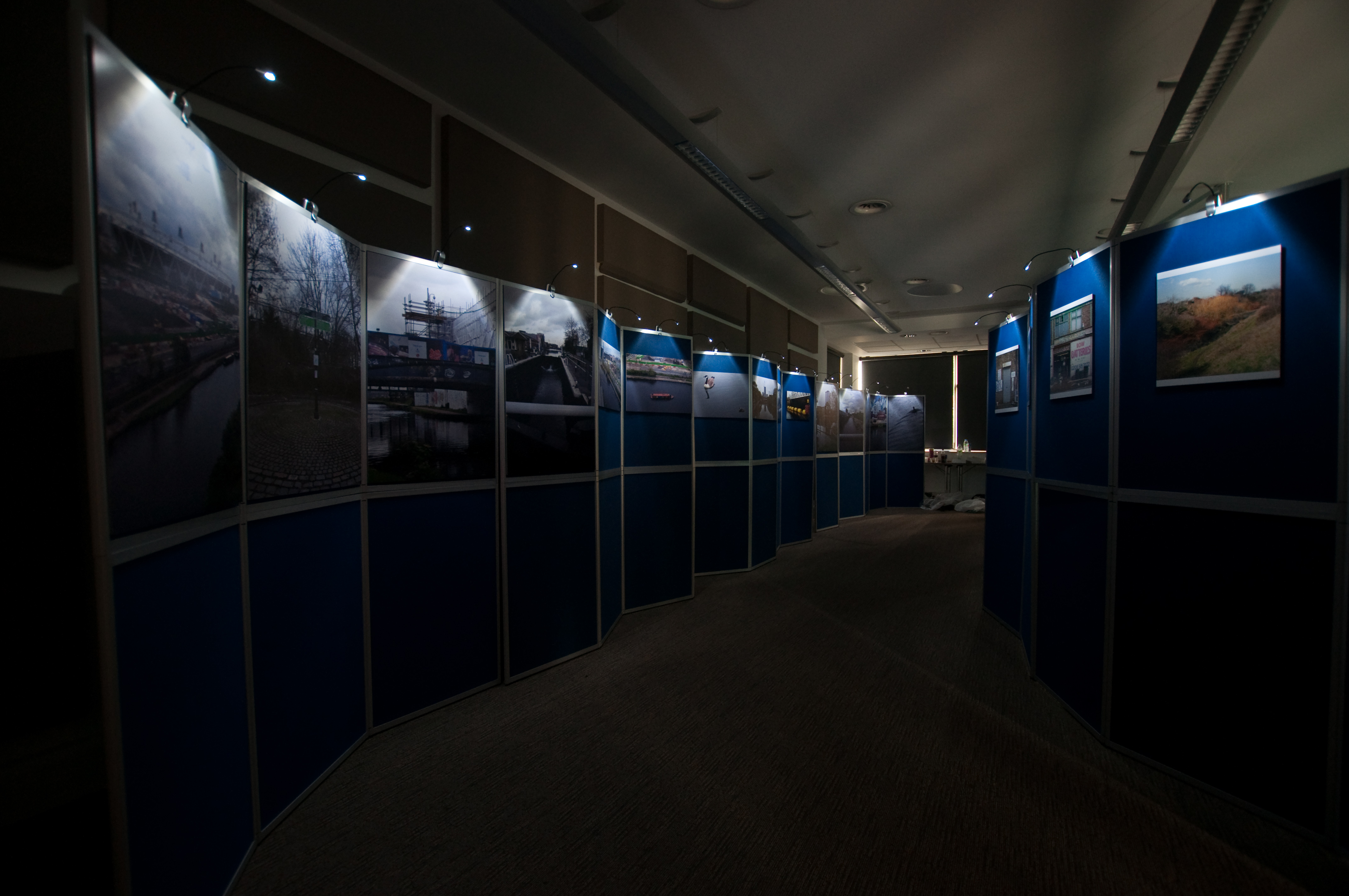
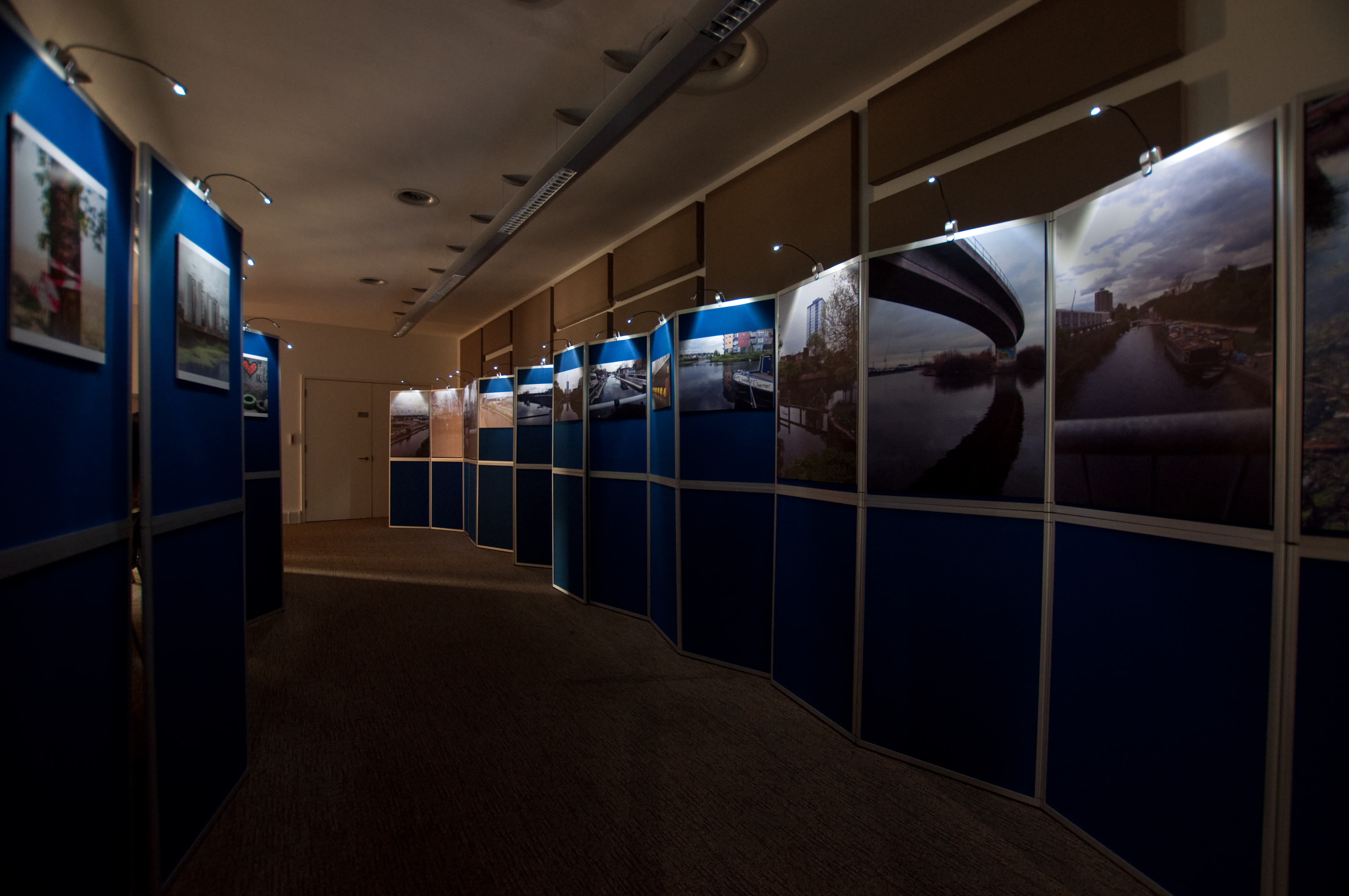
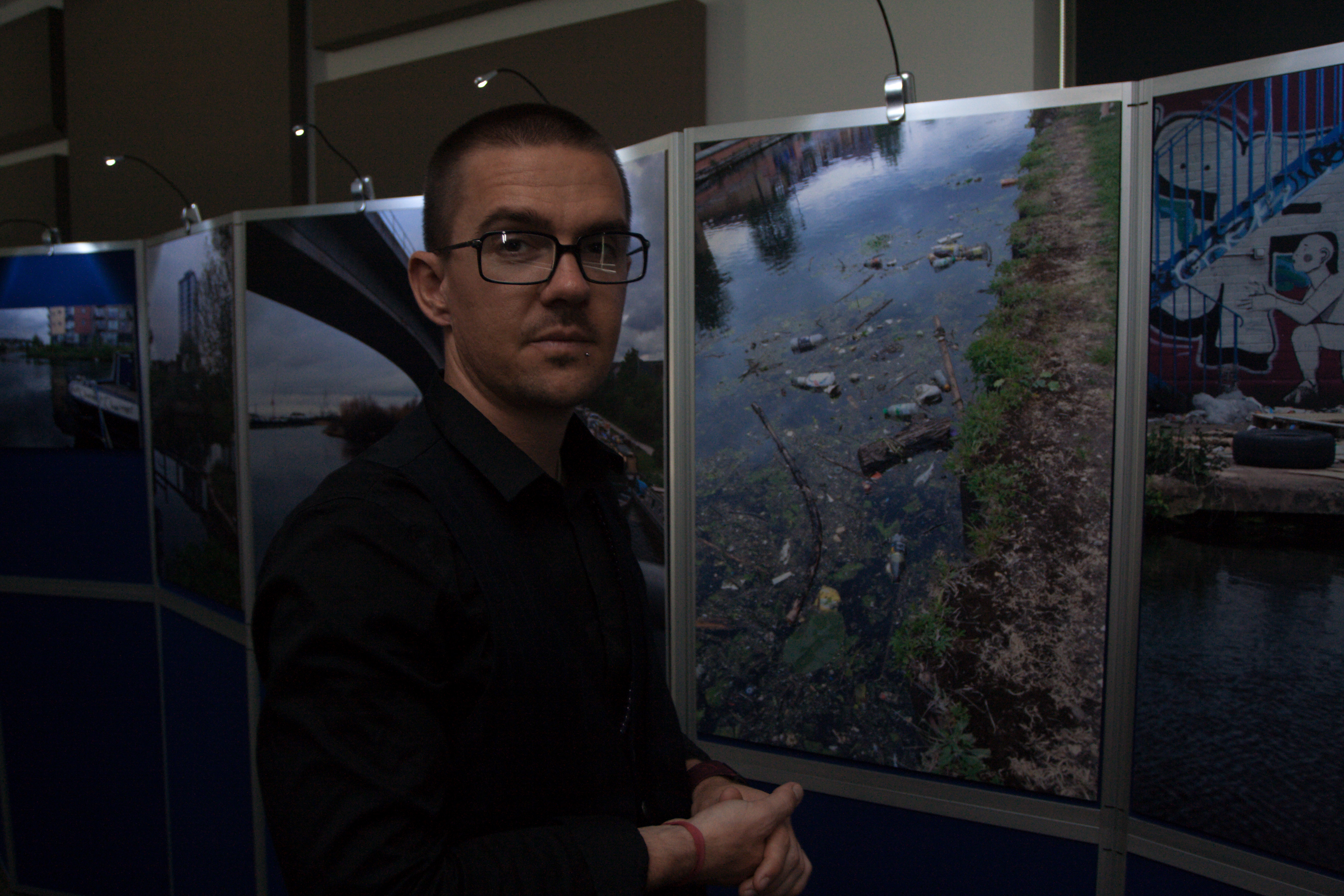
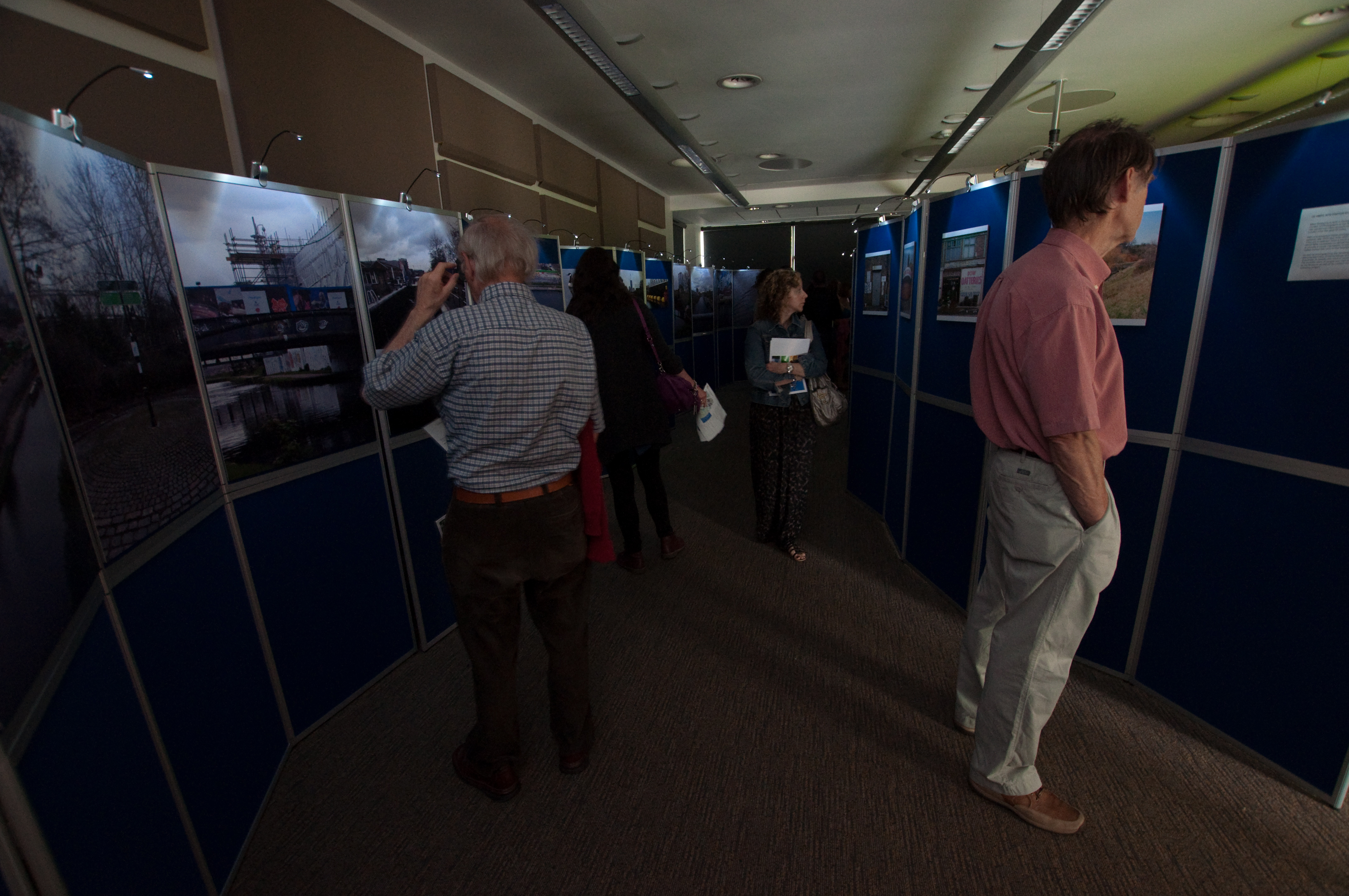
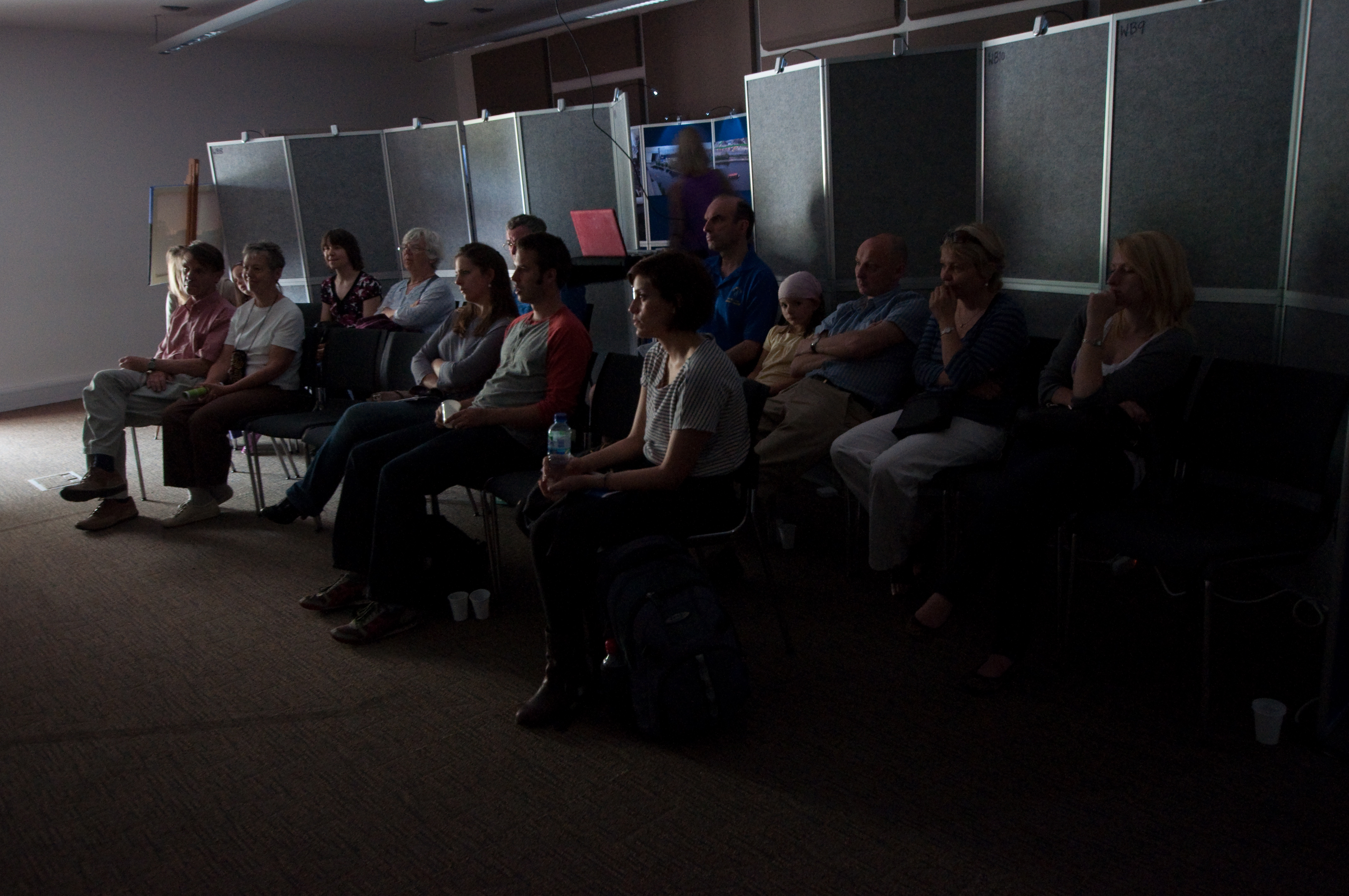
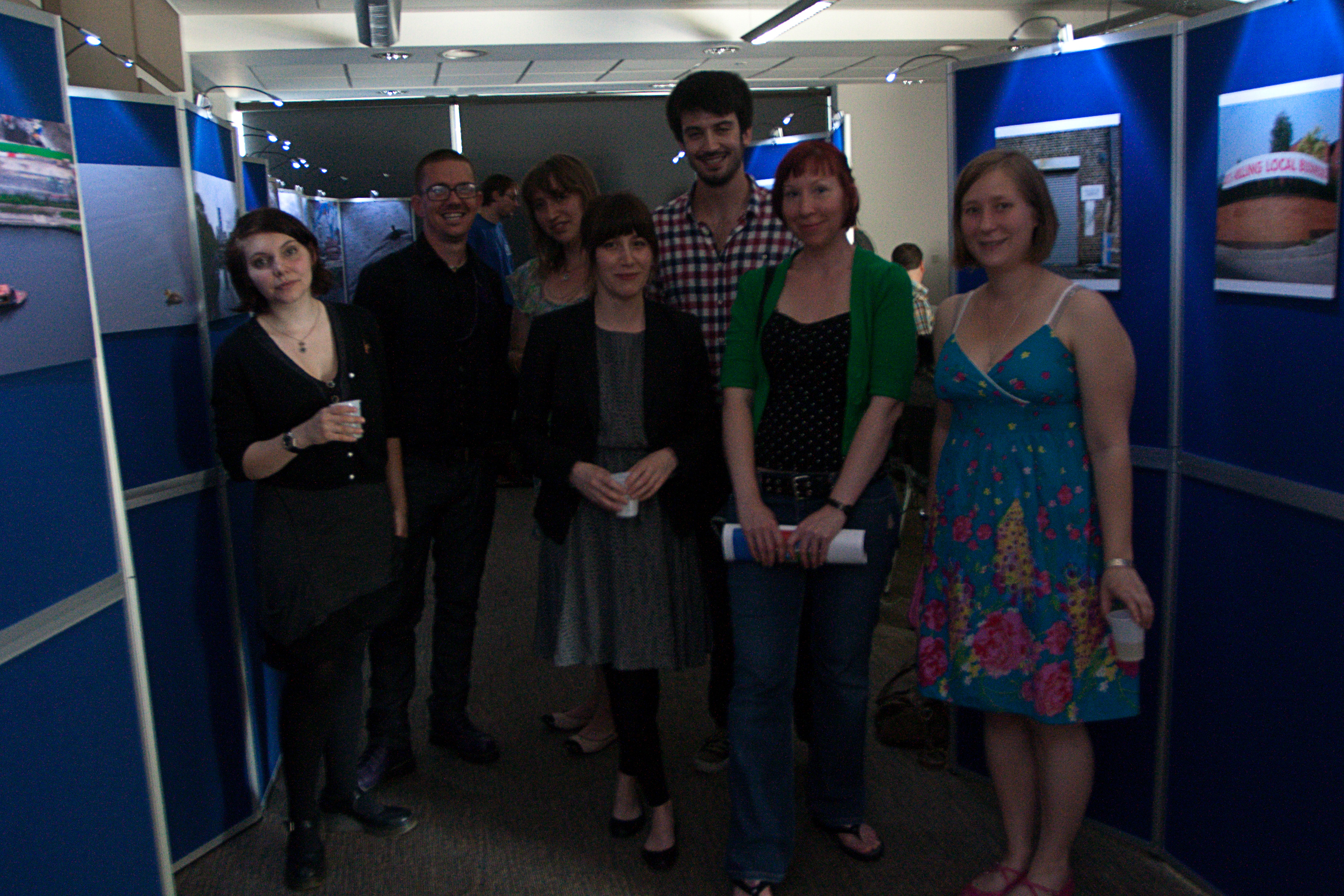
Last night we put on an exhibit at Royal Holloway, University of London as part of the Creative Campus Initiative linked to the London 2012 Olympics. The exhibit, run by Alison Hess, Ellie Miles, terri moreau, Michael Anton, Amy Cutler and myself was a huge success with far more visitors than we ever could have anticipated! Thank you so much to everyone who came out and to the rest of the team for putting on an amazing show!

The exhibit was broken into 3 parts. In the first, we displayed 10 photographs from Mike Seaborne, a photographer at the Museum of London, depicting the Olympic Waterscapes prior to construction of the stadium site. Opposite these, we displayed a number of photographs from our own journeys (undertaken as a geographic triathlon) up, down and around these waterscapes documenting the changes taking place there.

Finally, we made a 20 minute film about the past, present and future of these olympic waterscapes which I am proud to present for the first time here!

Here are some pictures from the exhibit. All photographs are by Danny Pack.


_________________________

Please also visit the project website

Share
Tags : , , , , , , , , , | 4 comments