If you knew what you were doing, it wouldn’t be called research.
-Albert Einstein

From www.phdcomics.com
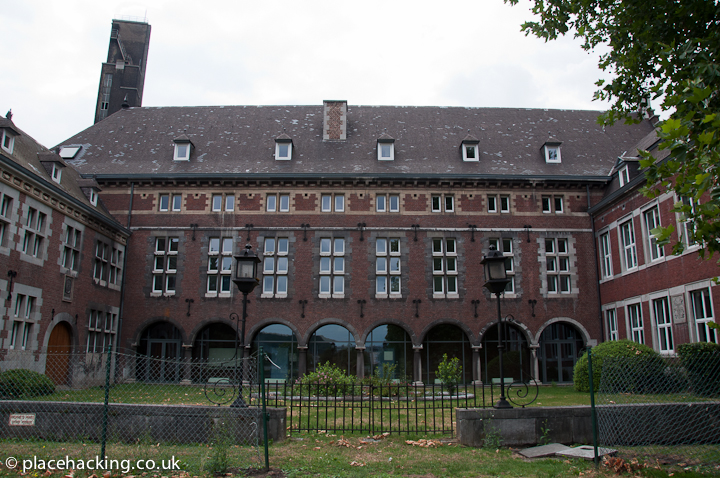
Whether due to my compulsive nature or my egregious energy levels, many of my postgraduate colleagues often ask me for advice on their PhD goals. It occurred to me, a few month ago while wandering through the derelict University of Liege campus in Belgium, that the strange model I have created for myself in my PhD has indeed been a good (dare I yet say successful?) one and that, in my last year, it might be useful to actually write down what has worked and what hasn’t for current and future PhD students. So here are 15 thoughts for PhD students.
Please keep in mind that these are not hard-and-fast rules, they are just ideas drawn from my experience. I hope they are helpful in some way.

1. Funding
My first thought is one of the most essential. Get full funding. I know this is harder now than it used to be but just keep fighting for it. Go pay for a one-year MA out of pocket and try again if you need to. Find the university you want to be at, contact the person you want to work with, wine them and dine them, write them love letters, write a killer proposal and get the cash. When they offer you partial funding (as Royal Holloway, University of London did in my first application in 2007), turn it down gently, when they offer you nothing, be offended, seriously. Most people don’t realize that funding is a negotiation and you can play hardball. My second application to RHUL landed me another £20,000 toward my work. Why is this important? Well, firstly, you will be a lot less stressed if you are not under under enormous financial pressures and anything you can do to alleviate stress during your PhD is pure gold. Secondly, it will give you confidence, and encourage you to live up to the investment the university has made in you (which is why I say if the university won’t invest anything in you, tell them to shove it!). Third, obviously, it looks awesome on your CV!
2. Create a great PhD topic
One easy way to get funding is to work under someone else’s research project. This, in my experience, creates the most miserable PhD students. It sucks, don’t do it unless you have to. Your PhD topic should be yours; you should love it inside and out. If you don’t dream about it and get a shiver of excitement when you think about the book you will publish at the end, just walk away because you will be miserable for the next big chunk of your life. As someone once told me, it’s best that you love your PhD topic from the beginning because you will most certainly hate it by the end!
3. Apply to work with an awe-inspiring supervisor
Yes, your supervisor should be kind, helpful, supportive and all that. But they should also be successful, powerful and intimidating. If your supervisor is (relatively) famous, well published and successful, you might get your stomach in knots every time you meet with them but it will also set the bar high. And, of course, it looks good on your CV.

4. Be brave, say yes!
As a professor at UCLA once told me, “if you are not a little bit afraid every day, you are not trying hard enough.” When you begin your PhD, regardless of where you came from, who you are or what you are think you are capable of, roll into town like Clint Eastwood after his saddlebags full of cash got jacked. This is seminal opportunity to redefine yourself as a force to be reckoned with and you should take it. Tell everyone that you intend to publish like crazy and attend every conference and then do it! When someone asks you whether you want to be involved with projects, say yesssss! with ridiculous enthusiasm. Be infectious about your passion for everything great. Propose ridiculous projects, take the lead on things. As my Dad always told me, “what the hell, why not just run it up the flagpole and see who salutes it?”
5. Network ruthlessly
In your first year especially, sign up for everything that looks remotely interesting, seminars, conferences, workshops, whatever, and network like crazy. Work the room at all of these events, make it known that you are one the scene and will be seen. When you attend talks, contribute something, even just one-on-one after the talk. Think back to high school. Do you remember being embarrassed about contributions you made? I don’t either. Just go for it. People will probably not remember if you say something daft, but they will remember that you got involved and were confident about saying something daft and that’s fun anyway.
Email people when and where you can to ask for papers you can’t find, let them know you are passing though town and would like to stop by and introduce yourself, comment on their blogs and send them your publications. All of it shows that you are active and engaged and will help to make the right contacts.
6. Read, watch, listen to your favourite authors through and through. Then go meet them!
Let me demystify this further – the most famous academics in the world are just people. They like it when you call them and tell them their work is awesome and you want to have coffee, buy them a beer or interview them for a video project. When you get to meet with them (it almost never fails, just ask), tell them that you would like to get involved with anything they are doing. Offering your services (for free sometimes yes) on their projects as a photographer, field goon, transcriber, whatever is a great way to get to know them. If you really like their work, it will be fun anyway. It’s also (surprise!) good for your CV.

7. Get organized
Okay so you’re in your PhD program, you’re getting involved, downloading articles, taking a bunch of notes in your Moleskin notebook, feeling all smug. Your life is now your PhD. There are going to be ups and down here, believe me (lucky up today after a long night of epic trespassing – woohoo!). In down times, my best suggestion is get organized. When I am cleaning my house, I am scared and retreating. When I have pulled all my books down and am organising them by thesis chapter, please take me out for a beer because I am slipping into the abyss.
But that time can be really useful. The need to have your shit together applies to your computer files and physical notes, books, article, field documents, whatever. I assure you that, however OCD it may appear, a militantly organized PhD is far less intimidating than your piles of scraps of notes and cameras full of pictures from the field last year you never downloaded. Seriously, if I get one more friend calling me saying, “I had all these pictures from the field but the hard drive doesn’t work any more…” Just take a weekend, strip everything down to the bone and create the space you need to work and an effective system to keep the rhythm and flow going. Remember, this may be the only time in your life that you have 3 years to invest in a project that is all yours with (almost) complete freedom. Create your own workspace heaven, however you need to do that.
If you have a Mac, I will suggest 3 programs that will change your life: Endnote, Super Duper! and Papers. Get them and use them. If you don’t have a Mac, stop wasting your time dicking around with that retard of a PC and get one. And get an iPhone to take notes, photos, etc when and where you can. I have written roughly 1/6 of my thesis on my iPhone while on the London Underground. In terms of your PhD (or any self-motivated project) productivity, efficiency and organization trumps your need to “fight the man”, make a statement, or whatever it is you are asserting by using that clunky machine. But, whatever you use, BACK IT ALL UP! Once a week at the least. Better yet, once a month give a third copy to your supervisor to hide in their office. They like it when you entangle them in your paranoia, don’t worry.
8. Mix it up
The old idea of breaking your PhD into three isolated sections of reading, doing and writing is stale and boring. As Alf Rehn scribbles (see endnote) “one definite upside to a frontal lobotomy is focus, and you should keep this in mind when your supervisor talks about focus.” Go do your fieldwork whenever you want/can. Take your reading with you. When you have a lull, hit the library hard or go read on the beach with a cocktail. Write constantly, ferociously, channel Kerouac writing on the road until you burn out. Maybe it doesn’t look anything like “thesis” writing but that doesn’t matter – you never know what is going to be valuable 3 years down the road or what weird little gem will be hiding in that mania. The trick is, I think, when you are inspired to do any of these things, do them. Follow passion first and foremost. Do valuable things that have little or nothing to do with your PhD. Be utterly busy with everything awesome and worthwhile. Which, by the way, looks awesome on your CV.
9. Treat your PhD like a (really cool) job
Make no mistake – if you have full funding and you spend the majority of your day playing World of Warcraft (unless it’s your research topic), you are an asshole. A PhD is a job. You are paid to do something and you should, just as you would if you were getting paid for any other job, put in 40 hours a week on it. I mean, seriously, if your university has invested a big chunk of change supporting you, what are you giving back? And please don’t say a thesis. No one cares about your thesis. But they are all watching what you do outside of it, that is the real marker of a rockstar student. In the end, if you developed a thesis topic that blends work and play, fun and critical engagement, home and field, than you won’t notice that you work endless hours anyway (I just chuckled to myself, realising I was writing this a 9pm on a Sunday night).

10. Present your work (in the right places!)
Connected to this (no) work ethic is the impetus to present your work. Do present. Based on what I have heard, 2 presentations a year is a fine minimum bar. But keep in mind that presenting will not get you a job (as publications will) and does require a lot of effort. Sometimes, you might get a book chapter or special issue article out of it but you usually don’t know this until afterwards and book chapters are not as valuable as journal articles in the end anyway. Try to send abstracts for chapters for section you need to write, using the pressure as motivation to get on with it.
Contrary to popular belief, presenting at small conferences (20-30 people) will do more for your career that large ones I think, though the large ones often have better parties and this should obviously be taken into consideration. I say do one of each every year. Also, before your PhD is over, make sure you organize at least one session at a conference. It’s not that hard and it shows that you a more driven than most. And it’s fun. And, you guessed it, it looks good on your CV.
11. Publish or perish
It’s not a joke people. If your supervisor told you that you shouldn’t worry about publishing until you are done with your PhD, they are sabotaging your career and you should slash their tyres in retaliation. Just think of it this way – when you graduate, you will graduate that year with a couple thousand people (just in the UK) who have the same degree you do. There will be about 12 academic jobs that year if we are lucky. The new minimum bar for a job after your PhD is 2 publications in high-ranking journals. I often publish in other places, sideline journals, online magazines, interviews on other people’s blogs, etc. but these are always in addition to my primary work thread. My best advice, passed on from my magnificent supervisor, Tim Cresswell, is to write each chapter of your thesis first as an article, submit it and then fold it back into the thesis after it gets published. Not only do you get publications out of it, you get comments and feedback on your work before it even makes it into the thesis. For instance, what will largely be my methods chapter (chapter 2) is now published in Progress in Human Geography and chapters 3 and 4 are sitting with reviewers right now at other journals. Your supervisor will love you for all the marking you saved them. Not to mention how much they are going to love your 7-page CV (just kidding, that’s obnoxious – see mine)!
If this all sounds mad, let me assure you that despite our wonderful moments of collaboration, this is a competition. Coming out on top requires a bit of strategising, just be sure not to become so entrenched that you pull the ladder up behind you like the current UK government administration is doing. Succeed so we can all succeed. It’s always better to create a job than to get one anyway so go forth, kick ass, and create new opportunities.
12. Write diversely, work creatively
The publishing system completely blows and does not acknowledge, for the most part, that people work in different ways. I know that many people are not the best writers (me included) or work more productively in another media or format (me included). Other people are better at writing, say, fiction, than academic articles. I say go for it. As long as you hit your bar of two journal articles in high-ranking journals, you should spend the rest of the time doing whatever you love. Just make sure you balance the time you spend doing to the time you spend producing. For instance, I have three writing outlets to keep me producing. One is this blog, for half-baked and still formulating thoughts (okay haters?!), one is popular publication for those moments when I write about my direct experiences or try new creative stuff, the last is my academic publications where I exercise the full force of my abilities. I also juggle writing, obviously, with photography and videography. The most important rule here is what my supervisor told me at the beginning of my PhD: do what you love and keep doing it. When you love your work, it shows.
Connected to this, I want to just mention that being a perfectionist is crippling. In the wise words on my friend Adam Fish in anthropology at UCLA, “get into it, get on with it and get over it.”

13. Cultivate a public image
If you Google yourself right now and get no results, you are failing your PhD. Like it or not, your Google ranking is just as important as your publications or, in a real life analogy, your credit rating. It requires active work to bump up the things you want on that list and push others down. Not to say that even bad press can be good at times. A recent blog posting I posted infuriated a whole bunch of people and drove 1200 hits to my blog in 2 days. I say that’s a victory (thanks, naysayers!). You also have to destroy anyone’s ranking with the same name as yours or change your name (I became Bradley L. Garrett at the start of my PhD because I couldn’t compete with this guy). Be sensible but ruthless about this. A blog is the single best way to have a strong public image but also be sure to keep your university webpage up to date as well. Get on Twitter and Facebook, Academia.edu, LinkedIn etc. if you are not already and use them as publishing and promotion platforms and to push other people with your name down the list until they are publicly dead. It works. Oh, by the way that CV I keep mentioning? Make sure it is hyperlinked, updated, formatted beautifully and all over the internet. It works wonders.
Also, keep those connections in mind you made back in the beginning. Collaborating on public projects with noted scholars and artists based on those earlier relationships will help immensely. For instance, my documentary urban explorers, quests for myth, mystery and meaning connected my research to the work of Caitlin DeSilvey, Hayden Lorimer, Tim Edensor, Alastair Bonnett and David Pinder. In addition to getting the fantastic opportunity to meet and work with them, their names are indelibly attached to mine online (in fact, the last time I saw Caitlin she told me “I was a little dismayed when I Googled my name and your blog was the second hit!”). Being an epiphyte can be very valuable. Seek these collaborations wherever possible and lock them down.
14. Protect your time
Remember in the first year when I told you to network with everyone? Forget that in your third year. If you did this well, they are watching you now. What you now need to show them if that you are not just going to show up to their conferences and make contributions and pitch cool projects that only a slightly-weird postgrad could dream up, you are now going to effectively guard your time to be sure you can produce the best work possible during your PhD (my current moment). If there’s a really good offer, like an invitation to speak at an important and relevant conference, of course, take it. But do not, under any circumstances, go to conferences, workshops or events where you have no funding to attend or are not presenting something, it’s just a time drain for the most part. And it, frankly, looks a little sad this late in the game. Participate or get back to your main thread!
More importantly, you have to protect your day-to-day time with extreme militancy. Unsubscribe from as much crap as you can to liberate your inbox for work, set-up email filters, learn to turn off your phone and wireless connection when you need to. Tell your friends they can only come over if they proofread your new article (just kidding). Stop spending worktime trolling through your friends facebook pages. I once called my brother Pip moaning because I was getting 130 emails a day and couldn’t keep up with them, let alone get to the “real” work. Pip (who owns a very successful cabinet company) told me,
“look bro, there’s a big difference between being productive and being active. Productive is getting the shit done you definitively set forth to get done in a particular ‘work’ session, while keeping in mind that there is nothing else that matters other than what is on that list. Granted other distractions (non-list items) are sure to and will arise, phone calls, e-mails, whatever… Fuck ‘em… and realize that ignoring them until your session is over will not be the end of the world… that’s productive. Being active on the other hand is doing anything else not on the list, regardless of how ‘busy’ you think you are are.”
So after you have gotten organized and handled your business, take time off. Lot’s of it, in big blocks. Reward yourself at the end of everyday with a big spliff and bad TV, and take a week or two off every few months. Just make sure you deserve it. If you don’t, lash yourself and eat only lettuce for a day (no don’t do that). This the joy and the curse of being your own boss – you’re supervisor will probably not tell you you don’t deserve the holiday you’re taking. One last thought here on being your own boss. Realize you can work wherever you want. If you feel like going off the snowy Swedish wilderness to drink beer in a hot tub and write for a few weeks (I did!), you should. No one can stop you but yourself.
15. Prepare for life after
As much as your PhD may dominate your life (if you’re doing it right), by the end of your 2nd year, you need to start thinking about the next step. And the game starts all over again. Go hit the streets for coffees, meet and re-meet all those brilliant people you have collaborated with and followed in the past few years. Let them know that you are ready for the next step and want that post-doc or whatever. Of course, no matter how good I feel about my PhD at the moment, whether or not I have been successful at the next step of this game remains to be seen!
My last bit of advice is the most important. Love every minute. We could never be in a position of more privilege than we are – 3 years to do whatever on earth we dream up. 3 years to make yourself a little wiser and (hopefully) mildly well-known writing a whole bunch of funky things for notable journals and telling people over drinks how important your research is while they roll their eyes. This is the best job in the world. Make use of every minute as if it was your last, breathe it in through the belly and treat each day as sacred.
Good luck everyone – hope this was more useful than strange!

___________________________________
For more on this topic, I suggest reading Alf Rehn’s fantastic free book The Scholar’s Progress.


 RSS
RSS Twitter
 Scribd